





The Digital Resurrection: Why Zelda Williams is Drawing a Line in the Sand Against AI
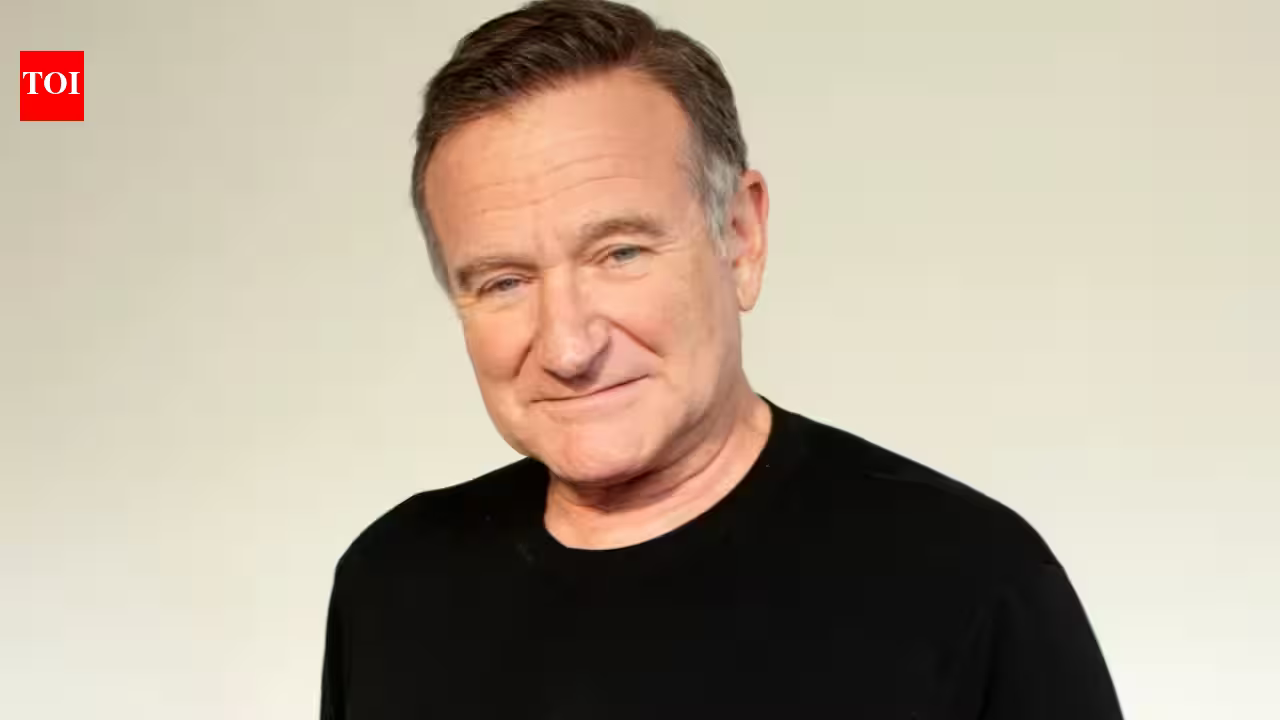
The rapid evolution of generative artificial intelligence has brought us to a strange, often unsettling intersection of technology and legacy. We are living in an era where voices can be synthesized from a decade of audio logs and faces can be mapped onto moving avatars with a few clicks of a mouse. But for Zelda Williams, this technological “advancement” isn’t progress—it’s a violation. The actress and filmmaker, daughter of the late, incomparable Robin Williams, has once again been forced to step into the public square to defend her father’s memory against the encroaching tide of AI-generated content.
The most recent catalyst for her frustration? A viral video that attempted to pass off a deepfake of Robin Williams as a genuine, “private” confession regarding political conspiracy theories. To the casual, late-night scroller, it might have looked plausible. To Zelda, it was a grotesque distortion of a man who can no longer speak for himself.
The Ethical Erosion of Digital Likeness
When a beloved icon passes away, their image often feels like public property. We revisit their films, quote their lines, and share their interviews. But as Zelda Williams pointed out in a blistering response on Instagram, there is a fundamental difference between honoring a legacy and pillaging it for personal or political gain.
The video in question was, as Zelda noted, “not even particularly convincing,” yet the fact that it gained traction at all is the terrifying part. It points to a culture of consumption where truth is secondary to engagement. By weaponizing Robin Williams’ voice—a voice that brought joy to millions through characters like Genie in Aladdin or the titular role in Mrs. Doubtfire—the creator of the video attempted to hijack the actor’s inherent credibility to push a fringe agenda. Zelda’s rebuke was surgical: “If you cannot make your case without making a dead man make it more convincing for you, then tell me: who’s the one manipulating the public through media now?”
A Battle for Agency and Consent
Zelda’s fight is not merely a personal grievance; it is a frontline struggle in the larger war for consent in the digital age. She has been a vocal opponent of the way studios and amateur content creators alike are training models to mimic performers who never signed a waiver for their digital likeness to be used after their death.
“I am not an impartial voice in SAG’s fight against AI,” she stated, referencing the industry-wide efforts to codify protections for actors. She argues that the drive to automate performance is an existential threat to the craft. When an AI can “recreate” an actor, it devalues the human labor, the years of training, and the nuanced, specific choices that make a performance human. For someone like Robin Williams—a man who thrived on spontaneity, improvisation, and raw emotional connection—the idea of him being reduced to a “robotic” playback loop is the antithesis of everything he stood for.
The Haunting Persistence of Deepfakes
This isn’t an isolated incident. The digital haunting of deceased stars has become a recurring nightmare for families of high-profile figures. Last year, Zelda was forced to make a similar plea, asking fans and trolls alike to stop sending her AI-generated imagery of her father. There is a strange, voyeuristic compulsion among some netizens to keep their idols “alive” through these digital puppeteering methods. They claim it’s a tribute; the families of the deceased see it as a desecration.
Zelda’s plea is as simple as it is heart-wrenching: “Just because he’s gone does not mean he’s now your puppet.” It is a demand for basic human decency in a digital landscape that is rapidly losing its moral compass. The technology allows us to create anything, but it offers no guidance on what we should create.
Protecting the Sanctity of Legacy
The loss of Robin Williams in 2014 was a profound cultural moment, leaving a void that simply cannot be filled by algorithms. His body of work—from the manic energy of Good Morning, Vietnam to the grounded, heartbreaking wisdom of Good Will Hunting—remains his gift to the world. It is a finite, perfect record of a human life.
When people attempt to use AI to make him say things he never said or support causes he never championed, they aren’t keeping him alive; they are rewriting him. They are erasing the man and replacing him with a crude approximation designed to satisfy a short-term narrative.
As we look toward an uncertain future where AI will only become more sophisticated, the line Zelda Williams is drawing is one we might all need to respect. It is a reminder that even in the age of the algorithm, some things—specifically, a person’s soul, their voice, and their truth—should be considered off-limits.
We can celebrate Robin Williams by watching his films, by laughing at his jokes, and by remembering the warmth he projected into the world. But we must allow him to rest. As Zelda so poignantly put it: “Have some shame.” It is a directive that every developer, user, and spectator of AI-generated content would do well to take to heart. Technology may have the power to bring faces back to the screen, but it has absolutely no power to recreate the spirit that made them icons in the first place.
Disclaimer: This content is auto-generated for informational purposes only.
Source: Read Original News