








SAMARKAND, Uzbekistan — For decades, the narrative of American women’s chess at the biennial Olympiad was one of struggle and near-misses. In a sport dominated by heavyweights like Russia and China, the United States spent over forty years searching for a seat at the podium, only to find the door firmly locked.
That changed in 2002, when Susan Polgar’s arrival galvanized the American program. Since then, the U.S. women have clinched three medals across two decades—a silver in 2004 and bronze finishes in 2008 and 2024. Amidst these shifting eras and changing rosters, one constant has remained: Irina Krush.
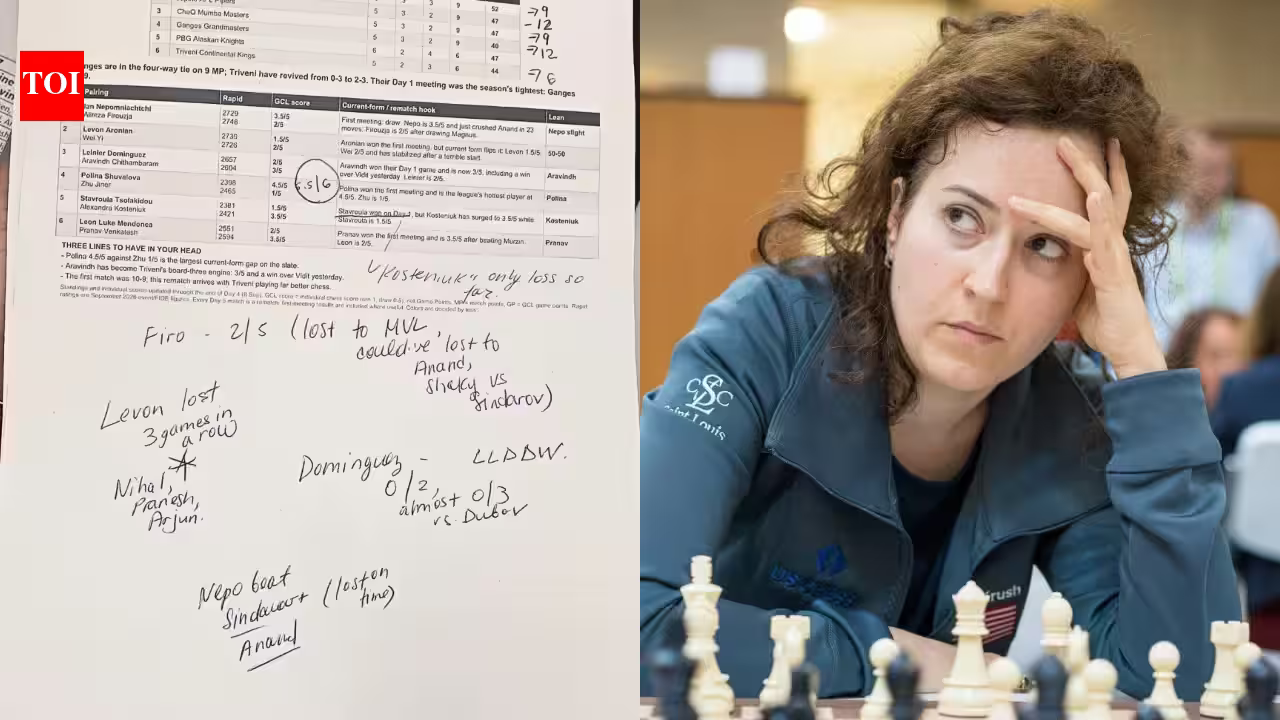
As the first and only woman to earn the Grandmaster (GM) title while representing the United States, Krush has become the bedrock of the national team. Now competing in her record-extending 13th Chess Olympiad in Samarkand, the 42-year-old icon remains as vital to the team’s identity as she was when she first emerged as an 11-year-old prodigy.
A Legacy Forged in Brooklyn
Born in Odesa, Soviet Ukraine, Krush’s journey began in Brooklyn at the age of five. Guided by her father, a high-quality amateur player, she quickly accelerated through the ranks of American chess. By age 14, she secured her first U.S. Women’s Championship title in 1998—a record that still stands today as the youngest victory in the event’s history.
Her career has since transcended simple board play. In recent years, Krush has emerged as a respected voice in the broadcasting booth, notably during the Global Chess League (GCL). Her participation in the inaugural 2023 season, where she shared a roster with Magnus Carlsen, served as a career highlight.
“It was a chance to play in the same team as Magnus, and it was like a very special opportunity,” Krush reflected. However, she candidly admitted the accompanying pressure of playing alongside the world’s best. “You don’t want to look like the fool on the team with Magnus. There are two sides to that coin.”
The Balancing Act: Commentary vs. Competition
Krush’s transition into commentary has been organic, fueled by a genuine passion for the game. Yet, it has come at a physical and mental cost. Ahead of the current Olympiad in Uzbekistan, Krush spent her time in India balancing grueling commentary shifts in Bengaluru with the necessity of preparing for one of the most demanding tournaments in the world.
“Honestly, I have not had a chance to do much chess for myself at all,” she admitted, describing long days that began at sunrise. Despite the exhaustion, Krush refuses to treat the trade-off as a burden. She spent the months leading up to her trip to India grinding through tournament play to ensure her form remained sharp, leaving the broadcasting arena almost immediately after the league concluded to catch her flight to Samarkand.
Her approach to commentary is as analytical as her approach to a Sicilian Defense. She focuses on research and context-building, noting that while general history is useful early on, the “best part” is the fluid, real-time focus on how a tournament unfolds. For Krush, the challenge isn’t in the chess itself—which she finds “easy” to discuss—but rather in the “filler” time when the games conclude.
A New Era for U.S. Women’s Chess
As she leads a fresh-faced U.S. squad in Samarkand featuring Carissa Yip, Alice Lee, Rose Atwell, and Tatev Abrahamyan, Krush views the current generation of American players with immense pride. She notes that the infrastructure surrounding the sport has undergone a complete metamorphosis since her own rise to prominence.
“It’s much more competitive,” Krush remarked. “We didn’t have the kinds of prizes we have at the US championships 25 years ago. We didn’t have an American Cup. We didn’t have a Cairns Cup. We didn’t have the Cairns Queen chess award for the next woman who’s gonna become a grandmaster in America.”
This surge in resources has created a talent pipeline that is beginning to pay dividends. With several young players closing in on the 2400-rating threshold, the U.S. team is no longer reliant on a single star. Instead, they operate as a blend of experience—anchored by veterans like Krush and Abrahamyan—and the raw, rising potential of the next generation.
Looking Toward the Future
Despite a challenging start in Uzbekistan, which included a difficult loss to India that left the team in 14th place heading into the rest day, Krush remains characteristically level-headed. She has spent her life navigating the pressures of the elite circuit, and she offers no “secret sauce” to those looking to follow in her footsteps.
Whether she is sitting across from an opponent or sitting behind a microphone, Krush’s philosophy remains simple: “Anyone who loves chess and is pretty good at it can do it.”
As the 46th Chess Olympiad continues, the focus for the U.S. team will be on regaining their momentum. For Krush, it is just another chapter in a storied career that has seen her go from a young immigrant girl in Brooklyn to the most decorated female player in American history. Regardless of the outcome in Samarkand, her influence on the sport—both on the board and through the screen—remains as powerful as ever.
Disclaimer: This content is auto-generated for informational purposes only.
Source: Read Original News