









The Economic Implications of Prolonged Banking Strikes
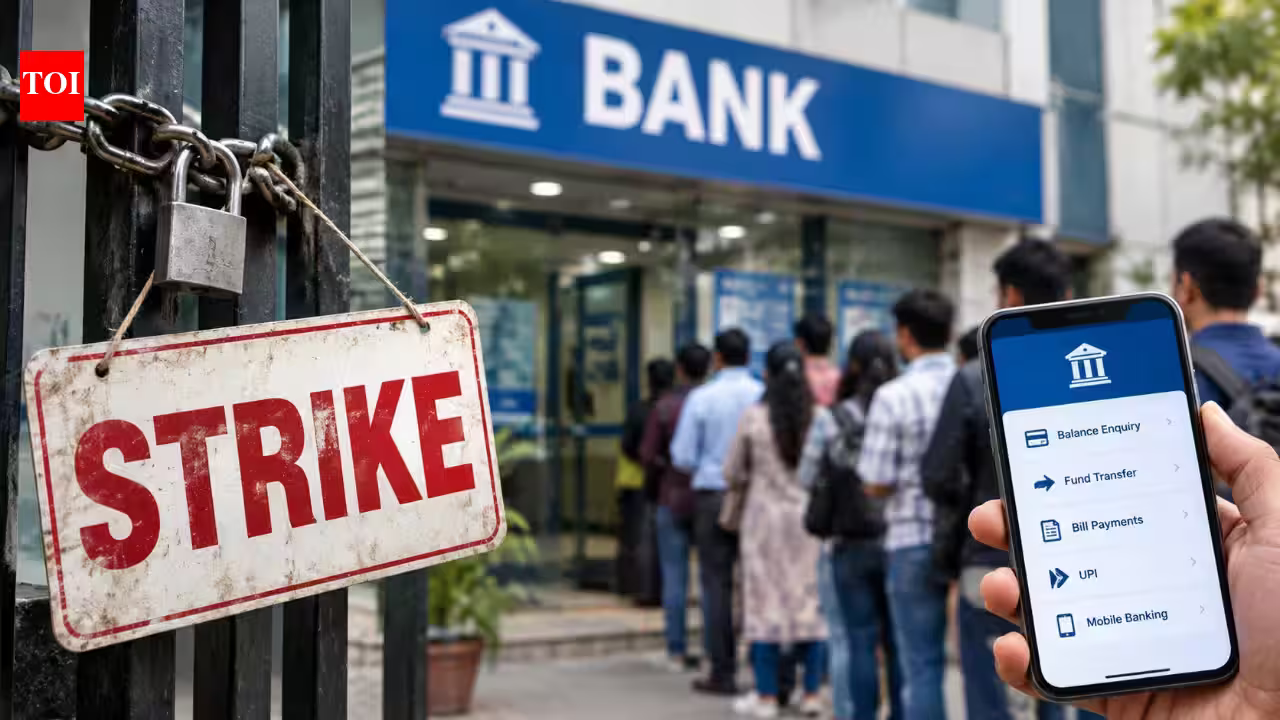
The announcement of a three-day nationwide strike by the United Forum of Bank Unions (UFBU) marks a significant escalation in the ongoing dialogue between the banking workforce and the Indian government. When such industrial action coincides with month-end closing—a period critical for financial reconciliation, tax processing, and treasury management—the resulting operational bottleneck extends far beyond the bank branches themselves. For the broader Indian economy, a five-day effective shutdown, including the preceding weekend, creates a ripple effect that touches everything from retail consumer transactions to the complex machinery of corporate liquidity.
The timing of this strike is particularly sensitive because September 30 serves as the end of the second quarter and the half-yearly closing date for financial institutions. During this period, banks are heavily engaged in provisioning for non-performing assets, reconciling inter-bank settlements, and preparing balance sheets for regulatory reporting. A complete cessation of work during these three days forces a compression of essential financial tasks into a shorter timeframe, increasing the risk of technical glitches or processing delays once operations resume. For small and medium enterprises (SMEs) and large corporations, this disruption threatens to stall payroll cycles, vendor payments, and supply chain settlements, illustrating that labor-management disputes in the banking sector carry substantial macroeconomic consequences.
Understanding the Core Demands of the Workforce
At the heart of the current conflict is the persistent demand for the implementation of a five-day work week. Currently, most bank employees in India follow a schedule that requires working on specific Saturdays. The UFBU, representing a vast majority of the banking workforce, argues that a five-day week is standard in most modern corporate and international banking sectors and is essential for improving employee productivity and mental well-being. This request is not isolated; it is bundled with broader grievances, including the demand for a uniform dearness allowance formula for pensioners and the option to shift from the National Pension System back to the defined-benefit structure of the Old Pension Scheme.
The government, represented by the Ministry of Finance and the Department of Financial Services, maintains that while these concerns are under consideration, they involve complex stakeholder consultations. The administrative challenge lies in balancing the workforce’s desire for improved working conditions against the government’s obligation to ensure that essential public services remain accessible. The government’s stance has been that strikes are counterproductive, asserting that they ultimately diminish the trust of the banking public and hinder the efficiency of the financial system. This creates a stalemate where the unions view the strike as the only leverageable instrument to force a concrete timeline for policy changes, while the government views the strike as an unnecessary obstruction to public service.
Assessing the Resilience of Digital Banking Infrastructure
The rapid digitization of the Indian financial sector, led by the proliferation of the Unified Payments Interface (UPI) and robust net banking platforms, provides a crucial safety net for individual consumers. In previous instances of industrial action, the shift toward digital channels has significantly mitigated the total paralysis of financial services. ATMs, mobile banking applications, and online fund transfer portals typically operate independently of branch-level staff, allowing essential retail transactions to continue uninterrupted. This digital shift has changed the nature of bank strikes in India; while physical branches may remain closed, the systemic collapse of consumer finance is no longer an automatic outcome.
However, the resilience of digital infrastructure does not apply uniformly across all banking segments. High-value corporate transactions, cheque clearances, and complex trade finance requirements still rely heavily on manual verification and human intervention within the bank branches. Therefore, while a retail customer can continue to pay utility bills or make grocery purchases via UPI, the institutional sector—which relies on high-volume, verified transactions—faces genuine risk. Businesses that require physical branch interaction for international transfers or document-based approvals will find their operations significantly hampered, highlighting that even in a digitized era, the physical banking infrastructure remains a foundational pillar for large-scale commerce.
Strategic Planning for Businesses and Consumers
To navigate the potential five-day disruption, proactive planning has become a necessity for both individual account holders and business owners. The guidance issued by public sector banks encouraging customers to utilize digital channels underscores the reality that branch-based services will be inaccessible. For households, this means ensuring that scheduled payments, such as EMI installments or utility bills, are either automated or scheduled well before the strike period. Relying solely on the availability of cash at ATMs is also a strategy that requires caution, as cash replenishment services often experience logistical delays during widespread industrial action.
For businesses, the advisory is more stringent. Organizations should aim to complete all high-value treasury operations and documentation-heavy tasks during the working days preceding the strike. Furthermore, treasury teams are advised to monitor their liquidity positions and ensure that sufficient funds are maintained to cover potential delays in cheque clearing or fund transfers. By front-loading administrative financial tasks, enterprises can insulate themselves from the immediate volatility caused by the strike. This period serves as a practical reminder of the importance of financial preparedness and the degree to which modern economic activity remains dependent on the seamless functioning of the banking sector.
The Future of Industrial Relations in Banking
The recurrent nature of these strikes points toward a deeper, structural need for a more efficient dispute resolution mechanism within the Indian banking industry. As the sector evolves to match global standards of service, the labor-management relationship must also modernize. The reliance on strikes as a primary bargaining tool creates a recurring cycle of uncertainty that affects public sentiment and market stability. Future stability may depend on developing a framework where consultative dialogue between the Indian Banks’ Association (IBA) and the union representatives produces binding, time-bound agreements before industrial action becomes the necessary recourse for employees.
Ultimately, the goal for all stakeholders is to harmonize the legitimate aspirations of the workforce with the requirement for consistent, reliable public banking. As India continues to position itself as a global financial hub, the frequency and duration of service interruptions will be closely monitored by both domestic participants and international investors. Moving forward, the successful navigation of this impasse will require a shift from reactive crisis management toward proactive policy alignment. Ensuring that the concerns of the workforce are addressed through structured, transparent, and timely communication is essential to prevent future disruptions and maintain the continuity of the financial services that underpin the nation’s economic progress.
Disclaimer: This content is auto-generated for informational purposes only.
Source: Read Original News