





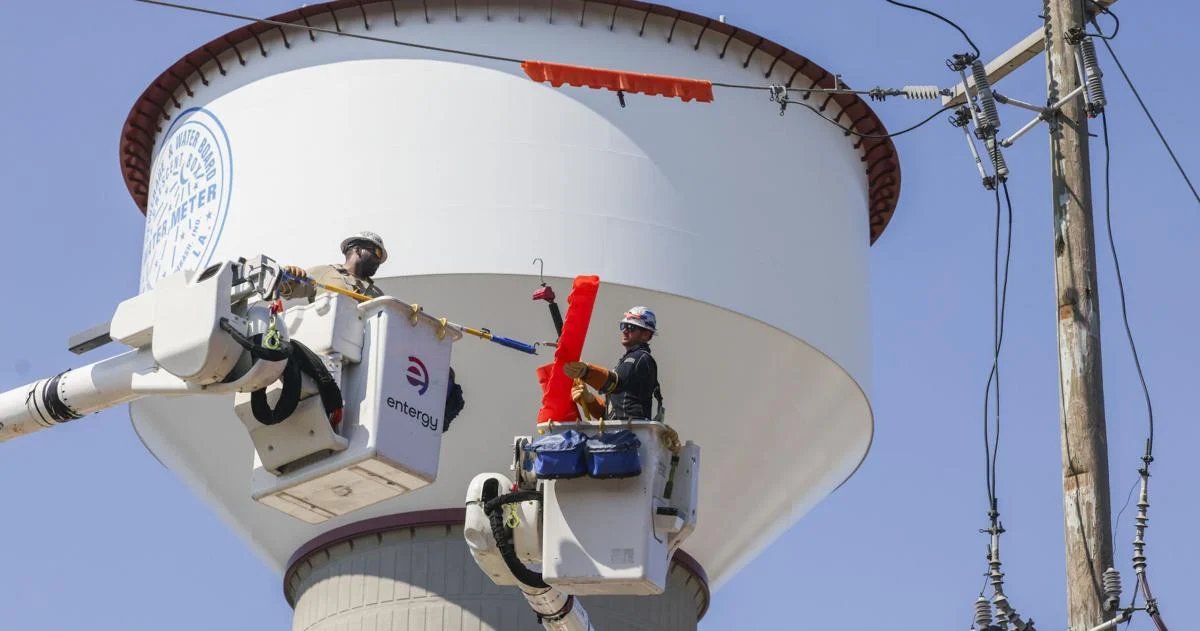
NEW ORLEANS — In a significant step toward fortifying the Gulf Coast’s power infrastructure, federal and state officials gathered at Harrell Park on Tuesday, September 22, 2026, to unveil a comprehensive grid-hardening project. Katie Jereza, Assistant Secretary for the U.S. Department of Energy’s Office of Electricity, joined Louisiana Department of Conservation and Energy Secretary Dustin Davidson and Entergy New Orleans President and CEO Deanna Rodriguez to announce a collaborative initiative aimed at integrating cutting-edge technology to withstand increasingly volatile weather patterns.
The project, which represents a massive investment in utility resilience, prioritizes the deployment of advanced sensor networks and automated distribution systems. By leveraging high-fidelity data analytics, the consortium plans to reduce recovery times following major storms, which have historically crippled the region’s aging electrical grid.
Integrating AI into Power Management
A central pillar of this new initiative is the integration of artificial intelligence and machine learning models into the grid’s operational framework. Officials confirmed that the project will utilize AI-driven diagnostic tools to predict equipment failure before it leads to widespread outages. By processing real-time telemetry from smart meters and line sensors, the system can identify “weak links” in the distribution network with unprecedented accuracy.
“We are moving from a reactive model to a proactive, data-informed ecosystem,” Jereza noted during the press briefing. “By using machine learning algorithms, we can simulate storm impacts on specific grid segments, allowing crews to reinforce critical infrastructure before a hurricane even makes landfall.”
This technological shift mirrors trends seen across the broader tech industry, where predictive maintenance has become a gold standard for managing complex, large-scale systems. The implementation involves a heavy reliance on high-speed data processing, similar to the infrastructure supporting cloud computing and real-time analytical services.
Modernizing Infrastructure with Google Cloud Partnerships
While the hardware upgrades involve physical reinforcements—such as stronger utility poles and undergrounding cables—the digital layer of the project relies on advanced software architectures. Industry insiders suggest that the collaborative project will lean on cloud-based computing platforms, similar to those provided by Google Cloud, to manage the immense flow of diagnostic data generated by the grid’s new sensor array.
By utilizing sophisticated data pipelines and machine-learning operations (MLOps), utility providers can create “digital twins” of the New Orleans power network. These virtual replicas allow engineers to test how the grid responds to different environmental stressors, such as extreme heatwaves or heavy flooding, without risking actual downtime. The use of robust, scalable cloud infrastructure is essential for housing these large datasets and ensuring that the AI models remain current as weather patterns evolve.
Tech-Driven Sustainability and Reliability
The push for a “smarter” grid also aligns with the Department of Energy’s long-term goals of decentralized power. The integration of distributed energy resources (DERs)—such as solar panels and battery storage—will be managed by the same intelligent software layer being installed in this project.
“This is not just about keeping the lights on; it is about building a foundation for the energy transition,” Rodriguez explained. “Our digital infrastructure must be as resilient as our physical infrastructure.”
As the project moves into its primary phase, New Orleans is expected to serve as a national case study for how legacy cities can modernize their electrical systems. By merging traditional utility engineering with the latest advancements in AI and data analytics, the Department of Energy and its partners are betting on technology to provide the stability that residents of the Gulf Coast have long demanded. As weather patterns become more unpredictable, this marriage of silicon and high-voltage power lines represents the new frontier in public utility infrastructure, positioning New Orleans at the forefront of a global shift toward resilient, tech-enabled urban living.
Disclaimer: This content is auto-generated for informational purposes only.
Source: Read Original News