







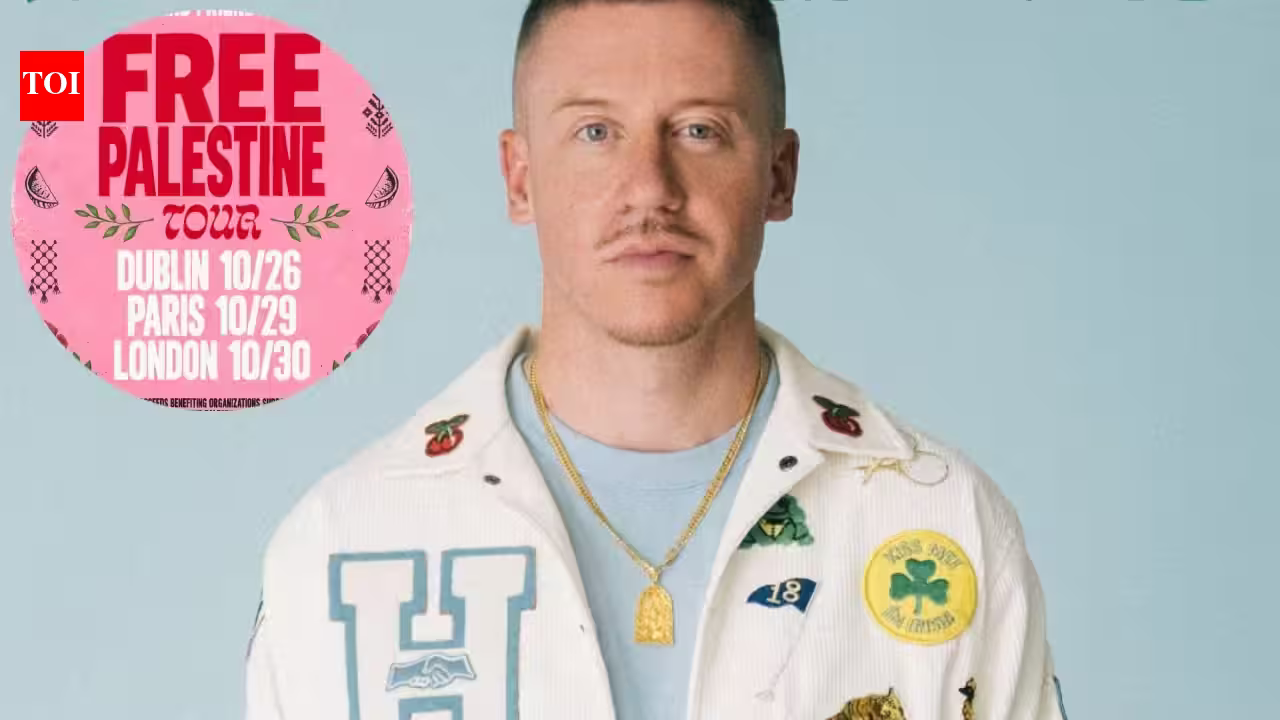
The music industry is currently witnessing a high-stakes collision between corporate oversight and artistic expression. When Macklemore announced his “Free Palestine” tour this week—a defiant response to his sudden removal from Ed Sheeran’s global trek—he wasn’t just announcing dates; he was drawing a line in the sand regarding the role of artists in global politics.
After being dropped from Ed Sheeran’s high-profile Loop Tour, the Grammy-winning rapper is pivoting to a platform entirely of his own making. The tour, which kicks off in Europe next month, serves as both a rebuke to the promoters who cut his set and a direct conduit for humanitarian aid. With a firm start in Dublin on October 26, followed by stops in Paris and London, Macklemore is proving that for some, the message is far more important than the stature of the stage.
## From Stadium Opener to Independent Catalyst
The transition from the massive venues of the Loop Tour to his own intimate, high-impact shows signifies a shift in Macklemore’s career strategy. The rapper, known for his politically charged lyrics and advocacy, found himself at the center of a firestorm when his planned appearances were scrapped. The fallout was swift and unexpected, triggering a chain reaction that saw other supporting acts walk away from Sheeran’s tour in solidarity.
Sheeran, for his part, has attempted to distance himself from the controversy, characterizing the decision to drop the rapper as a move by the promoter, not a personal mandate. However, the optics remain difficult to navigate. In the modern era of the “touring industrial complex,” the power dynamic between artists, billionaire venue owners, and corporate promoters has rarely been this transparently fraught. For Macklemore, the exclusion wasn’t just a scheduling conflict—it was an invitation to strike out on his own terms.
## The Financials of Activism
Perhaps the most striking aspect of the “Free Palestine” tour is its administrative architecture. This isn’t a traditional commercial venture designed to pad a bank account. Instead, every cent of profit is destined for a massive list of aid organizations. The list reads like a comprehensive directory of relief efforts: Anera, Glia, the Gaza Soup Kitchen, Taawon, HEAL Palestine, the Palestinian Youth Movement, Jewish Voice for Peace, Medical Aid for Palestinians, the Institute for Middle East Understanding, the Palestine Children’s Relief Fund, and UNRWA USA.
Beyond the ticket revenue, Macklemore has pledged a staggering $1 million from his own net earnings to support these groups. By tying his brand so explicitly to these organizations, he is attempting to operationalize his activism. He isn’t just speaking about the crisis; he is effectively turning his touring footprint into a humanitarian fundraising engine. This model challenges the industry standard where artists generally avoid “controversial” stances to ensure smooth relations with venues and corporate sponsors.
## Challenging the “Billionaire Class”
Macklemore’s social media statement accompanying the tour announcement was nothing short of a manifesto. In a post that garnered significant attention, he addressed the “collective awakening” surrounding Palestinian liberation. He took a direct shot at the influence of the billionaire class in the arts, specifically referencing Robert Kraft, the owner of the New England Patriots and the Gillette Stadium, as the force behind his removal.
“When the billionaire class can decide which voices are allowed on stage and which ones are too dangerous to hear, everyone should be paying attention,” the rapper noted. This statement hits on a growing sentiment among a younger generation of listeners who increasingly expect their favorite artists to be more than just entertainers. They are looking for ideological alignment. By framing his removal as an act of censorship, Macklemore is positioning himself as an advocate for artistic autonomy—a move that likely secures his relationship with his core fanbase while simultaneously infuriating the traditional gatekeepers of the concert industry.
## The Ripple Effect Across the Touring Industry
The fallout from the Loop Tour controversy has had a palpable impact beyond just one rapper’s schedule. When additional acts began dropping out of Sheeran’s dates, it signaled a potential shift in how artists negotiate their tour contracts. If the industry moves toward a model where outspoken political opinions can lead to the termination of lucrative support slots, we may see a bifurcated touring circuit: one that remains “neutral” to appease corporate interests, and one that is explicitly movement-based.
Macklemore’s ability to sell out venues like the 3Arena in Dublin or the OVO Arena Wembley while maintaining an overtly political agenda will be the ultimate litmus test. Can an artist survive, and even thrive, when they are effectively blacklisted by the mainstream stadium circuit? History suggests that controversy often fuels popularity, but this is a specific type of friction that reaches deep into the wallets of those who own the infrastructure of modern live music.
## What Lies Ahead
As the “Free Palestine” tour prepares to launch, the industry is watching closely. With U.S. dates still to be announced and an artist presale already creating high demand, it is clear that there is a significant audience hungry for the kind of defiant, agenda-driven performance art that Macklemore is currently peddling.
The rapper’s move is a high-stakes gamble. By moving away from the safety and scale of Ed Sheeran’s tour and into the volatile world of direct, aid-focused activism, he has essentially burned the bridge that once led him to major stadiums. But in doing so, he has created a narrative that transcends music charts and streaming numbers. Whether this becomes a blueprint for other artists remains to be seen, but one thing is certain: the conversation about who owns the stage—and what they are allowed to say upon it—has only just begun. For now, Macklemore is ensuring that the discourse won’t be silenced, even if it has to be shouted from a different set of speakers.
Disclaimer: This content is auto-generated for informational purposes only.
Source: Read Original News