









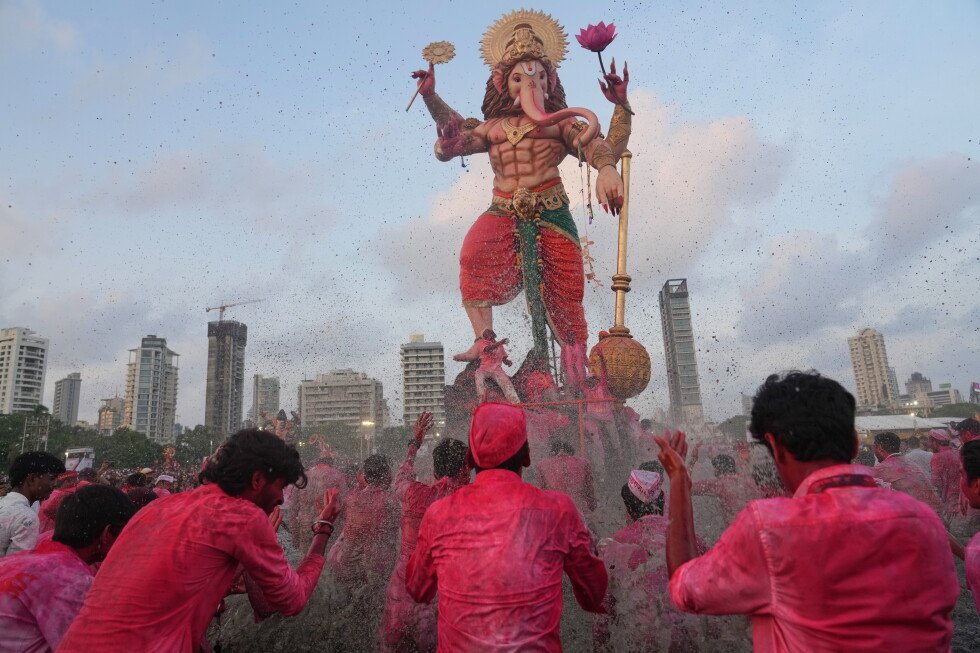
Ganesh Chaturthi: Millions Across India Welcome the Lord of New Beginnings
Across the length and breadth of India, the atmosphere is charged with vibrant chants of “Ganpati Bappa Morya,” as the nation ushers in Ganesh Chaturthi. The 10-day festival, dedicated to Lord Ganesha, the elephant-headed deity revered as the remover of obstacles and the god of wisdom and prosperity, began today with immense fervor and spiritual devotion.
From the bustling streets of Mumbai, where the celebrations reach a fever pitch of grandeur, to the quiet, traditional households in the southern states, millions of devotees have welcomed Ganesha idols into their homes and makeshift community marquees known as pandals. The festival, which marks the birth of Lord Ganesha, serves as a powerful unifying force, bringing together people across diverse communities to celebrate faith, creativity, and public spirit.
The Spirit of Devotion and Community
In cities like Mumbai, Pune, and Hyderabad, the scale of the celebrations is unparalleled. Elaborate pandals have been constructed, housing artistically crafted idols that range from a few inches to over 20 feet in height. These temporary shrines serve as centers for cultural performances, morning and evening aartis (prayers), and communal feasts.
“Ganesh Chaturthi is not just a festival; it is an emotion that binds our society together,” said Rajesh Kulkarni, a resident of central Mumbai, as he prepared for the Sthapana (installation) ceremony. “The process of bringing the idol home, decorating the space with flowers, and offering his favorite delicacies like modaks brings a sense of peace and optimism into our lives for the entire year ahead.”
Across India, market stalls have been bustling for days, filled with aromatic incense, fresh garlands of marigolds, and various traditional sweets. The modak, a steamed or fried dumpling filled with coconut and jaggery, remains the quintessential offering, believed to be the deity’s most beloved treat.
A Shift Toward Sustainable Celebrations
While the religious fervor remains constant, a significant transformation is visible in how the festival is being observed this year. There is a growing emphasis on eco-consciousness, with an increasing number of devotees opting for “green” Ganesha idols. These idols are crafted from natural clay, papier-mâché, and organic colors rather than the traditional Plaster of Paris (PoP), which often contains toxic chemicals that harm water bodies during the ritual immersion.
Environmental activists and local municipal corporations have been actively campaigning for the use of artificial immersion tanks to prevent the pollution of public beaches and rivers. Many households have also started adopting the tradition of “home immersion,” where the idol is submerged in a large bucket of water, allowing the clay to dissolve back into the earth, symbolizing the cycle of creation and dissolution.
The Cultural Tapestry
Beyond the rituals, Ganesh Chaturthi remains a profound celebration of arts and culture. The festival acts as a stage for local artisans, traditional musicians, and dancers who perform in processions leading up to the final day of Visarjan (immersion).
As the festivities continue over the next ten days, the streets will witness thousands of processions characterized by rhythmic drumming, traditional dances, and unwavering devotion. For millions, this period is a time for introspection, new beginnings, and seeking the blessings of the Lord of Wisdom to navigate the challenges of the coming year. As the nation celebrates, the message remains clear: the spirit of Ganesh Chaturthi is one of joy, inclusion, and the enduring strength of faith.
Disclaimer: This content is auto-generated for informational purposes only.
Source: Read Original News