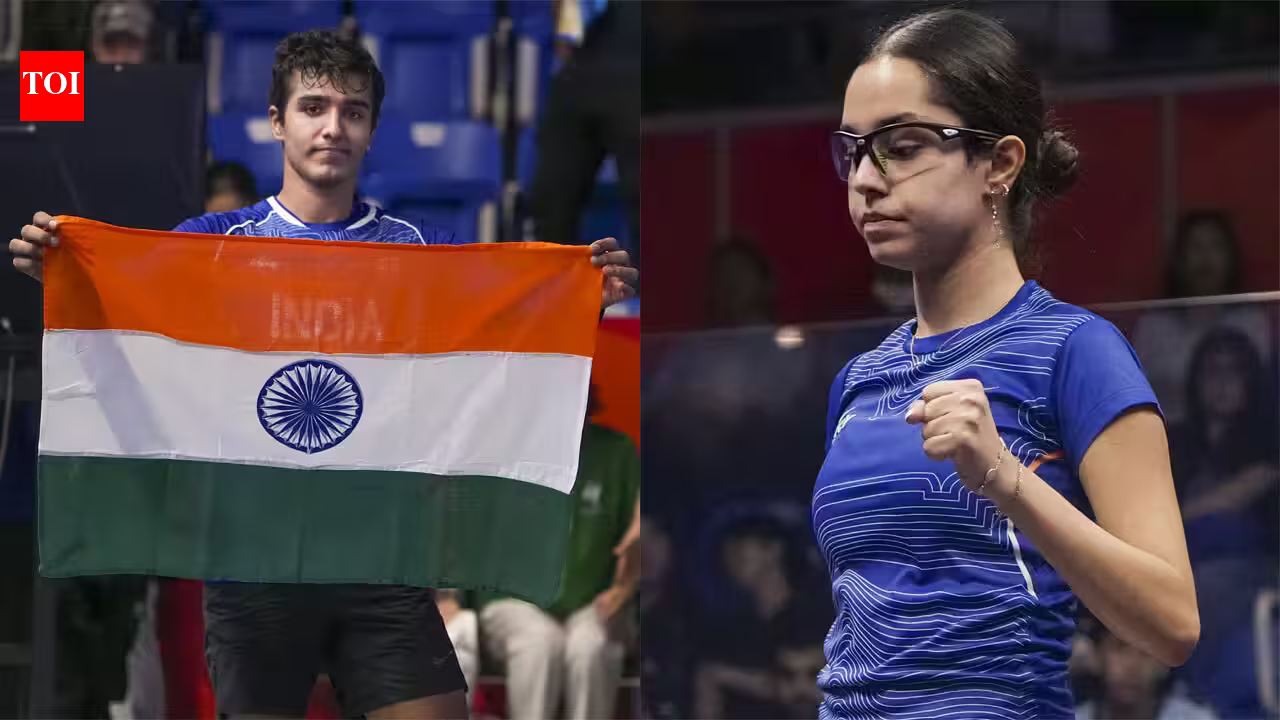







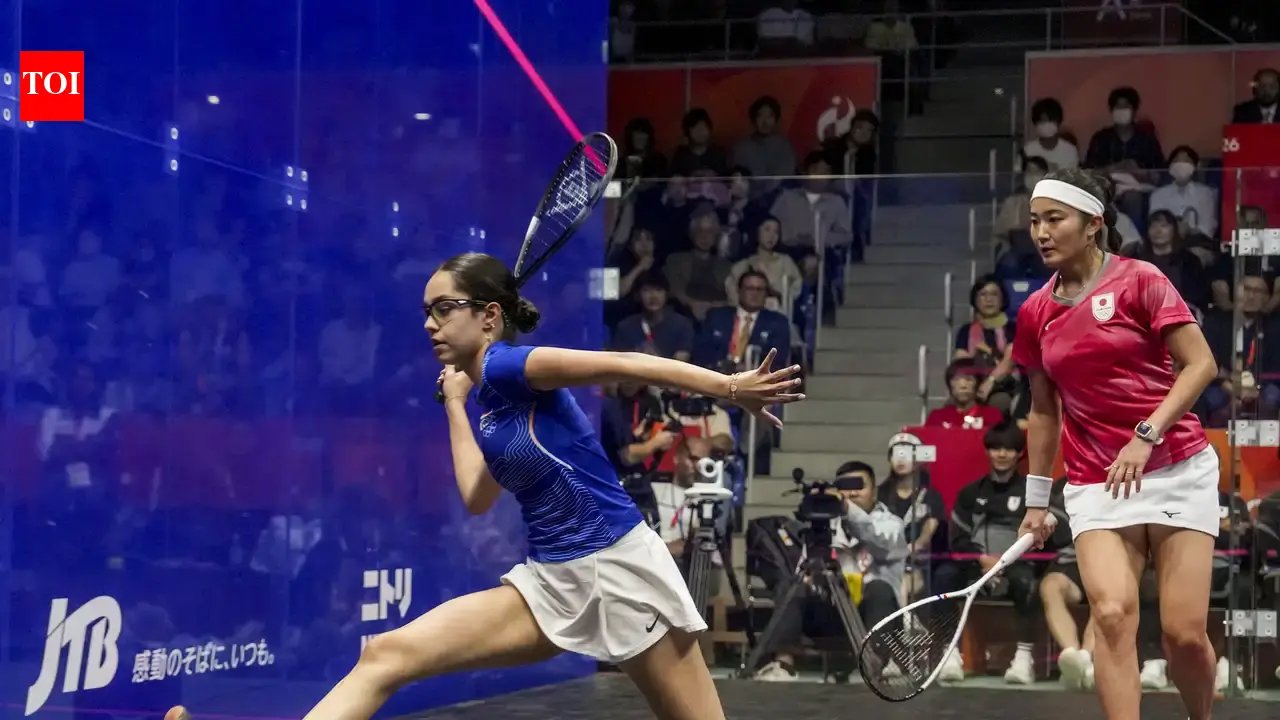
NAGOYA — The Nagoya Kinjo-Futo Arena bore witness to a masterclass in mental fortitude and tactical resurgence on Saturday as Indian squash sensation Anahat Singh orchestrated a stunning comeback to seal her place in the Asian Games women’s singles final. In a performance that defied her youth, the 18-year-old junior world champion erased a two-game deficit against Japan’s formidable world No. 6, Satomi Watanabe, to keep her Olympic dreams firmly within her grasp.
The semifinal clash, which lasted 51 minutes, was a rollercoaster of momentum, tension, and sheer physicality. With the added incentive of an automatic qualification spot for the 2028 Olympic Games—awarded to the gold medallists of the Asian Games singles event—the stakes could not have been higher.
## A Turnaround for the Ages
Anahat’s path to the final appeared treacherous early on. Despite pushing Watanabe in the opening exchanges, the Indian teenager found herself trailing 0-2 after dropping a closely contested first game 9-11 and a heart-wrenching second game 11-13. The match was briefly halted when a mid-court collision resulted in Anahat biting her tongue, requiring medical intervention.
However, if there were any concerns that the injury or the deficit would break her spirit, Anahat answered with immediate effect. Down 8-10 in the third, she clawed back with four consecutive points to keep the match alive. From there, the momentum shift was palpable. Anahat began to dictate the pace, using surgical drop shots and superior court coverage to dismantle the Japanese star’s defense.
She surged through the fourth game 11-6, and by the time the deciding fifth game arrived, it was essentially one-way traffic. Anahat dominated 11-3, completing a 9-11, 11-13, 12-10, 11-6, 11-3 victory that will surely go down as the defining moment of her nascent career.
Reflecting on the psychological turning point, Anahat revealed that the Olympic carrot was the primary driver of her second-half surge. “I do focus on that [Olympic qualification]. It’s something that I think of more as motivation rather than pressure,” she said. “When I was losing, the first thought that came into my mind was, ‘You can’t let the Olympic spot go by so quickly, and you really need to push for it.’ That kept replaying in my head.”
## The Final Hurdle Awaits
With her ticket to the gold-medal match punched, Anahat now prepares for a grueling showdown against Malaysia’s world No. 5, Sivasangari Subramaniam. Sivasangari reached the final by overcoming Hong Kong’s Chan Sin Yuk in a confident display.
Anahat, ever the realist, remains focused on the task at hand. “I still have a match left. Sivasangari is a great player; I’ve played her numerous times before. I’m just excited to get on the court and see what I can do,” she added.
## Abhay Singh Charges into Men’s Final
While Anahat provided the dramatics, her compatriot Abhay Singh delivered a clinical, professional performance to secure his spot in the men’s singles title clash. Facing Pakistan’s Muhammad Irfan, Abhay looked to be in total command, closing out the contest in a brisk 35 minutes with a 11-3, 12-10, 11-6 victory.
Abhay, who has already tasted success in Nagoya with a gold in the men’s team event and a bronze in the mixed doubles, emphasized that the simplicity of the scoreline belied the complexity of the match. “It was not an easy one,” Abhay noted. “I think I did well to make it look easy, but respect to your opponent. No Asian Games match is going to come easy.”
Addressing the inevitable intensity of an India-Pakistan encounter, Abhay maintained a measured perspective. “I think all the people listening to you love the India-Pakistan stuff, but for us, it’s just another opponent, just another match. Too many people put too much work into us; you have to come in and do them justice.”
Abhay is now set for a titanic clash against Malaysia’s NG Eain Yow, who earned his final spot by defeating Zaman Noor of Pakistan.
## The Road to 2028
As Sunday’s finals loom, the atmosphere in Nagoya is electric. For both Anahat and Abhay, the final represents more than just a continental title; it is a gateway to the pinnacle of global sports. With both athletes playing with a combination of tactical maturity and high-octane aggression, Indian squash finds itself at a historic crossroads.
Whether Anahat’s resilience or Abhay’s composure proves enough to overcome the Malaysian challenge, one thing is certain: both players have served notice that they are ready for the grandest stage of all. The gold medal match is not just a battle for regional supremacy—it is a pursuit of Olympic destiny.
Disclaimer: This content is auto-generated for informational purposes only.
Source: Read Original News