

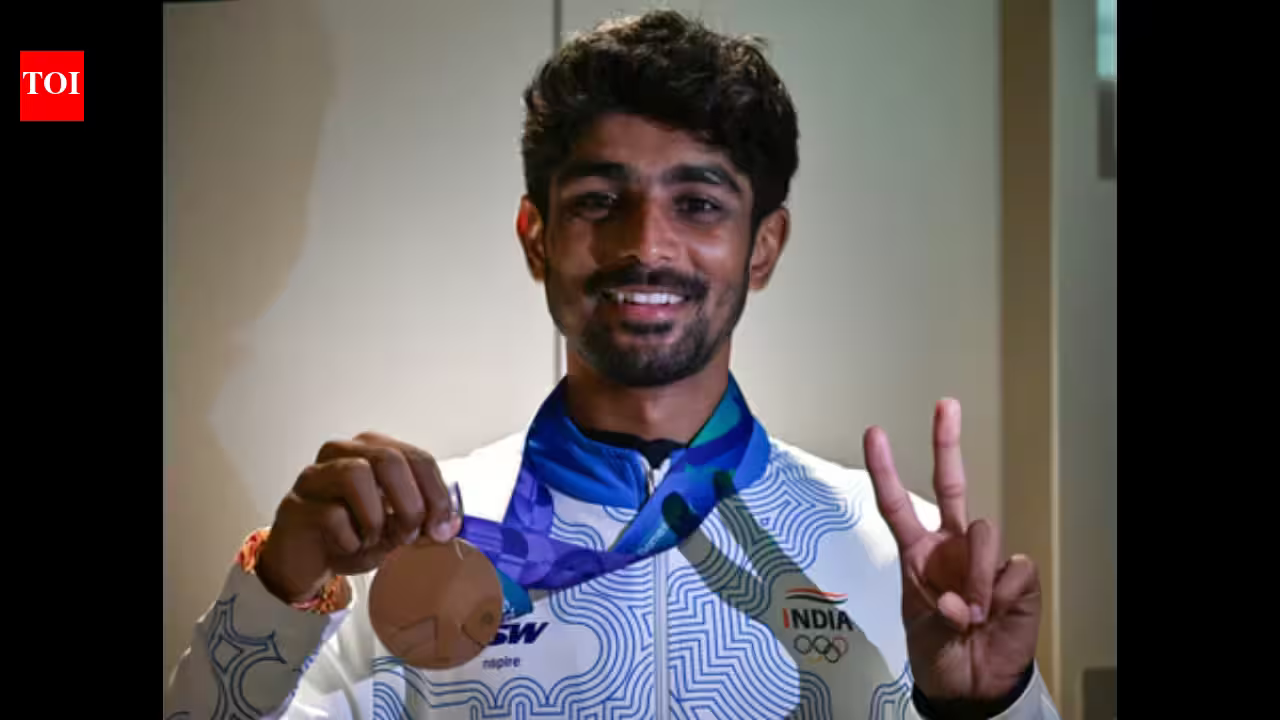





New Delhi is buzzing with a renewed sense of ambition following a landmark performance at the 2026 Aichi-Nagoya Asian Games. Jay Meena, the man who captured the nation’s first-ever soft tennis medal, has set his sights far beyond the podium in Japan. With the 2030 Commonwealth Games slated for Ahmedabad, Meena has issued a bold, rallying cry to the sporting world: if soft tennis is integrated into the Commonwealth program, the gold medals will stay firmly in India.
This isn’t merely a celebratory declaration from an athlete coming off a career-defining win. It represents a strategic shift for the Amateur Soft Tennis Federation of India (ASTFI), which is now pivoting its focus toward capitalizing on the 2030 home-turf advantage.
## A Historic Bronze Changes the Conversation
For years, soft tennis has operated in the shadow of its more mainstream counterpart, lawn tennis. Despite receiving government recognition and support from the Sports Authority of India (SAI), the sport struggled to capture the public imagination. Meena’s bronze medal has changed that narrative overnight.
“This is definitely a historical moment for India,” says Harshang Khodadhara, Special Advisor to both the ASTFI and the International Soft Tennis Federation (ISTF). For Khodadhara, this victory is the culmination of a project that began in 2002. “We participated in four Asian Games and finally secured a medal in the fourth. We don’t want to stop at bronze. Our next target is silver or gold. We want to win a medal in the singles competition. I am not being arrogant here—Japan and South Korea are at a different level—but with the right government support, we will beat them.”
The path to the podium was far from easy for Meena, who battled through a debilitating hip injury, a bout of typhoid, and the crushing weight of self-doubt to secure his place in history. His success has provided the ASTFI with the leverage it needs to push the sport into the mainstream.
## Why Ahmedabad 2030 Matters
The federation’s long-term vision is the inclusion of soft tennis in the 2030 Commonwealth Games. While the sport is a juggernaut in East Asia, its Commonwealth presence is currently in its infancy. However, with established federations already operating in India, Pakistan, Bangladesh, England, and Australia, the foundation for a successful bid is present.
Meena believes that the key to Commonwealth recognition lies in wider European adoption. “If European countries adopt this game, the chances of entering the Commonwealth Games become very good,” he noted. “And if it is included, whether it’s me or another Indian athlete, all the gold will remain in India.”
Khodadhara is equally optimistic about India’s dominance should the sport make the cut. “India is currently the highest-ranked team among Commonwealth nations. If soft tennis is included in 2030, we are assuring that all the gold will stay in India,” he stated, noting that both the Gujarat state government and the central government have been instrumental in the sport’s recent growth.
## Infrastructure: The Silent Advantage
One of the most compelling arguments for including soft tennis in the 2030 Games is the ease of implementation. Unlike many niche sports that require the construction of expensive, specialized venues, soft tennis utilizes the exact dimensions and surfaces of traditional lawn tennis courts.
“From an infrastructure point of view, there is no issue,” Khodadhara explained. “The courts used in tennis are also used in soft tennis.”
Meena reinforced this sentiment, suggesting that India already possesses a vast network of thousands of courts. The challenge for the nation, he argues, is not about building new facilities, but about identifying and nurturing the immense talent currently waiting in the wings.
## Closing the Gap with the Giants
Despite the unbridled optimism, the federation remains clear-eyed about the mountain they have to climb. Japan and South Korea have nearly a century of institutional knowledge, professional leagues, and elite coaching systems behind them. India, with only two decades of organized soft tennis, is clearly the underdog.
The gap, however, is not one of talent, but of international exposure and systemic support. “The biggest gap is international exposure,” says Khodadhara. “The techniques and skills are there. To implement and develop it here, we need more foreign coaches and more opportunities to compete internationally.”
Furthermore, the ASTFI is lobbying for a change in how state sports policies evaluate success. Currently, many states prioritize Olympic disciplines, leaving Asian Games-exclusive sports in a state of administrative limbo.
“In most states, the schemes for international players are only focused on Olympic sports,” Khodadhara pointed out. “Whether that means support for players or cash prizes, you have to remember that the Asian Games are the ‘Olympics of Asia.’ These sports deserve the same level of importance.”
As the dust settles in Nagoya, the message from the Indian camp is clear: the bronze medal was just the opening act. With a clear roadmap, existing infrastructure, and a surging talent pool, the goal is to transform Indian soft tennis into a global powerhouse by the time the Commonwealth Games arrive in Ahmedabad in 2030.
Disclaimer: This content is auto-generated for informational purposes only.
Source: Read Original News