



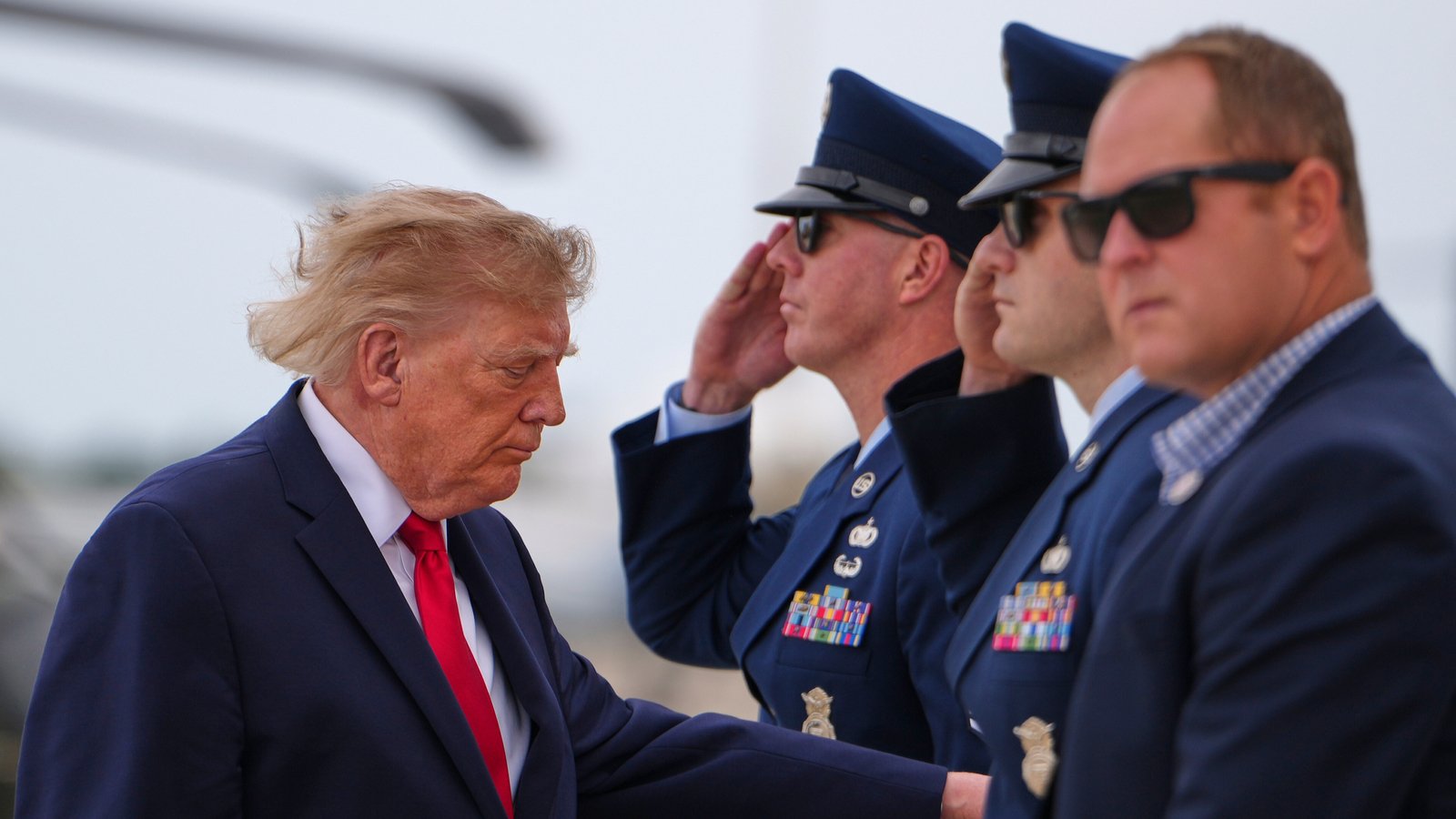
WASHINGTON — U.S. President Donald Trump has officially rejected a high-stakes proposal from Iran that sought to reopen the vital Strait of Hormuz in exchange for significant American concessions. The rejection, delivered by the President outside the White House on Saturday, comes as the Middle East grapples with deepening instability and ongoing regional hostilities.
Tehran’s proposal, outlined by Foreign Minister Abbas Araghchi just hours earlier, offered to lift the blockade on the Strait of Hormuz and resume stalled nuclear negotiations within seven days. In return, Iran demanded that the U.S. terminate its naval blockade of Iranian ports, waive comprehensive sanctions on oil sales, and enforce a ceasefire that would include Lebanon.
President Trump appeared to dismiss the overture outright, signaling a continuation of his “maximum pressure” strategy. Early Saturday, the President took to his Truth Social platform to post a map of the Strait of Hormuz, provocatively relabeling the critical waterway as the “Trump Strait.” The post served as a pointed rebuttal to Iranian suggestions that a deal could provide a political win for the President ahead of the upcoming midterm elections.
The diplomatic impasse arrives as Iranian President Masoud Pezeshkian departs New York following the United Nations General Assembly. While Pezeshkian’s address to global leaders included pushback against Trump’s recent threats to “annihilate” the Islamic Republic, he maintained that Tehran remained theoretically open to diplomacy. However, the tone of the week was tempered by rising military tensions. Saudi Arabia’s military reported the interception of a ballistic missile launched by Iran-backed Houthi rebels in Yemen, which they said targeted the southwestern city of Khamis Mushait. The Gulf Cooperation Council (GCC) swiftly condemned the attack as a “grave escalation,” heightening concerns over regional security.
Meanwhile, questions regarding the stability of the Iranian leadership continue to swirl. President Pezeshkian, who is also a physician, told CBS in an interview set to air Sunday that Supreme Leader Mojtaba Khamenei is in good health despite his prolonged absence from the public eye since the onset of the conflict in February.
The volatility extends into the humanitarian and territorial arenas as well. In the West Bank, Israeli settlers have reportedly intensified efforts to seize natural water springs. Rights groups note that settlers have begun redirecting water to private pools, further restricting access for over 2.8 million Palestinians already facing severe shortages. Simultaneously, Iraq has initiated formal requests for U.S. sanctions exemptions, hoping to facilitate air travel for religious pilgrimages and medical treatment, highlighting the difficult economic position of nations caught in the U.S.-Iran standoff.
As of Saturday afternoon, the White House has maintained that U.S. officials are engaged in “positive and constructive” conversations with mediators, though the President’s public dismissal of Iran’s core demands suggests that any path to de-escalation remains narrow.
Disclaimer: This content is auto-generated for informational purposes only.
Source: Read Original News