





UNGA 2026: Jaishankar warns of global fallout from conflict, slams threats to maritime security
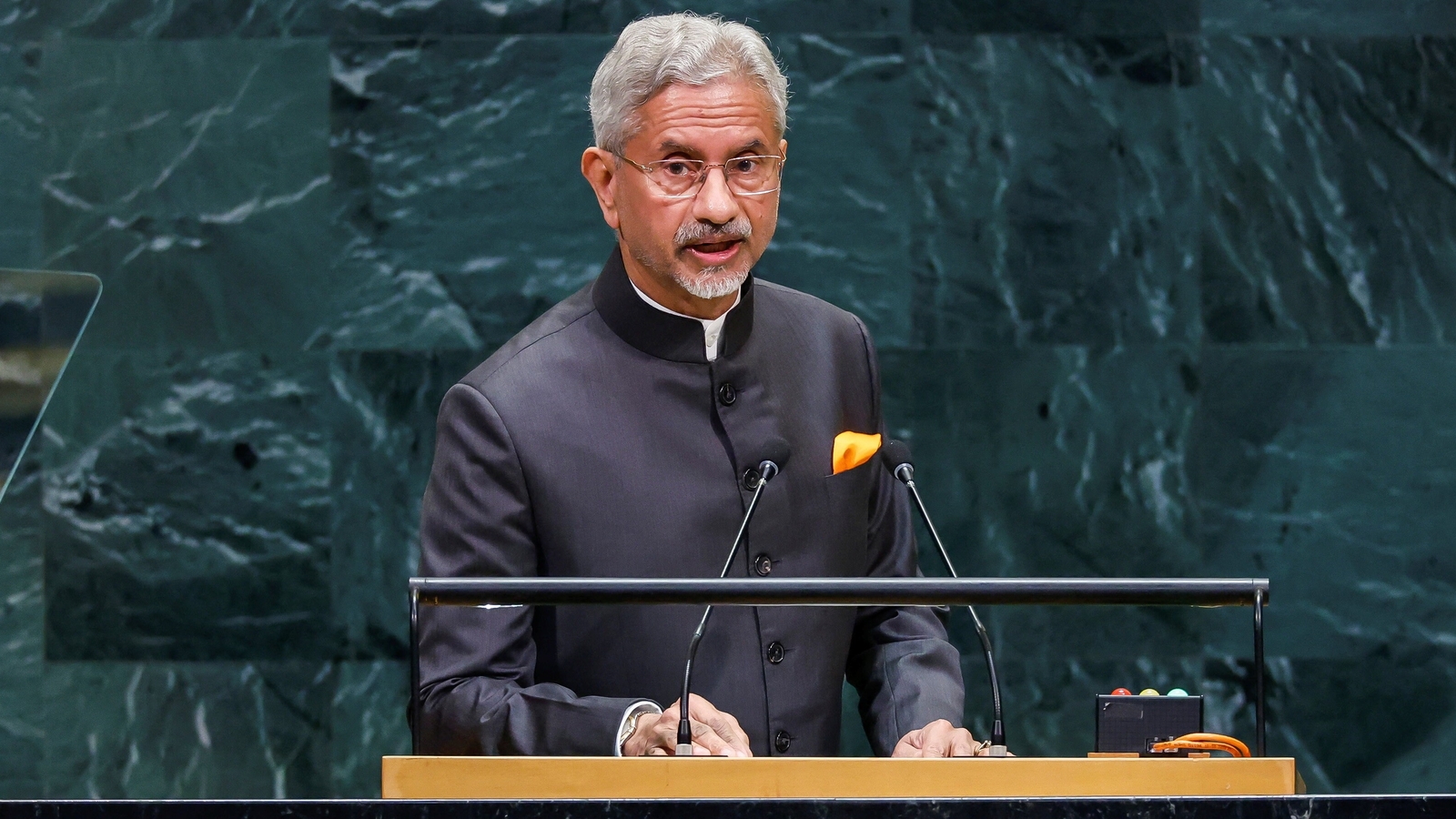
NEW YORK — External Affairs Minister S. Jaishankar issued a stern message to the international community at the 81st United Nations General Assembly (UNGA) on Friday, cautioning that the ripple effects of ongoing global conflicts are disproportionately harming vulnerable nations that have no role in the hostilities.
Drawing upon the core philosophy previously articulated by Prime Minister Narendra Modi, Jaishankar emphasized that the modern world faces a precarious geopolitical environment. He noted that while major powers often drive the agendas of conflict, it is frequently the uninvolved nations that suffer the most severe economic and social consequences.
The burden on the global South
“Countries far from conflicts are being penalised for no fault of theirs. Those most impacted often have the least say,” Jaishankar stated, urging the assembly to adopt a more honest and pragmatic assessment of the current global state of affairs.
The minister’s remarks underscored a recurring theme in India’s foreign policy: the demand for a more inclusive international order where the concerns of the Global South are not sidelined by the localized disputes of more dominant powers. By invoking the Prime Minister’s earlier assertions, Jaishankar signaled that India views the current drift toward instability as a systemic failure that threatens global development goals.
Escalating tensions in the Gulf
A significant portion of the minister’s address was dedicated to the volatile situation in West Asia. Reflecting on the deteriorating security landscape, Jaishankar remarked, “This year, we are witnessing a conflict in the Gulf, one that is exacerbating an already difficult situation. We remain deeply concerned over continuing hostilities.”
The minister expressed grave apprehension regarding the safety of international maritime corridors, specifically mentioning the recent surge in attacks on commercial vessels near the Strait of Hormuz. He characterized these strikes on civilian and merchant shipping as a violation of international norms, stating clearly that such aggression is “simply unacceptable.”
The disruption of these critical supply routes has far-reaching implications for global energy security and commodity prices, which India has consistently identified as a major risk to its domestic economic trajectory.
A call for restraint
In a move that reinforced India’s position as a voice for stability and mediation, Jaishankar called on all stakeholders in the region to prioritize diplomacy over force.
“India calls upon all parties to exercise restraint, de-escalate tensions, ensure protection of civilians, and maintain the uninterrupted flow of energy and commerce,” the minister urged.
This diplomatic outreach comes on the heels of another strong intervention by Jaishankar at the UNGA, where he earlier condemned Pakistan for its state-sponsored activities, labeling the nation a “serial practitioner of terrorism” that continues to misrepresent facts on the international stage.
By balancing his firm stance on regional security threats with a humanitarian appeal for the protection of global supply chains, the External Affairs Minister reaffirmed India’s role as a proactive participant in the international effort to restore order amidst a backdrop of escalating, multi-front conflicts. His address at the UN concluded with a call for the global body to shift away from rhetoric and move toward actionable solutions that prioritize the security of civilian populations and the stability of global trade.
Disclaimer: This content is auto-generated for informational purposes only.
Source: Read Original News