






The Republic of Ireland national football team faces an unprecedented crisis of conscience as preparations for Sunday’s Nations League fixture against Israel continue under a cloud of intense political scrutiny. The match, which has become a focal point for calls to boycott in response to the ongoing conflict in Gaza, has led to significant unrest within the squad, resulting in at least one player withdrawing from the fixture.
The tension follows a harrowing year in the Middle East. Since the Hamas-led attacks on Israel on 7 October 2023, which left approximately 1,200 people dead and 251 taken hostage, Israel’s subsequent military campaign in Gaza has resulted in over 73,000 deaths, according to figures from the Hamas-run health ministry, which are recognized by the United Nations.
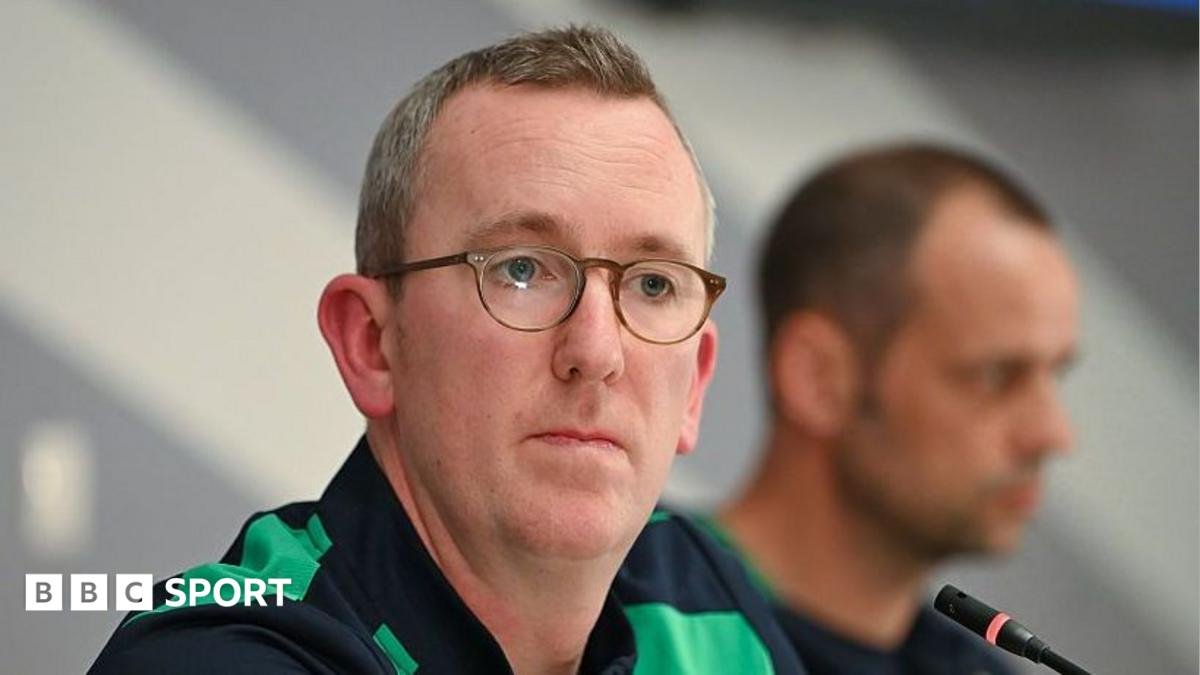
Prominent voices within Irish football, including former national team manager Brian Kerr and long-time international James McClean, have publicly championed the call for a boycott. As the debate reached a boiling point within the dressing room, Ireland manager Heimir Hallgrimsson held an extensive, high-stakes meeting with his squad on Saturday.
Hallgrimsson admitted that the situation has placed an unfair burden on his players, stating, “Nobody can understand the pressure that has been going on these players.” He confirmed that the lengthy deliberations were prompted by a player’s last-minute decision to opt out of the game. “The balance changed with this withdrawal,” Hallgrimsson noted, adding that while the team would continue to train, the situation remains fluid. “It’s a unique situation and we are just trying to limit the damage. There is no action we do that everyone will agree to. It’s a situation you can’t win.”
The Irish government has distanced itself from the controversy, maintaining that the responsibility lies entirely with the Football Association of Ireland (FAI) and UEFA. In a statement, an FAI spokesperson confirmed that despite deep misgivings, the fixtures will proceed. The association highlighted that it had previously lobbied UEFA to have Israel excluded from international competition, but that motion was ultimately defeated. “The FAI was obliged to fulfil the fixture,” the statement read, confirming that after internal engagement with the players, the decision to play remains unchanged.
The atmosphere surrounding the team has been undeniably affected by the unrest. The squad enters Sunday’s game following a disappointing loss to Kosovo on Thursday, a result that was widely viewed as a byproduct of the external distractions surrounding the Israel match.
As the team prepares to take the pitch, Hallgrimsson remains guarded about the potential performance, noting that he is focused on navigating the “damage” caused by a geopolitical crisis that has left his players caught between professional duty and intense personal discomfort. For now, the match is set to proceed, but the shadows cast over the fixture suggest a difficult day ahead for all involved.
Disclaimer: This content is auto-generated for informational purposes only.
Source: Read Original News