







JOHANNESBURG — The iconic Wanderers Stadium is braced for a high-stakes showdown on September 27 as Australia faces a must-win scenario in the second ODI against a surging South African outfit. With the Proteas holding a commanding 1-0 lead in this three-match series, the atmosphere in the “Bullring” is expected to be electric, offering little breathing room for an Australian side currently grappling with injury setbacks and a fragile middle order.
Following a clinical 67-run victory in the series opener in Durban, South Africa enters the contest with the momentum firmly in their favor. A victory here would not only clinch the series but cement their dominance over the tourists. For Australia, the mission is singular: stabilize the collapse that haunted their first outing and force a series decider.
The Durban Blueprint: From Despair to Dominance
The narrative of the first ODI was one of dramatic reclamation. South Africa’s victory was far from a foregone conclusion, especially after they were reduced to a precarious 29 for 2 early in their innings. The Australian bowling attack appeared to be seizing control, but the momentum shifted violently when Matthew Breetzke and Marco Jansen took center stage.
Breetzke’s masterful 112 from 106 balls served as the anchor, providing the technical composure required to navigate the middle overs. However, it was the explosive cameo from Jansen—who muscled 75 off 59 deliveries—that broke the Australian spirit. Their 107-run partnership for the sixth wicket catapulted the hosts to a formidable 297 for 8, a total that proved to be a mountain too steep for the visitors.
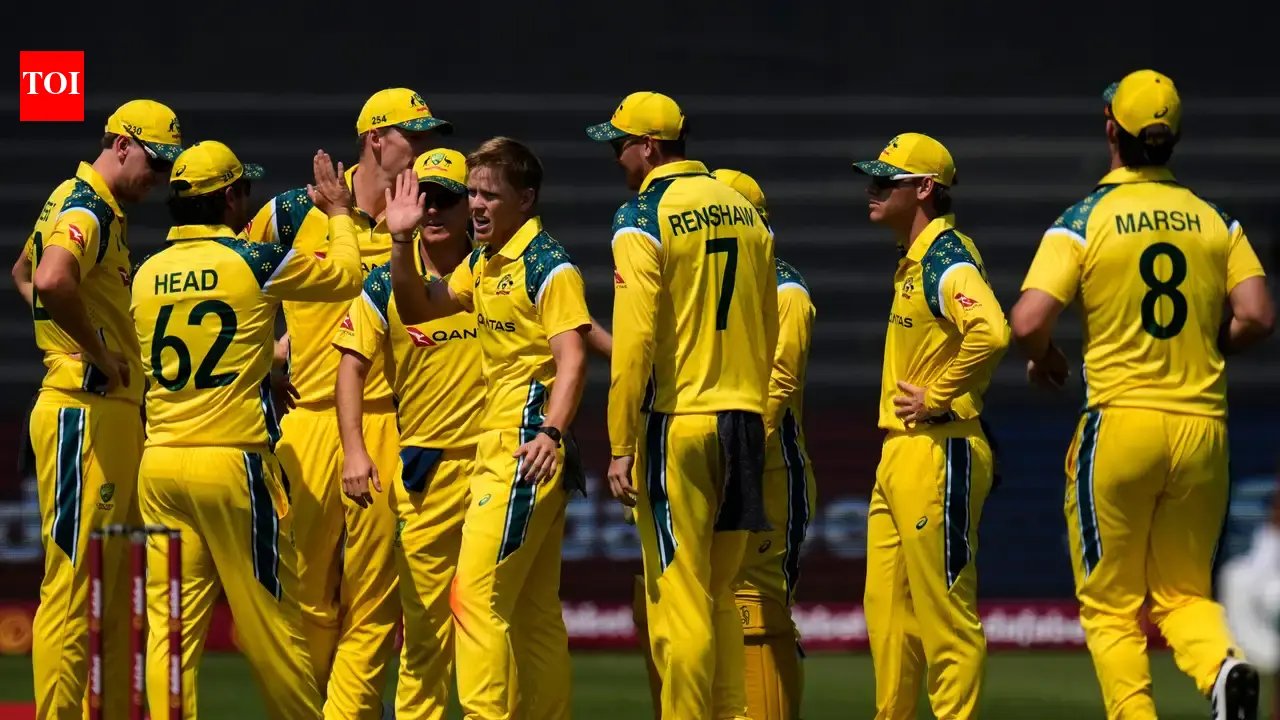
The subsequent collapse of the Australian chase remains a point of deep concern for their coaching staff. At 129 for 1, Australia was cruising. Mitchell Marsh looked in destructive form, dispatching the ball to all corners during his rapid 60 from 36 balls, while Travis Head provided a solid 36 at the other end. Even after the openers departed, contributions from Matt Renshaw (44) and Cooper Connolly (38) kept the required rate manageable. Yet, in a display of tactical disintegration, Australia lost their final nine wickets for a mere 101 runs. Keshav Maharaj was the primary architect of this destruction, dismantling the middle and lower order with a career-defining spell of 4 for 20.
Injury Woes and Strategic Changes
As both sides descend upon Johannesburg, the team sheets will reflect significant changes driven by necessity and tactical evolution. Australia has suffered a blow to their playing eleven, with Josh Inglis ruled out of the remainder of the series after suffering a fractured right index finger. This paves the way for the experienced Alex Carey to reclaim the wicketkeeping gloves, a move that provides stability but necessitates an immediate adjustment to the rhythm of the game.
Perhaps the most significant development for the visitors is the potential return of skipper Pat Cummins. Having been absent from the first ODI, Cummins’ leadership and pace will be vital if Australia hopes to restrict a confident South African batting lineup. His inclusion is a strategic imperative; Australia cannot afford another late-innings capitulation, and Cummins’ ability to lead from the front with both ball and tactical acumen is exactly what is missing from their current setup.
South Africa, meanwhile, is bolstered by the availability of Aiden Markram. His return adds significant depth to their middle order, providing another layer of security should the top order falter as it did in Durban. The Proteas will be keen to integrate Markram back into the mix without disrupting the rhythm that brought them success in the opening match.
The Wanderers Factor: A Batting Paradise?
Historically, the Wanderers is recognized as one of the world’s most prolific high-scoring venues. With clear skies forecasted for Friday, the surface is expected to be true and carry, offering value for stroke-makers on both sides. In such conditions, the toss could play a pivotal role, though both captains will likely focus on managing the middle overs—the exact phase where the first ODI was won and lost.
For South Africa, the game plan is straightforward: repeat the collective effort. The ability of the bowlers to remain disciplined under pressure—as displayed by Maharaj—will be the benchmark for their performance. Australia, conversely, must shed the “all-or-nothing” approach that defined their Durban innings. They need to translate their aggressive starts into substantial individual partnerships. Marsh and Head have proven they can dictate terms; now, they must prove they can see the job through to the final ball.
As the cricketing world turns its attention to Johannesburg, the margin for error has vanished. Australia finds themselves at a crossroads: either they solve their mid-innings vulnerability and force a final match, or they allow South Africa to seize the series in a display of total dominance. For the Proteas, the prize is a series win on home soil—a result that would confirm their status as a formidable force in the ODI format. All eyes will be on the first ball, as the Wanderers prepares to host a battle of grit, strategy, and sheer hitting power.
Disclaimer: This content is auto-generated for informational purposes only.
Source: Read Original News