







Shadows of 1999: The Persistent Security Anomaly at Kathmandu’s Airport
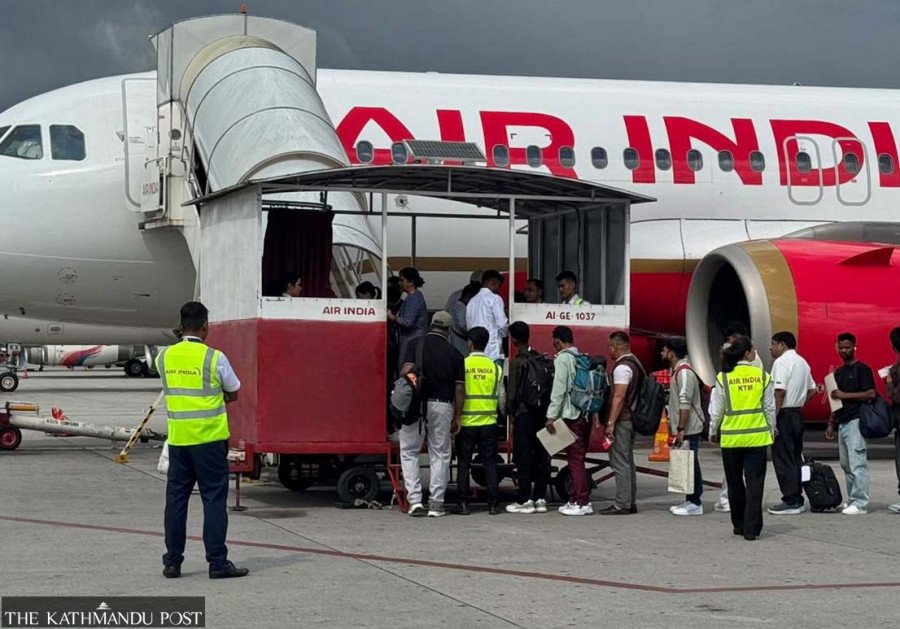
For over a quarter of a century, passengers boarding Indian-registered aircraft at Kathmandu’s Tribhuvan International Airport (TIA) have faced a unique and often unsettling ritual. Before stepping onto the plane, they must navigate an additional security checkpoint located on the airport apron. Inside a makeshift, four-sided trolley, Indian security personnel—distinct from their Nepali counterparts—conduct rigorous body frisks and manual luggage searches. This operational reality, while routine for frequent travelers, represents a lingering shadow of a geopolitical crisis from two decades ago.
A Legacy of the IC814 Hijacking
The arrangement traces its origins to the harrowing events of December 24, 1999, when Indian Airlines Flight IC814 was hijacked shortly after departing from Kathmandu. The week-long hostage crisis, which ended only after the release of high-profile militants in Kandahar, prompted a swift and punitive response from New Delhi. India suspended all Indian Airlines flights to Nepal for five months, demanding sweeping changes to TIA’s security protocols.
When service resumed in June 2000, it came with a non-negotiable condition: an extra layer of screening by Indian staff. While intended as a temporary fix to restore confidence, the protocol has become a permanent fixture. Despite the evolution of global aviation standards and Nepal’s own domestic security upgrades, no official documentation exists to explain why this practice—unmatched by any other international carrier operating out of Nepal—continues to this day.
Sovereignty and Administrative Silence
The lack of formal records regarding this arrangement is striking. Successive Nepali ministries—including Home, Tourism, and Civil Aviation—have consistently deflected inquiries, with no agency able to produce a written mandate or intergovernmental agreement. Former officials suggest the practice was rooted in a “verbal understanding” made under duress during the post-hijacking normalization process.
This silence has sparked periodic criticism regarding Nepal’s national sovereignty. International Civil Aviation Organization (ICAO) standards dictate that airport security remains the purview of the host nation, with foreign involvement limited to advisory roles or technical cooperation. Yet, India has repeatedly pressed for even greater influence, including the deployment of sky marshals—a move Nepali authorities have historically resisted or quietly shelved.
Modern Realities vs. Historical Friction
Today, TIA is significantly more equipped than it was in 1999. With hundreds of police personnel, dozens of modern X-ray machines, and advanced biometric surveillance, the physical security landscape has transformed. However, a recent high-level government report acknowledged that while infrastructure has improved, the airport still suffers from fragmented command structures and accountability gaps.
Critics argue that India uses these findings to maintain the status quo. For Indian officials, the presence of their security staff remains a pragmatic safeguard against perceived systemic vulnerabilities. Conversely, many in Kathmandu view the continued presence of foreign security personnel on sovereign soil as an anachronism.
“The situation in 1999 was entirely different,” notes Bharat Dhakal, a former official with the Civil Aviation Authority of Nepal. “Both governments need to rethink this.”
A Diplomatic Impasse
Despite the rise and fall of various political parties—many of which campaigned on platforms of heightened nationalism—none have made a formal diplomatic attempt to dismantle the arrangement. Former Prime Minister Baburam Bhattarai, who once navigated these very screenings as a private citizen, has publicly questioned why the issue isn’t addressed within a broader framework of bilateral relations rather than on a case-by-case basis.
As Nepal and India continue to negotiate on air connectivity, including the opening of new entry points, the shadow of the 1999 hijacking persists. While the Indian Embassy in Kathmandu maintains that the airport screening issue has not been a recent point of contention, the sight of foreign boots on the TIA apron remains a stark reminder that some legacies are harder to depart from than others.
Disclaimer: This content is auto-generated for informational purposes only.
Source: Read Original News