








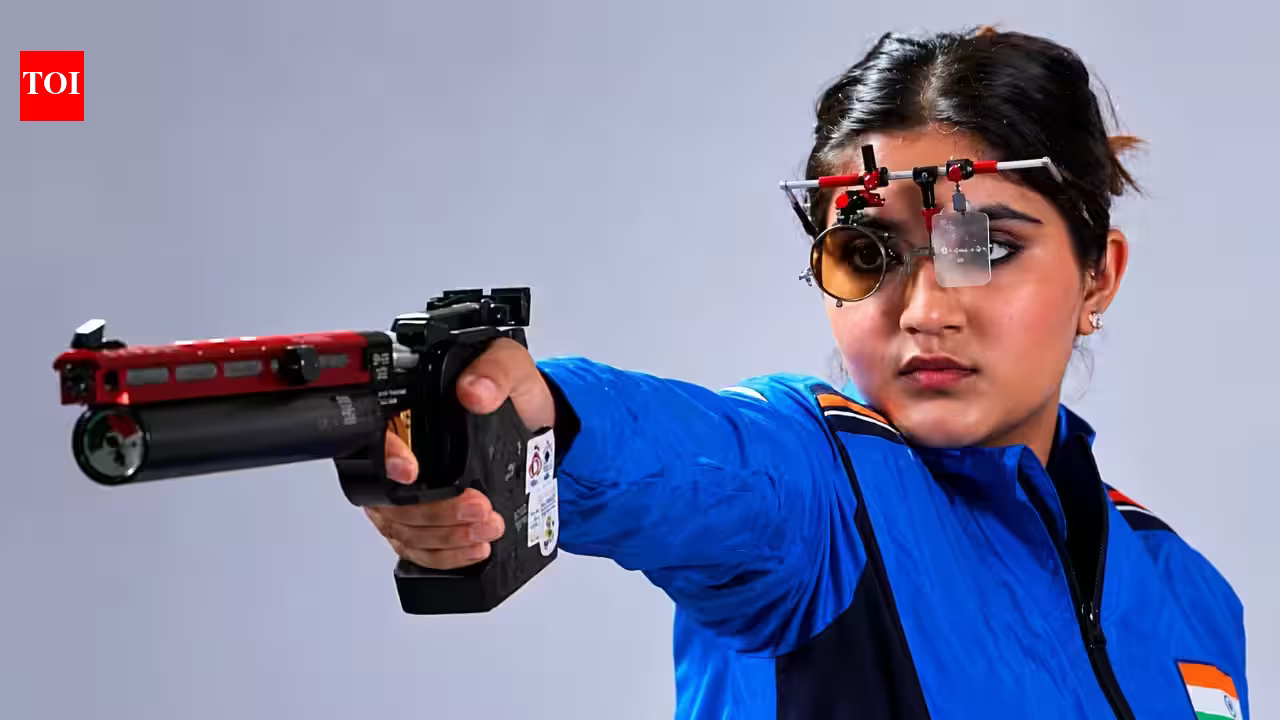
Expectations were sky-high as the Indian shooting squad stepped onto the range at the 2026 Asian Games on Monday, but the women’s 25m pistol team event proved to be a roller coaster of emotions, ultimately culminating in a heart-wrenching slide from medal contention. After a commanding performance in the precision stage that left them breathing down the necks of the Chinese leaders, the Indian trio saw their podium dreams evaporate during the high-pressure rapid fire round, leaving Esha Singh as the lone beacon of hope for an individual medal.
A Tale of Two Halves
The day began with immense promise. The Indian team, anchored by the experienced Rahi Sarnobat, the formidable Manu Bhaker, and the rising star Esha Singh, executed the precision stage with surgical accuracy. By the time the dust settled on the first phase of the competition, India sat comfortably in second place, trailing the powerhouse Chinese contingent by a razor-thin margin of just one point. The momentum was tangible; spectators and analysts alike began eyeing the gold, sensing that the chemistry between these three athletes could replicate the magic of previous continental outings.
However, the rapid fire stage proved to be the ultimate litmus test for nerves and composure. Tragedy struck early in the series when Sarnobat, usually the bedrock of the team’s consistency, suffered a disastrous opening sequence, missing the target and effectively derailing the team’s collective rhythm. The rapid-fire stage is notoriously unforgiving, and the momentum shift was irreversible. As the points began to aggregate, India’s standing plummeted, finishing with a final score of 1727-56x. The disappointment was compounded by the leaderboard, which saw China take the gold (1743-68x), followed by South Korea (1735-65x), Chinese Taipei (1734-48x), and Vietnam (1732-56x), pushing India down to a fifth-place finish.
Esha Singh Saves the Day
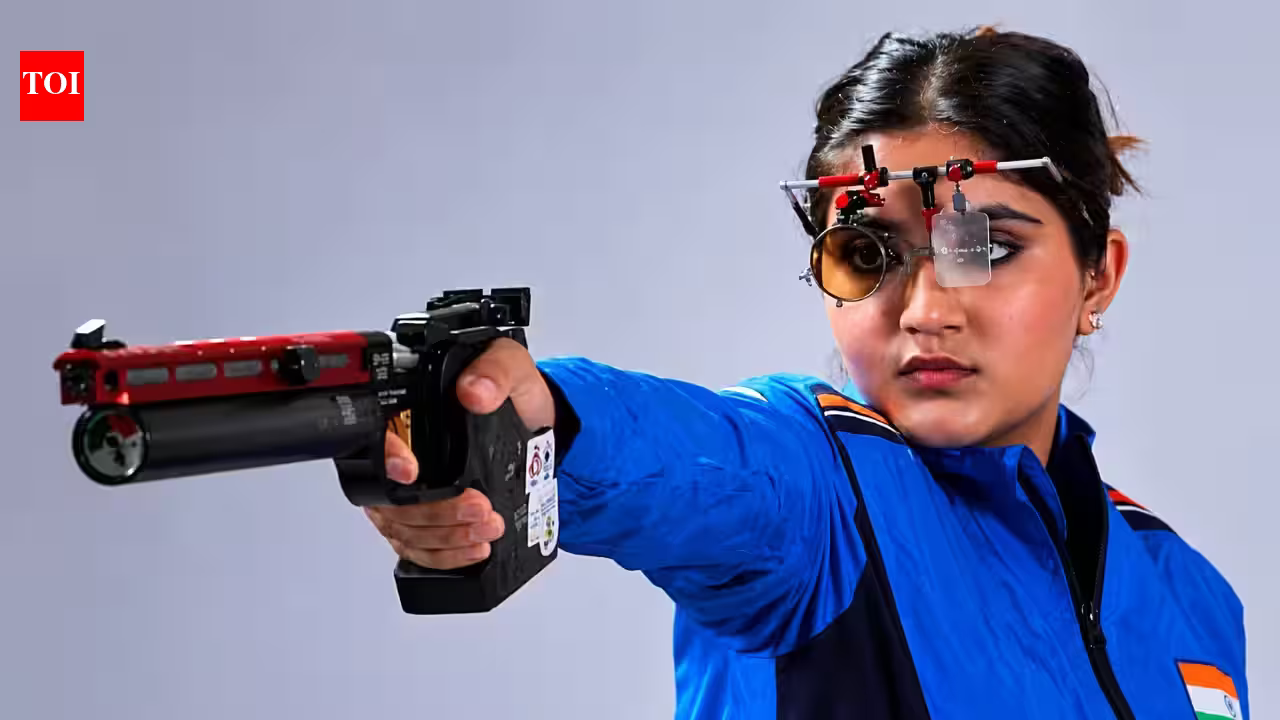
While the team event ended in frustration, the individual qualifiers offered a reprieve. Esha Singh stood tall amidst the pressure, delivering a masterclass in focus to record a score of 580-22x. That performance was just enough to edge her into the eighth and final qualifying spot for the individual final. For Singh, the task ahead is clear: translate the technical skill displayed during qualification into a podium finish.
For Manu Bhaker, however, it was a day of “what ifs.” Bhaker finished 11th with a score of 579-18x, falling just short of the final cut. The proximity to the top eight will undoubtedly haunt her, as the marginal difference between a medal match and an early exit remains the central theme of India’s campaign in Aichi-Nagoya. Rahi Sarnobat, struggling to recover from her early errors, eventually finished 30th with a 568-16x, a result that surely does not reflect her true caliber as a world-class marksman.
A Pattern of Near-Misses
The result in the 25m pistol team event is emblematic of the “so-near-yet-so-far” narrative that has defined India’s shooting efforts at the 2026 Games. In a sport where the difference between glory and disappointment is measured in millimeters, the Indian contingent has found themselves frequently on the wrong side of the margin.
The sting of this performance is particularly sharp when contrasted with the history of this event. At the previous Asian Games in Hangzhou, this discipline was a crowning jewel for India; Esha Singh captured individual bronze, and the trio of Singh, Bhaker, and Rhythm Sangwan secured a historic team gold. The decline from the top step of the podium to fifth place illustrates the extreme volatility of international competition.
This trend has extended beyond just the 25m pistol event. Bhaker previously battled to a fifth-place finish in the 10m air pistol individual final, and both the men’s and women’s 10m air pistol squads finished in a frustrating fourth place, agonizingly close to the podium but failing to clear the final hurdle.
Looking Toward the Final
Despite the broader team struggles, the shooting camp is not without its victories. Medals have been secured in the 10m air rifle events and in both men’s and women’s skeet team competitions, proving that the talent pool remains deep and highly capable. The challenge now is consistency under the intense glare of the Asian Games spotlight.
As the squad regroup, all eyes will be on Esha Singh. Her individual final represents more than just a shot at a medal; it is an opportunity for the Indian contingent to rewrite the narrative of their Aichi-Nagoya campaign. Having already proven her ability to thrive in the heat of a major final, Singh carries the weight of expectation on her shoulders. If she can harness the form that carried her through the qualification round, she has the potential to turn a week of close calls into a moment of pure, golden redemption.
The range beckons once more, and for India, the chance to reclaim their standing among Asia’s elite remains very much alive.
Disclaimer: This content is auto-generated for informational purposes only.
Source: Read Original News