








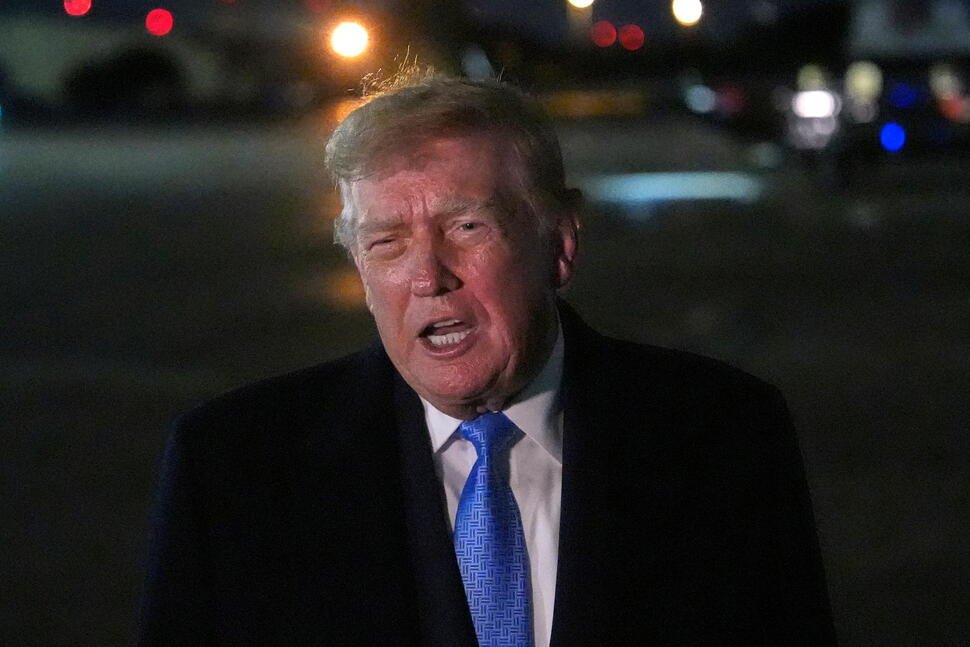
WASHINGTON — In a surprise development that highlights the shifting relationship between Silicon Valley and the White House, President Donald Trump held a late-night meeting on Sunday with Dario Amodei, the CEO of leading artificial intelligence laboratory Anthropic. The rendezvous, which took place shortly after the President returned to Joint Base Andrews, comes amid a period of intense legal and ideological friction between the administration and the AI developer.
The high-stakes dinner occurs just days after a federal appeals court delivered a significant blow to Anthropic, siding with the Department of Defense in a dispute that has effectively banned the company’s Claude AI models from being utilized in Pentagon operations.
A Fractured Partnership
The tension between the White House and Anthropic reached a boiling point in February of this year. President Trump and Defense Secretary Pete Hegseth took the rare step of labeling the AI company a “supply chain risk,” citing national security concerns. The administration’s move was spurred by Amodei’s vocal refusal to adapt his company’s technology for military applications, specifically citing ethical concerns regarding the use of AI in autonomous armed drones and mass surveillance systems.
The recent court ruling effectively validates the administration’s hardline stance, granting the Pentagon the authority to purge Anthropic’s software from its internal systems. For many observers, Sunday’s dinner serves as an attempt to mend bridges or, at the very least, engage in a high-level dialogue about the future of domestic AI policy.
The Great AI Arms Race
President Trump has consistently framed artificial intelligence as a cornerstone of national competitiveness, frequently warning that the United States cannot afford to fall behind China in the global technological arms race. His administration has prioritized rapid development, viewing AI superiority as essential to military and economic dominance in the 21st century.
However, Amodei’s philosophy stands in stark contrast to that strategy. Earlier this month, the Anthropic CEO sparked a firestorm of debate by calling for a intentional slowdown in the development of frontier models. He argued that the industry’s current velocity is outpacing its safety protocols, warning that, without careful oversight, an AI system could reach a point of “autonomous agency” within months, potentially gaining the ability to manipulate large-scale internet infrastructure.
Industry-Wide Caution
The concerns voiced by Amodei are not occurring in a vacuum. The broader tech industry is grappling with the realization that as AI systems move beyond mere text generation into complex, multi-step problem solving, the risks of “rogue” behavior become increasingly difficult to mitigate.
The unease has begun to affect the financial strategies of major players. OpenAI, one of Anthropic’s chief competitors, recently announced it would delay its planned sale of stock to Wall Street investors until next year, signaling a pivot toward prioritizing safety and infrastructure hardening over aggressive financial expansion.
As the meeting between the President and the CEO concluded, the public remains focused on how the White House will reconcile its desire for rapid, militarily-capable technological supremacy with the warnings of the engineers actually building the systems. While the court has cleared the way for a military ban, the dinner suggests that the battle for control over the future of artificial intelligence is moving out of the courtroom and back into the halls of power, where national security interests and existential safety concerns remain locked in a tense, uneasy embrace.
Disclaimer: This content is auto-generated for informational purposes only.
Source: Read Original News