







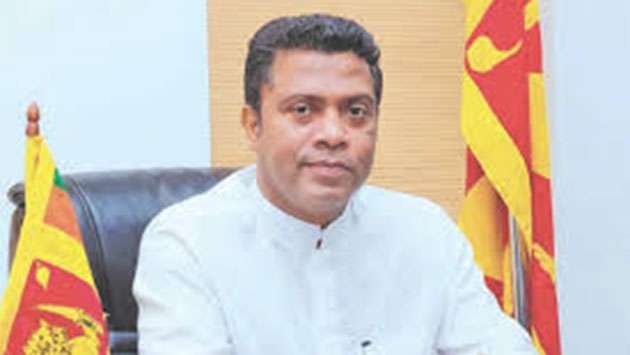
The Sri Lankan political landscape is facing a fresh wave of turbulence as the opposition appears increasingly fractured in the wake of the 22nd Amendment to the Constitution. Nalinda Jayatissa, a prominent figure, has publicly characterized the opposition’s current state as one of “total disarray,” citing internal disagreements and a failure to present a unified front regarding the legislative move.
The 22nd Amendment, designed to restore checks and balances to the executive branch, was expected to act as a litmus test for opposition solidarity. Instead, the debate surrounding the bill has exposed deep-seated ideological rifts and strategic differences among various political parties within the opposition fold. Analysts suggest that the inability to harmonize their stance on key clauses has left voters and political observers questioning the opposition’s capacity to serve as a viable alternative government.
According to Jayatissa, the lack of a cohesive narrative has paralyzed the opposition’s momentum. “The opposition is in complete disarray following the 22A developments,” he remarked, noting that the inability to reconcile conflicting views on the extent of presidential powers and the role of independent commissions has weakened their bargaining power in Parliament.
While some opposition factions have advocated for a more radical curtailing of executive power, others have adopted a more cautious approach, favoring a incremental transition. This divergence has led to mixed voting patterns and conflicting public statements, which the government has effectively leveraged to its advantage. By highlighting these fractures, the administration has successfully steered the discourse away from the core issues of economic reform and constitutional accountability, refocusing it instead on the perceived incompetence and division of their political rivals.
The fallout from 22A has also reignited speculation regarding potential realignments within the opposition. With local government elections on the horizon, pressure is mounting for the fragmented groups to bridge their differences. However, observers note that the wounds inflicted during the 22A debate are significant, making a swift reconciliation unlikely.
Critics argue that the opposition’s preoccupation with internal skirmishes is a disservice to the public, particularly during a time of intense economic strain. As the government continues to consolidate its legislative agenda, the opposition’s failure to organize remains a critical weakness. Whether these parties can bury their differences and focus on a common agenda will determine their effectiveness in the coming months.
For now, the image of a fragmented opposition has become a dominant theme in the national discourse. Unless a major leadership shift or a strategic consensus emerges, the opposition risks sliding into further obscurity, leaving the government with little organized resistance in the legislative chambers. The coming weeks will be crucial as parties reassess their positions and attempt to salvage their credibility ahead of future electoral cycles.
Disclaimer: This content is auto-generated for informational purposes only.
Source: Read Original News