





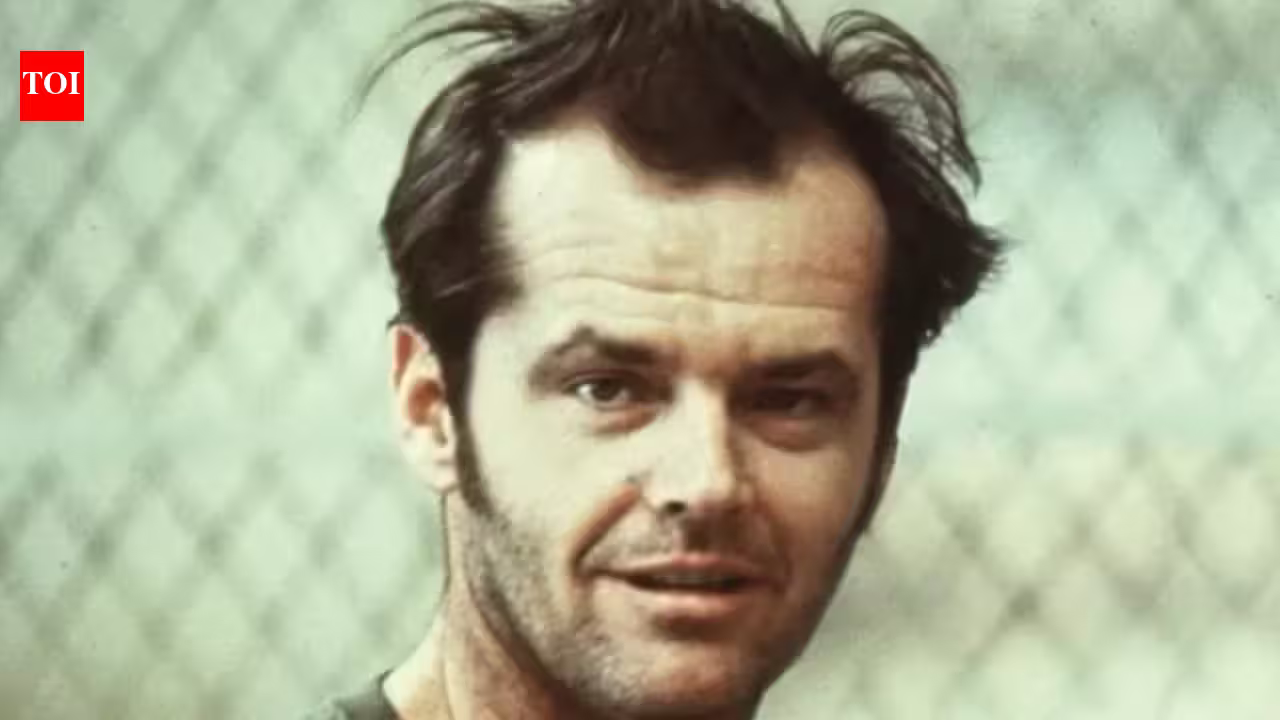
In Hollywood, where square footage is usually measured in ego and real estate portfolio value, Jack Nicholson once pulled off a disappearing act that would make his most cunning characters proud. While his peers were busy consolidating hillsides into gated compounds, the three-time Academy Award winner was quietly orchestrating one of the most significant conservation efforts in the history of the Santa Monica Mountains.
The story, which has resurfaced as a testament to the actor’s guarded private life and genuine environmental stewardship, dates back to 1994. While the world was distracted by the release of Wolf and the cultural dominance of Pulp Fiction, Nicholson was busy making a move that would permanently alter the topography of Coldwater Canyon. He didn’t build a mansion; he gave the land back to the wild.
The Secret Gift That Saved a Canyon
In the mid-nineties, the Santa Monica Mountains Conservancy was engaged in a quiet war of attrition against developers. The goal was simple but ambitious: to create a “green necklace” of continuous habitat spanning from Griffith Park in the east to Topanga State Park in the west. It was a project defined by small, hard-fought victories, but then, a massive piece of the puzzle fell into place with absolute silence.
A 60-acre plot near Mulholland Drive—prime real estate that had already been pre-approved for four luxury residential subdivisions—was donated to the Conservancy. The donation was anonymous. For the public and the local press, the “phantom donor” became a point of intense speculation. Could it be a reclusive billionaire? A guilt-ridden developer? For a time, the identity remained locked behind a wall of legal nondisclosure, with Nicholson’s own business manager offering no comment, keeping the mystery alive.
It wasn’t until officials like John A. Diaz, the then-land-acquisition chief for the Conservancy, began confirming the details that the curtain was pulled back. The man behind the mask was the star of The Shining, a figure rarely associated with the humble, dirt-under-the-fingernails work of environmental preservation.
A Fortune Left on the Table
To understand the magnitude of Nicholson’s decision, one must understand the California real estate market. This wasn’t just any parcel of land; it was a sprawling, pristine stretch of Southern California terrain that could have easily fetched millions. In the high-stakes environment of Los Angeles development, where every inch of ridge-line is a battleground, the decision to forego four luxury estates represents a staggering financial sacrifice.
Had Nicholson opted for the path of least resistance—hiring an architect, breaking ground, and selling the finished estates—he could have padded his already massive net worth. Instead, he treated the land as a legacy. By donating the property, he effectively neutralized the threat of further urban encroachment into the Franklin Canyon area. It was a rare instance of a Hollywood titan choosing the environment over the bottom line, proving that Nicholson’s famous unpredictability extended well beyond his choice of roles.
Life Thrives Where Mansions Never Rose
Today, the legacy of that 1994 donation is written in the flora and fauna of Coldwater Canyon. If you were to walk the trails surrounding Mulholland Drive, you wouldn’t find private driveway gates or “No Trespassing” signs. Instead, you find a vibrant, functioning ecosystem that has served as a sanctuary for decades.
The land is characterized by thick, sprawling native oak woodlands and dense chaparral. It is a vital corridor for local wildlife, providing a safe haven for mule deer, bobcats, coyotes, and an array of avian species that rely on these uninterrupted migratory paths. In a city defined by concrete and gridlock, this 60-acre slice of wilderness remains a quiet, emerald lung for the region. It is a tangible, living monument to a decision made in total secrecy three decades ago.
The Mystery Behind the Curtain
Why did he stay quiet? In an industry fueled by public relations, charitable galas, and the constant need for image management, anonymity is a radical act. Nicholson, famously known for his refusal to play by the standard celebrity rulebook, likely wanted to avoid the fanfare.
Turnley Walker, the former chairman of the Longridge-Alomar Neighborhood Committee, was eventually the one to help pull the truth into the light, referring to the land in public forums as “the Nicholson donation.” Yet, even as the secret leaked out, Nicholson himself never sought a ribbon-cutting ceremony. There is no plaque boasting of his generosity on the trailheads; there is no vanity project. There is only the land itself, unchanged and un-fenced.
A Legacy Beyond the Screen
Jack Nicholson has built a career defined by the unexpected. From the manic energy of One Flew Over the Cuckoo’s Nest to the measured menace of The Departed, he has always defied audience expectations. His environmental legacy mirrors this trait. While modern celebrities often use their platform to signal their virtue through public campaigns, Nicholson chose a different route: he simply did the work, ensured the land was protected in perpetuity, and then walked away.
As Los Angeles continues to sprawl and developers look toward every remaining hillside for the next “exclusive” neighborhood, the 60 acres preserved by Nicholson stand as a rare, enduring victory for nature. It serves as a reminder that the most impactful roles an actor can play are often the ones they perform off-camera, far from the lights of the red carpet and the prying eyes of the press.
Thirty years later, the deer still graze in the shadows of the oaks, and the hawks still circle the ridgeline. The land remains wild, not because of a policy shift or a government mandate, but because one man decided that some things are worth more as they are than as they could be sold. It is, perhaps, the most grounded performance of his career.
Disclaimer: This content is auto-generated for informational purposes only.
Source: Read Original News