






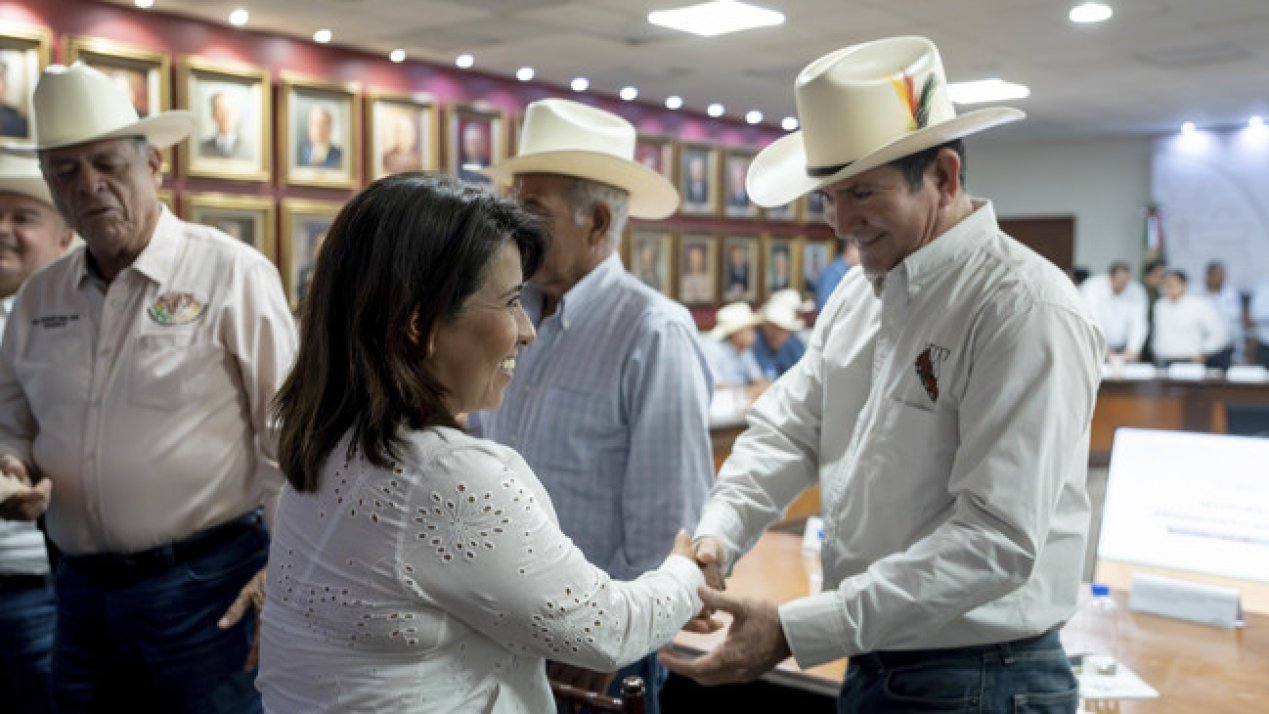
Mexico’s federal government is signaling a major pivot in how it manages the agricultural and fishing sectors in Sinaloa, moving away from reactive emergency measures toward a proactive, long-term development framework. During a four-day working tour, Agriculture and Rural Development Minister (SADER) Columba López met with state officials to solidify a strategy designed to stabilize the regional economy through technological integration and structural reform.
## Leveraging Technology for Agricultural Efficiency
A central pillar of this new strategy is the implementation of digital platforms to optimize production. SADER plans to launch a specialized procurement platform that will allow producers to purchase basic inputs and bioinputs for white corn and wheat directly, cutting out intermediaries to reduce production costs.
Beyond purchasing, the government is leaning into technical data to drive yield. As part of a broader effort to modernize operations, the Ministry is integrating advanced diagnostic tools to map coastal carrying capacity and vessel conditions. By leveraging precision data, SADER aims to provide producers with seeds specifically adapted to regional agroclimatic conditions, ensuring that local farmers can maximize output while minimizing resource waste. These AI-driven and data-focused initiatives are designed to turn Sinaloa into a hub for sustainable, high-yield production that moves beyond the “desk-based solutions” of the past.
## Strengthening Livestock and Sanitary Infrastructure
The federal government is also prioritizing the modernization of livestock management through enhanced traceability and sanitary control. To combat diseases like brucellosis and tuberculosis, officials are emphasizing intensive, tech-monitored campaigns.
A significant technological component involves the National Service of Agrifood Health, Safety and Quality (SENASICA), which is scaling up its fight against the New World screwworm. This effort includes the production of up to 50 million sterile flies at the Metapa de Domínguez facility, a biological control measure that demonstrates the government’s shift toward high-tech, proactive interventions rather than traditional, less-effective livestock management. Furthermore, the ministry is designing specific schemes to modernize TIF slaughterhouses and optimize genetic improvement programs, utilizing banking and fintech-style financing mechanisms—such as the “Harvesting Sovereignty” credit program—to provide producers with up to MX$8 million in capital.
## Data-Driven Transformation in Fisheries
The fishing and aquaculture sectors are undergoing a similar digital and administrative overhaul. Minister López has directed local agencies to update technical databases regarding vessel status and catch volumes within a one-month window. This information will be used to identify modernization opportunities for the fleet and improve energy efficiency.
In the aquaculture space, authorities are focusing on market protection and product quality. Plans are currently underway to introduce locally sourced tilapia into major supermarket chains, backed by a new “quality seal” that promises transparency and traceability for consumers. This move is supported by a push for alternative projects, such as oyster farming, which provides women in the industry with new economic opportunities through modern, sustainable aquaculture methods.
By demanding a shift from temporary, emergency-based administration to a four-year development plan, the federal government hopes to replace volatility with a structured, data-informed ecosystem. The strategy, which includes regular follow-up meetings, aims to hold local and federal stakeholders accountable by using clear, time-sensitive metrics. As the state moves to implement these changes, the focus remains on building a robust, tech-enabled, and stable foundation for Sinaloa’s primary industries.
Disclaimer: This content is auto-generated for informational purposes only.
Source: Read Original News