







Jaishankar Calls Out Global Blind Spots on Cross-Border Terrorism in New York Address
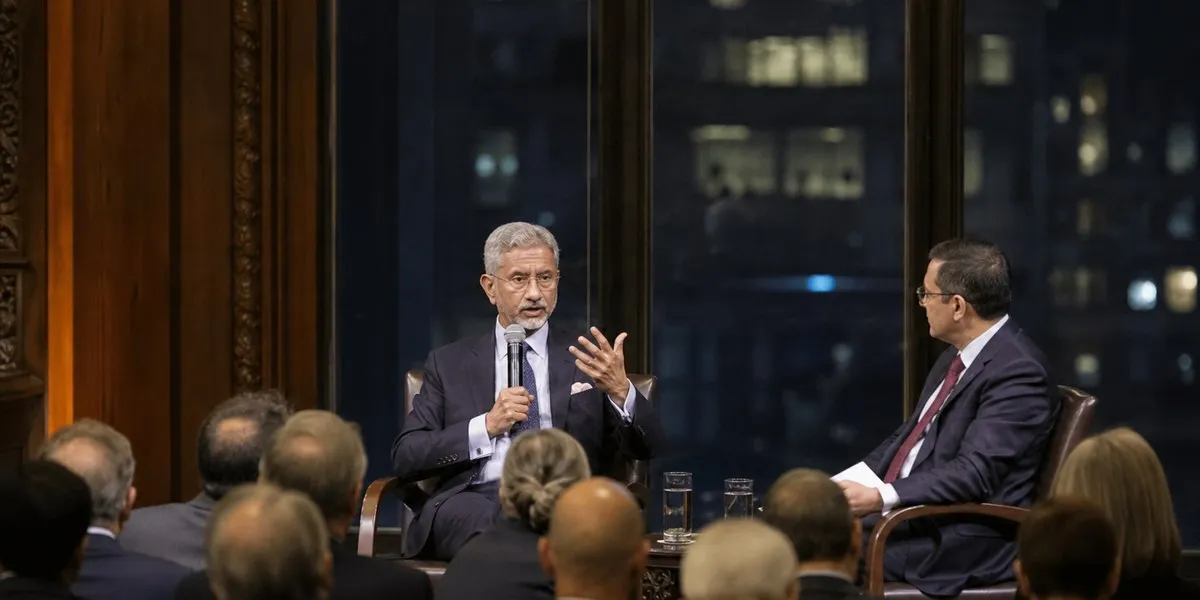
NEW YORK – External Affairs Minister S. Jaishankar has delivered a pointed message to the international community, emphasizing that India’s strategic partnerships are inextricably linked to a mutual understanding of the threats posed by cross-border terrorism. Speaking at a high-profile event hosted by the Asia Society in New York, the minister underscored that the persistence of terrorism originating from Pakistan remains the single most significant impediment to regional stability and a critical priority for New Delhi’s foreign policy.
The Cost of Misunderstanding
Addressing a gathering of policy experts, diplomats, and members of the Indian-American diaspora, Jaishankar articulated a clear message: the depth of India’s bilateral relationships is directly proportional to how well its partners grasp the gravity of the security challenges emanating from across its western border.
The minister’s remarks arrived at a sensitive juncture, following the conclusion of the 81st session of the United Nations General Assembly in New York. While India has consistently sought to strengthen its strategic and economic ties with Western nations, particularly the United States, Jaishankar pointedly noted that a “lack of understanding” regarding the nuances of cross-border terror continues to complicate these diplomatic efforts. For New Delhi, this is not merely a regional dispute, but a core national security concern that requires proactive recognition and condemnation by the international community.
Navigating Complex Geopolitics
The timing of Jaishankar’s speech is notable, occurring as Washington has engaged in increased diplomatic outreach with Islamabad. In the corridors of power, such engagements often raise concerns in New Delhi, where officials remain wary of any policy shifts that might downplay the history of state-sponsored militancy.
Jaishankar’s address was a firm recalibration of these optics. By tying the health of bilateral ties to the recognition of India’s security realities, he signaled that New Delhi is no longer willing to sideline its primary security concerns for the sake of diplomatic niceties. The minister’s firm stance serves as a reminder to the United States and other global powers that the fight against terrorism remains the bedrock upon which genuine, long-term strategic cooperation must be built.
A Call for Consistent Policy
Throughout his engagement in New York, the Foreign Minister reiterated that India’s perspective on terrorism is rooted in decades of experience. He urged policy experts and the international community to move beyond generic rhetoric and toward a more granular understanding of how terrorism is used as an instrument of policy in the region.
“The quality of our relations will be determined by the extent to which our partners acknowledge the concerns that define our national security,” the minister implied, highlighting that ignoring the source of instability ultimately weakens the broader Indo-Pacific security architecture.
As the diplomatic season in New York concludes, Jaishankar’s message resonates as a robust defense of India’s strategic autonomy. By vocalizing these frustrations on a global stage, India is asserting that its partnerships are not blank checks; rather, they are commitments that must reflect a shared commitment to global security and a zero-tolerance approach toward terror, regardless of the geopolitical complexities involved.
Disclaimer: This content is auto-generated for informational purposes only.
Source: Read Original News