








Strategic Infrastructure Shifts: The North-East Corridor
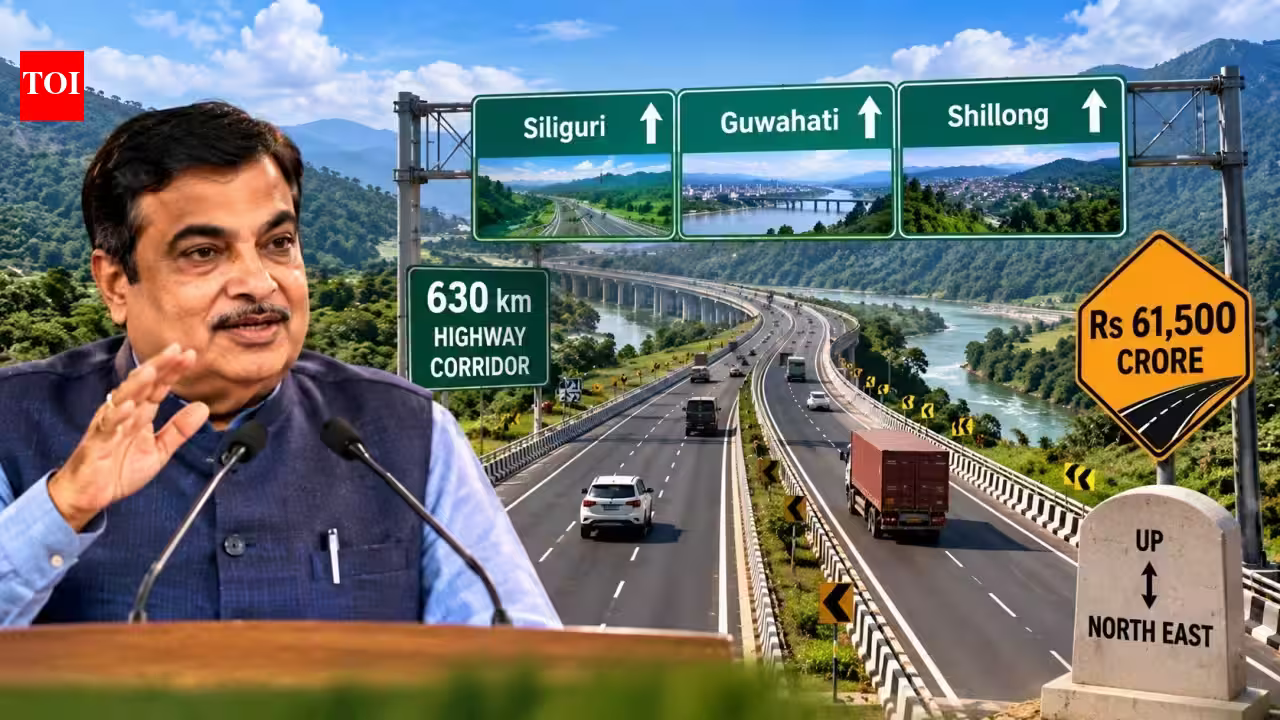
The Indian government’s commitment to transforming the North Eastern Region (NER) from a geographically isolated territory into a thriving economic hub has reached a significant milestone. The announcement of a 630-km high-speed highway corridor, spanning from Siliguri to Guwahati and Shillong, marks a pivotal shift in the nation’s logistical framework. With a budgetary allocation of Rs 61,500 crore, this project represents more than mere road construction; it is a calculated effort to integrate the North East into the broader industrial ecosystem of North and East India.
By bridging the gap between West Bengal, Assam, and Meghalaya, the government is addressing the historical challenges posed by the “Chicken’s Neck” corridor—a narrow strip of land that has long served as the only land access to the region. The project, which involves a mix of new greenfield expressways and the modernization of existing highway segments, is designed to accommodate high-speed traffic, effectively slashing commute times and logistical overheads. This infrastructure investment is the backbone of the “Act East” policy, aimed at facilitating smoother trade flows, reducing transport costs, and fostering regional stability through economic development.
Economic Integration and Logistical Efficiency
The significance of the Siliguri-Guwahati-Shillong corridor extends to the integration of the North East with Uttar Pradesh. The initiation of an expressway project connecting Gorakhpur to Siliguri creates a continuous, high-capacity road network that links the industrial belts of Uttar Pradesh directly to the North Eastern states. For businesses operating in Northern India, this connectivity translates into a reduction in the “distance friction” that has historically deterred large-scale supply chain expansion into the region.
Logistics in India have long suffered from high costs compared to global benchmarks, often attributed to inefficient road networks and long transit times. The new corridor addresses this by optimizing road geometry and reducing distance. For example, the greenfield stretch between Jorabat and Barapani is projected to reduce the distance from 100 km to 66 km, effectively cutting travel time by over 60 percent. This level of efficiency is a game-changer for the fast-moving consumer goods (FMCG), agricultural, and manufacturing sectors, which rely on the rapid movement of perishable and time-sensitive commodities. By shrinking the transit time, the government is effectively lowering the landed cost of goods, which is vital for the economic competitiveness of local industries in the North East.
Driving Development Through Massive Capital Outlay
The magnitude of investment in the North Eastern region is indicative of a broader macroeconomic strategy. Between 2014-15 and 2024-25, the government invested over Rs 6.11 lakh crore in development initiatives, exceeding original allocations. This sustained expenditure reflects an understanding that infrastructure acts as a force multiplier for local economies. In Assam alone, ongoing projects worth approximately Rs 2 lakh crore, spanning 4,700 km, demonstrate the intensity of the current drive.
Beyond the major highways, the impact is felt through the Pradhan Mantri Gram Sadak Yojana, which has added over 46,000 km of rural roads. This creates a multi-layered network: rural roads provide the “last mile” connectivity that brings village produce to regional markets, while high-speed expressways serve as the “arteries” for long-distance, high-volume logistics. This hierarchical approach to infrastructure development is essential for balanced growth, ensuring that the benefits of industrial connectivity reach beyond major urban centers to rural peripheries. For investors and developers, this indicates a stable, long-term commitment by the state to reduce structural barriers to entry in the region.
Railway and Air Connectivity Synergy
While road infrastructure receives significant attention, the North East is witnessing a parallel transformation in railway and air connectivity. The shift in railway policy is evidenced by the massive surge in budgetary support, rising from an average of Rs 2,122 crore annually in the 2009–2014 period to Rs 10,440 crore for FY 2025-26. Projects such as the Bhairabi-Sairang and Jiribam-Imphal lines are not just about passenger transit; they are designed to move freight, which is critical for the development of local industries like tea, minerals, and handicrafts.
Complementing this is the Regional Connectivity Scheme (UDAN), which has operationalized 90 routes in the NER. The market-driven approach of this scheme has allowed private airlines to identify high-demand corridors, such as connections to Pasighat, Tezu, and Shillong. This creates a balanced multimodal transport system: road for high-frequency short-to-medium range logistics, rail for heavy freight, and aviation for high-value business travel and time-sensitive logistics. This synergy is essential for a region that experiences significant seasonal disruptions; having multiple modes of transport ensures that supply chains remain resilient regardless of topographical or weather-related challenges.
Market Insights for Industry Stakeholders
The rapid development of this high-speed corridor presents substantial opportunities for private sector players. The construction of new greenfield stretches creates a market for engineering, procurement, and construction (EPC) companies, as well as firms specializing in high-speed traffic management systems and sustainable road materials. Furthermore, the increased accessibility is likely to spark a real estate and commercial development boom in transit hubs like Siliguri, Guwahati, and Shillong.
However, stakeholders must navigate the complexities of mountain terrain and the unique regulatory environment of the North East. Projects in this region often require sophisticated environmental impact assessments and coordination with local governing councils. Businesses looking to leverage these new routes should focus on establishing warehousing and distribution hubs that utilize the new highway speeds to serve larger catchment areas. As the corridor matures, the transformation of these cities into logistics nodes will inevitably attract new capital.
Ultimately, the North-East corridor project represents a mature phase of Indian infrastructure policy—one that moves beyond mere connectivity to focus on efficiency, economic integration, and long-term national cohesion. For investors and businesses, the path forward is clear: the integration of the North East is no longer a peripheral development goal but a core component of India’s economic growth engine. The successful execution of these projects will likely redefine the commercial landscape of the region for decades to come, turning historic isolation into a modern gateway for trade and industry.
Disclaimer: This content is auto-generated for informational purposes only.
Source: Read Original News