









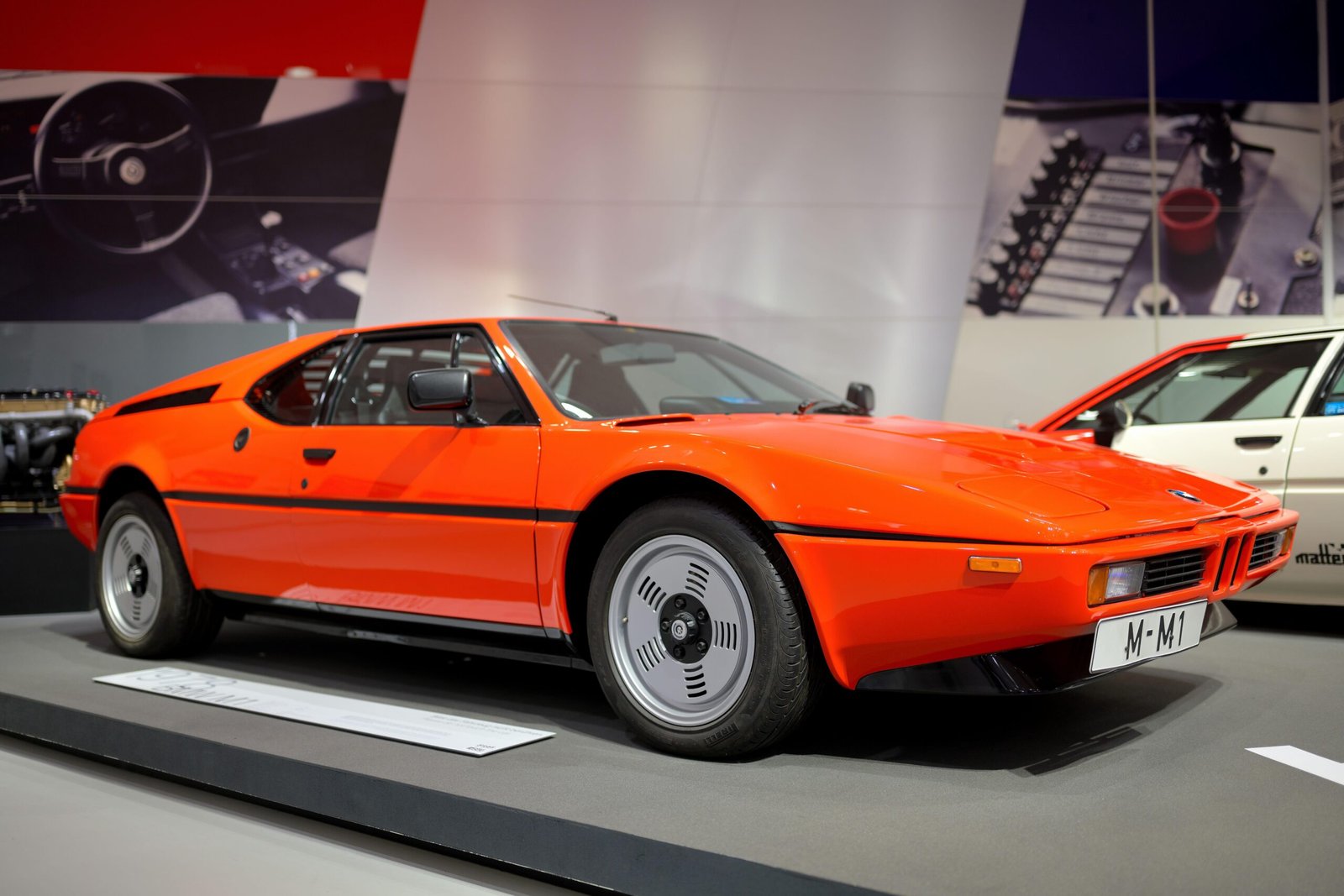
The history of BMW suggests that it has made few errors. It has baffled us with impenetrable strings of technological acronyms, surprised us with some of its more recent styling, and shocked us with the amount of power it can wring from an essentially everyday engine. Pedants would argue that it has produced the odd mild duffer — the original 3-series Compact, for example — but, if we want evidence of genuine fallibility, we need to return to the mid Seventies and the BMW M1.
It remains the only mid-engined production car in BMW’s archive, and the only one to be made of plastic (GRP to engineers, but to the rest of us the thing that school canoes are built of). It was intended to end the Porsche 911’s dominance in international sports-car racing but, by the time it was ready, the rules had changed, making it completely uncompetitive. Not quite the feather in their felt hats the Bavarians had hoped for.
With time at a premium, BMW handed the design and engineering to Lamborghini in Italy, who promptly went bust. BMW’s motorsport division broke into the Lamborghini factory to rescue the bodywork moulds from the receivers.

The ‘distinctly psychedelic wheels’ on full display at the BMW Museum in Munich.
(Image credit: Walter Piesch/Alamy)
In Britain, the M1 cost about £35,000 at a time when Ferrari’s 308 was not much more than half that. In fairness, the part that BMW built itself, the 3.5-litre straight-six engine, was gloriously good and became the inspiration for the M5 saloon and every subsequent BMW Q-car. A top speed of 161mph and 0-60mph in 5.8 seconds is respectable even by today’s standards.
Every other Seventies supercar I have driven has been a fairly grim affair: hard work, hot, uncomfortable and unreliable. Yet the M1 is still likeable. The controls are easy, the visibility good, the race-car breeding clearly evident. It even looks reasonably contemporary, bar the distinctly psychedelic wheels. The engine went on to feature in more mainstream BMWs, so it can be assumed to be dependable.
Only about 500 M1s were built, all left-hand drive and to exactly the same specification. Reckon on £35,000 as a starting price — and do not underestimate the expense or annoyance of sourcing replacement parts.
Major errors of judgment rarely have such an agreeable long-term effect. This is perhaps BMW’s best-ever bad car.