







India Rejects Erdogan’s UNGA Remarks on Jammu and Kashmir, Reaffirms Sovereignty
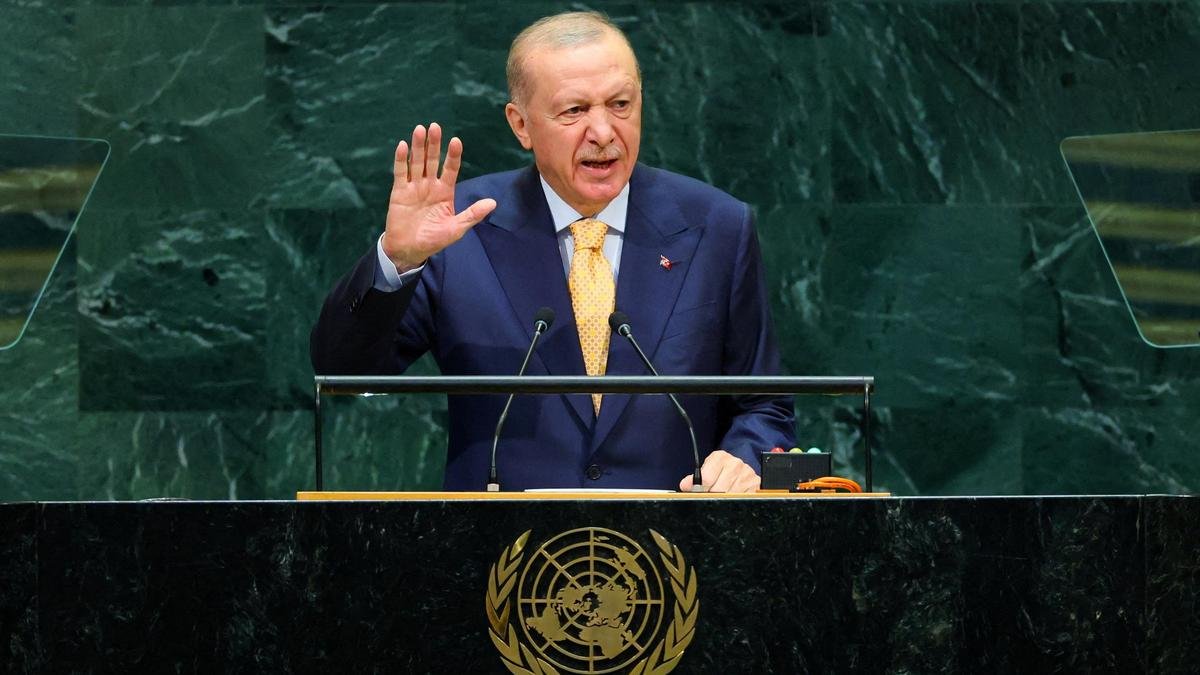
New Delhi: The Indian government has issued a stern diplomatic rebuke to Turkey following President Recep Tayyip Erdogan’s recent comments regarding the Union Territory of Jammu and Kashmir. During his address at the United Nations General Assembly (UNGA) in New York, the Turkish leader urged that regional disputes in South Asia, specifically mentioning Kashmir, should be resolved through dialogue aligned with the UN Charter.
On Tuesday, September 29, 2026, the Ministry of External Affairs (MEA) categorically dismissed these suggestions, labeling them as “unwarranted” and an infringement upon India’s domestic jurisdiction.
A Firm Stand on Sovereignty
During a scheduled media briefing, MEA spokesperson Randhir Jaiswal addressed queries regarding the Turkish President’s remarks. He emphasized that the discourse surrounding Jammu and Kashmir pertains exclusively to the territorial integrity and sovereignty of the Indian nation.
“India rejects unwarranted references to India and the Union Territory of Jammu and Kashmir made by the President of Turkiye during his UNGA address,” Jaiswal stated firmly. He added that New Delhi maintains a clear and consistent stance: the region is, and shall remain, an integral part of India. Consequently, the spokesperson asserted that no external entity or third party possesses the locus standi—the legal right—to intervene or offer commentary on the matter.
Consistent Policy on International Forum Interference
This incident marks yet another instance where India has had to reiterate its position against the internationalization of the Kashmir issue. For years, New Delhi has maintained that the Jammu and Kashmir question is an internal matter, and any outstanding concerns are to be resolved bilaterally between India and Pakistan, free from external pressures or internationalized mediation.
The diplomatic friction between Ankara and New Delhi over this issue has occurred intermittently over the past few years, often straining bilateral relations. Despite attempts by Turkey to position itself as a mediator in regional conflicts, India’s policy remains uncompromising: external commentary is neither sought nor welcomed.
Diplomatic Implications
The rejection of President Erdogan’s statement reflects India’s broader foreign policy doctrine, which seeks to insulate its internal affairs from the political posturing often seen at the United Nations. By addressing the remarks with such directness, the Indian government has signaled that it will continue to prioritize its territorial sovereignty over diplomatic etiquette when international leaders attempt to frame internal issues as global disputes.
The Ministry’s prompt response serves as a reminder to the international community that India views its administrative decisions, including those regarding the former state of Jammu and Kashmir, as non-negotiable. As the global spotlight remains on the UNGA proceedings, India continues to utilize the platform to solidify its stance against any form of interference that challenges its national borders or its right to govern its territories without external scrutiny.
Disclaimer: This content is auto-generated for informational purposes only.
Source: Read Original News