








The Paradigm Shift in Urban Traffic Management
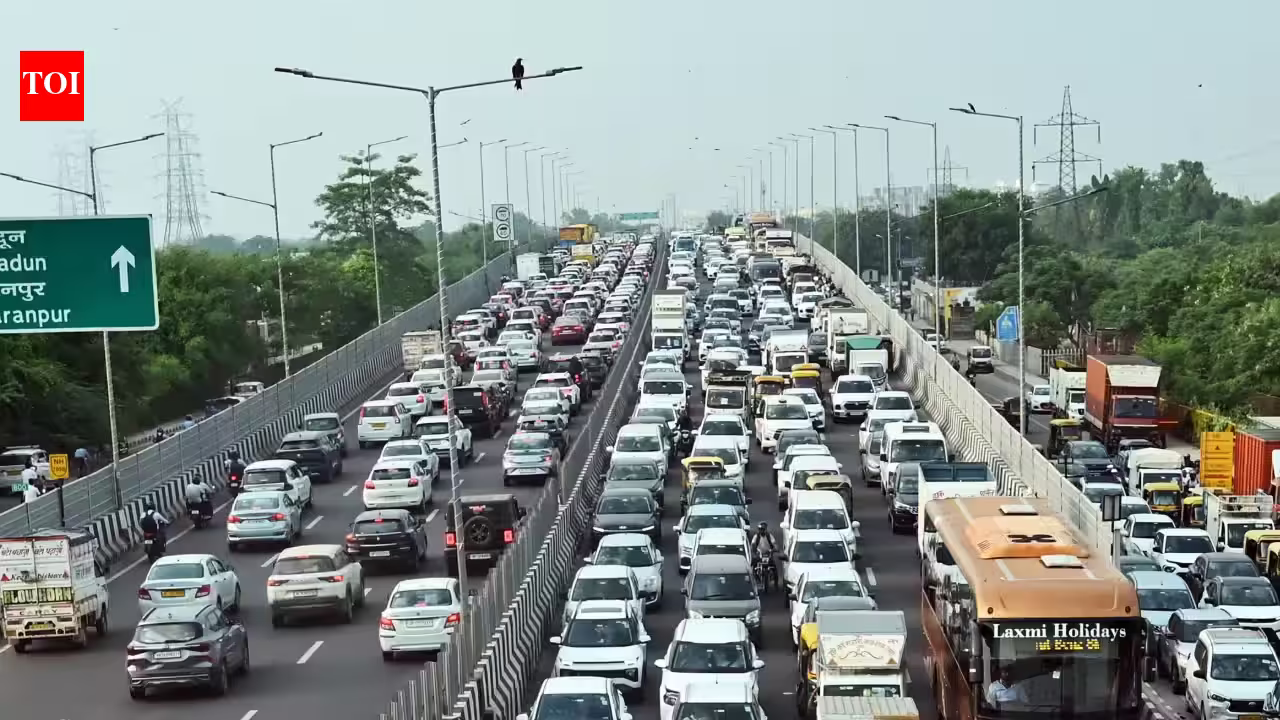
The announcement by the Cabinet Committee on Economic Affairs regarding the Rs 1,789.52-crore Intelligent Traffic Management System (ITMS) for Delhi marks a significant departure from legacy urban infrastructure management in India. For decades, the capital’s traffic management has relied on fixed-timer signals that often fail to account for the fluid nature of modern road congestion. With over 71 lakh registered vehicles navigating a finite road network, the mismatch between infrastructure capacity and vehicle volume has become a chronic bottleneck, impacting both economic productivity and the quality of life for residents.
The integration of an “intelligent brain” into Delhi’s traffic corridors is not merely a technological upgrade; it is a fundamental shift toward data-driven governance. By replacing rigid, timing-based cycles with Adaptive Traffic Control Systems (ATCS), the project aims to optimize signal phases in real-time. This ensures that green signal windows are dynamically adjusted based on the actual flow of traffic, rather than predetermined patterns that often force vehicles to wait at empty intersections. From a business perspective, the reduction in idle time on roads directly correlates to lower fuel consumption, reduced logistics costs for supply chains operating within the city, and increased efficiency for daily commuters.
Technological Infrastructure and AI Integration
The core of this initiative lies in the deployment of 1,092 adaptive traffic control locations, creating a cohesive network capable of processing massive datasets. The project is designed around a centralized Command and Control framework, supported by a robust Data Centre and disaster recovery architecture. This centralized structure is critical for handling the immense volume of high-resolution data generated by 1,029 enforcement locations.
Artificial Intelligence plays a transformative role here. Unlike conventional CCTV monitoring, which requires significant human intervention, the new system utilizes AI-based analytics to identify traffic violations autonomously. This includes detection of red-light jumping, stop-line transgressions, speeding, wrong-way driving, and even behavioral infractions such as mobile phone usage while operating a vehicle. By automating enforcement, the system removes human bias and improves the accuracy of fine issuance. Furthermore, the capacity to identify hot-listed, blacklisted, or stolen vehicles through automated license plate recognition enhances national security and public safety, effectively turning the city’s traffic management grid into a powerful instrument for law enforcement.
Prioritizing Emergency Response and Public Utility
One of the most critical aspects of the ITMS implementation is its focus on emergency service optimization. Currently, ambulances navigating congested arterial roads in Delhi face significant delays, often dictated by the lack of coordination across sequential traffic signals. The proposed “green corridor” feature will allow the system to detect approaching emergency vehicles and proactively clear traffic paths. This capability can be life-saving, as it minimizes the time critical-care patients spend in transit.
Beyond emergency services, the project prioritizes the dissemination of information to the general public. Through the use of Variable Message Sign (VMS) boards and digital integration with navigation providers, the system will offer commuters transparency regarding traffic conditions. By sharing data on congestion, road incidents, and parking availability, the government is facilitating a smarter, more informed flow of traffic. This information-centric approach empowers individual drivers to make better routing decisions, which, when aggregated across millions of users, leads to a more balanced distribution of load across the entire road network.
A Three-Phase Strategic Rollout
The execution of a project of this magnitude requires a structured, multi-phase rollout to minimize disruption. By dividing the implementation across 42 identified traffic corridors into three distinct phases, the Delhi Police, in collaboration with the Centre for Development of Advanced Computing (C-DAC), ensures that each segment is rigorously tested against performance parameters before moving to the next.
This iterative process is essential for large-scale public infrastructure projects. The involvement of C-DAC as a technical partner provides the necessary specialized expertise to manage the complexities of such a rollout. The project is structured with a 24-month implementation timeline, followed by a five-year operation and maintenance commitment. This lifecycle approach is vital for ensuring that the hardware and software components remain updated against evolving threats and technological advancements. By relying on open standards and APIs, the government has ensured that the system remains modular and scalable, allowing for future integration with newer technologies, such as connected vehicles or autonomous transport platforms, as they emerge in the Indian market.
Economic and Socio-Environmental Implications
The economic benefits of a modernized traffic management system extend far beyond reduced commute times. In a hyper-dense urban environment like Delhi, the economic loss due to traffic congestion is substantial, ranging from lost man-hours to the environmental costs of increased carbon emissions from idling vehicles. By optimizing traffic flow, the ITMS directly supports the sustainability agenda. Smoother movement leads to decreased fuel burn and lower aggregate emissions, contributing to better air quality standards in the capital.
Moreover, the predictability of transit times will benefit the logistics and gig-economy sectors, which serve as the backbone of urban commerce. Delivery services, which frequently struggle with unpredictable delays, will be able to plan routes more efficiently, thereby increasing the velocity of last-mile logistics. For the business community in Delhi, this project represents a long-overdue modernization of the city’s commercial arteries.
In conclusion, the Rs 1,789-crore investment is a decisive step toward transforming Delhi into a “Smart City” in the truest sense. While the success of the system will ultimately depend on the precision of its implementation and the rigorous enforcement of its rules, the framework itself is sound. It shifts the burden of traffic management from manual oversight to automated, intelligent, and real-time intervention. For India, Delhi’s experiment with the ITMS serves as a potential blueprint for other metropolitan centers struggling with the challenges of rapid urbanization and vehicular congestion. The alignment of C-DAC’s technical prowess with the administrative authority of the Delhi Police offers a promising path forward for the capital’s infrastructure modernization.
Disclaimer: This content is auto-generated for informational purposes only.
Source: Read Original News