







The ecosystem of Indian celebrity journalism has reached a boiling point. For years, the symbiotic relationship between stars and the flashbulb-wielding brigade of Mumbai was understood, if not always comfortable. It was a trade-off: visibility for relevance. But recently, the lens has shifted from “public interest” to something far more invasive, prompting a stern, collective pushback from the industry’s heavyweights.
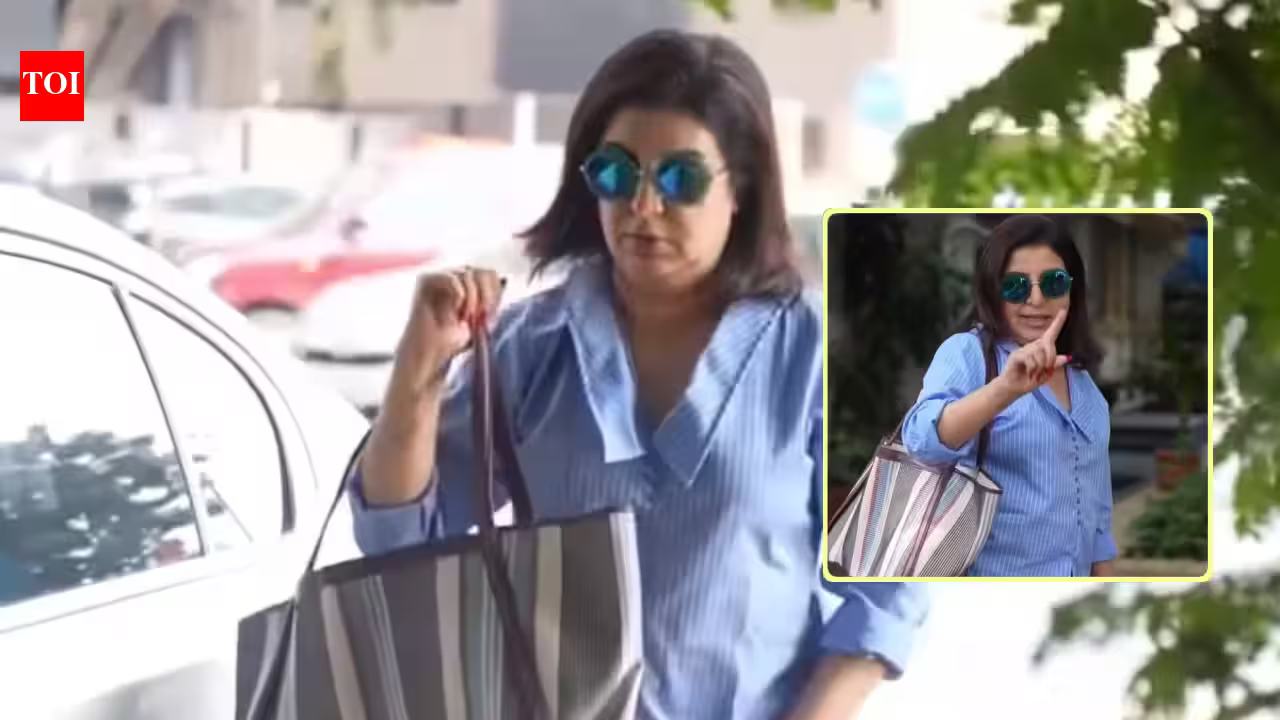
In the latest development, filmmaker Farah Khan has become the latest star to draw a hard line in the sand, echoing the sentiments of Salman Khan regarding the invasive practices of modern-day shutterbugs. Spotted in Mumbai in a relaxed, casual ensemble of a striped shirt and palazzo pants, the director—usually known for her quick wit and rapport with the media—was visibly taken aback by the presence of cameras in a space where she expected privacy.
When photographers swarmed, attempting to capture footage from behind, Farah didn’t mince words. Channeling the sentiment recently expressed by Salman Khan on Bigg Boss, she firmly directed them to pivot. “Salman bhai ne bola na peeche se nahi lene ka, turn karo, turn karo,” she commanded. It wasn’t a request; it was a reminder of a new code of conduct that stars are now daring to enforce in public spaces.
The Shrinking Space for Privacy
The incident highlights a growing frustration among A-listers. The digital age has democratized photography, but it has also eroded the professional standards that once governed celebrity-paparazzi relations. As Farah Khan’s reaction demonstrated, the issue isn’t just about being photographed; it’s about the angle and the intent.
There is a palpable fatigue among female celebrities who have long been subjected to “voyeuristic” angles—shots specifically designed to catch them off-guard or in unflattering, suggestive positions as they exit cars or navigate public spaces. By invoking Salman Khan’s name, Farah wasn’t just citing a peer; she was referencing a movement. The demand is simple: if you are going to document our movements, do so with dignity, and for heaven’s sake, keep the lens in front of us, not behind us.
Salman Khan’s ‘Bigg Boss’ Stand
To understand the gravity of Farah’s rebuke, one must look back at the Weekend Ka Vaar episode that sparked this discourse. Salman Khan, a man who has lived under the microscope for three decades, took a rare, unscripted moment during his hosting duties to call out the “creeping” nature of modern paparazzi.
He didn’t just label the behavior as unprofessional; he called it out for what it is: harassment. Salman pointedly drew a distinction between the “established” media houses—who follow a code of ethics and maintain a professional distance—and the swarm of newcomers and mobile-phone-wielding “freelancers” who have turned celebrity-chasing into a game of exploitation. His assertion that the “actual paparazzi” should self-regulate and police their own ranks was a challenge to the industry to clean up its own house before celebrities decide to cut off access entirely.
The Rise of the ‘Freelance’ Menace
A crucial point made by Salman—and echoed by the industry at large—is the identity of the people behind the lenses. The traditional photographer, armed with a DSLR and a sense of decorum, is increasingly being drowned out by a sea of individuals who treat celebrity sightings as content gold for social media algorithms.
This shift has created a Wild West environment in Mumbai’s suburbs. If you are standing outside a restaurant or a recording studio, you are no longer just dealing with credentialed media. You are potentially dealing with anyone with a smartphone, driven by the lure of viral engagement. This is where the boundaries collapse. Farah Khan’s reaction to this, while firm, also signals a warning to the fraternity: if the professional paparazzi don’t distinguish themselves from the opportunists, the stars will eventually treat everyone with the same icy distance.
A Change in the Power Dynamic
The most intriguing part of this narrative is the changing power dynamic. For decades, the media held the keys to the narrative. But in the era of social media, stars now have their own channels to speak directly to their audience. They don’t need the paparazzi in the same way they once did to stay relevant.
When Salman Khan arrived at a recording studio late Tuesday night, he didn’t just ignore the cameras; he gave them a controlled moment to perform their jobs. He posed, let them get their shots, and then walked away. It was a masterclass in how stars are trying to reclaim their space. By offering a window of access, they are attempting to negotiate a “truce”: We will give you the shot, provided you stay within the lines we define.
The Road Ahead: Respect vs. Exposure
As we move forward, the relationship between Bollywood and the paparazzi is at a crossroads. We are seeing a shift where stars are no longer passive subjects; they are active enforcers of their own boundaries. If the paparazzi continue to ignore the warnings of icons like Farah Khan and Salman Khan, the consequences could range from restricted access to legal action regarding stalking and privacy violations.
The entertainment industry is not calling for an end to photography, but an end to the “gotcha” culture that has plagued it for far too long. The message from the industry’s most influential voices is clear: respect is the currency of the trade. If you want the content, you have to earn the right to capture it by treating the subjects with the dignity they demand. For now, the cameras are still clicking, but they are being watched much more closely than ever before. The era of the “unrestricted lens” is drawing to a close, replaced by a new, more guarded reality where the subjects have finally decided to take the wheel.
Disclaimer: This content is auto-generated for informational purposes only.
Source: Read Original News