






The long-standing financial axiom that a rise in U.S. Treasury yields inevitably weakens the South Korean won has officially been upended. Despite a steady climb in U.S. interest rates, the won has demonstrated remarkable resilience, signaling a fundamental shift in how the won-dollar exchange rate is being determined in the modern market.
Historically, when U.S. market rates rise, the “interest rate gap” between the U.S. and Korea has acted as a primary driver for currency depreciation in emerging markets. Investors typically shift capital away from the won toward the higher yields and perceived safety of the U.S. dollar. However, recent data shows this traditional correlation has broken down. Throughout September and early October, while the 10-year U.S. Treasury yield breached the 5% and even 5.3% marks, the won-dollar exchange rate remained stubbornly anchored in the 1,350 to 1,360 range, defying expectations of a slide.
Market analysts point to a change in the hierarchy of market drivers. Today, supply-and-demand dynamics—specifically the robust current-account surplus generated by South Korea’s export sector—are exerting a stronger influence than the federal funds rate.
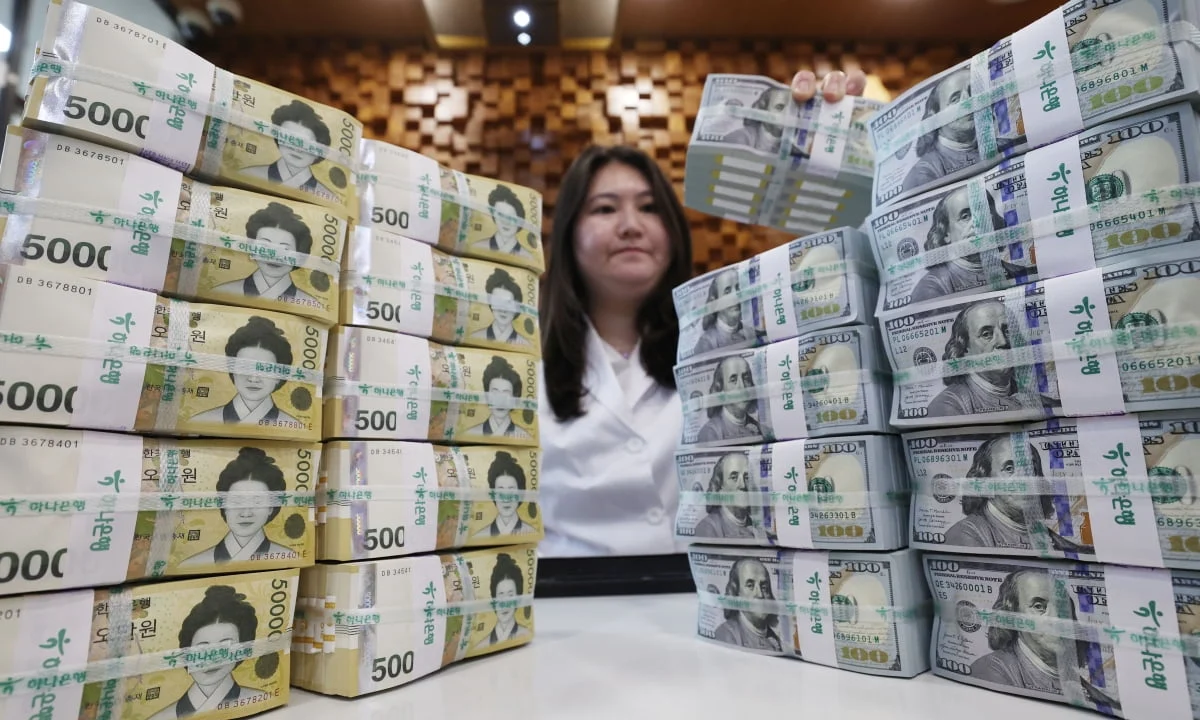
The primary catalyst for this stability has been the aggressive dollar-conversion orders from exporters. With monthly exports recently surpassing $120 billion—an 83.5% surge compared to the previous year—the influx of foreign currency is immense. As companies like those in the semiconductor sector bring record dollar receipts into the Seoul foreign-exchange market, their routine conversion into won creates a consistent demand for the domestic currency. This structural selling of dollars has effectively capped the exchange rate’s upside, leaving speculative traders with little room to maneuver.
“Flow factors are becoming the decisive element in setting the exchange rate,” notes Min Kyung-won, an economist at Woori Bank. Beyond simple trade figures, the currency is being shaped by a complex web of capital flows, including securities investment by retail and foreign investors, corporate treasury decisions, and the strategic overseas asset allocations made by Korean pension funds.
This phenomenon is not entirely without historical precedent; between 2004 and 2006, the won similarly strengthened during a Federal Reserve rate-hike cycle, bolstered then by a global trade boom. However, the current environment highlights a unique sensitivity to liquidity. Market participants have observed that whenever the exchange rate edges toward the top of its 1,340–1,390 won trading band, the sheer volume of institutional and corporate flow acts as a shock absorber.
While global macroeconomic headwinds—including a strong dollar index—still provide pressure for the won to weaken, the dominance of export-driven liquidity suggests that for the time being, the traditional “rate gap” model has been sidelined by the sheer strength of South Korea’s fundamental trade performance.
Disclaimer: This content is auto-generated for informational purposes only.
Source: Read Original News