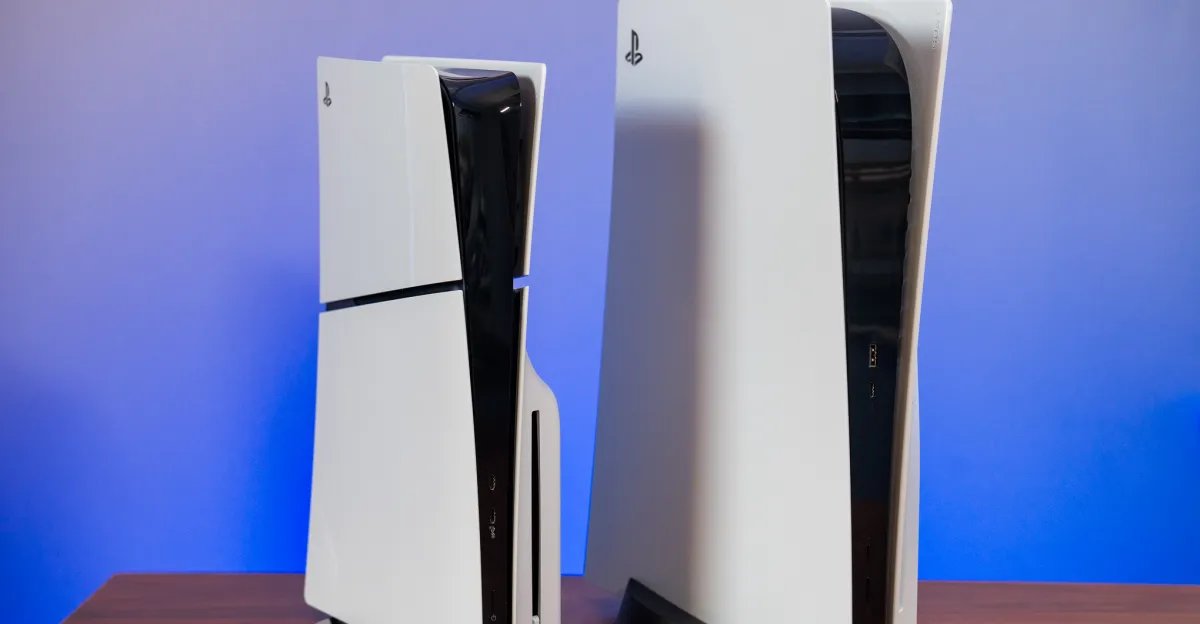









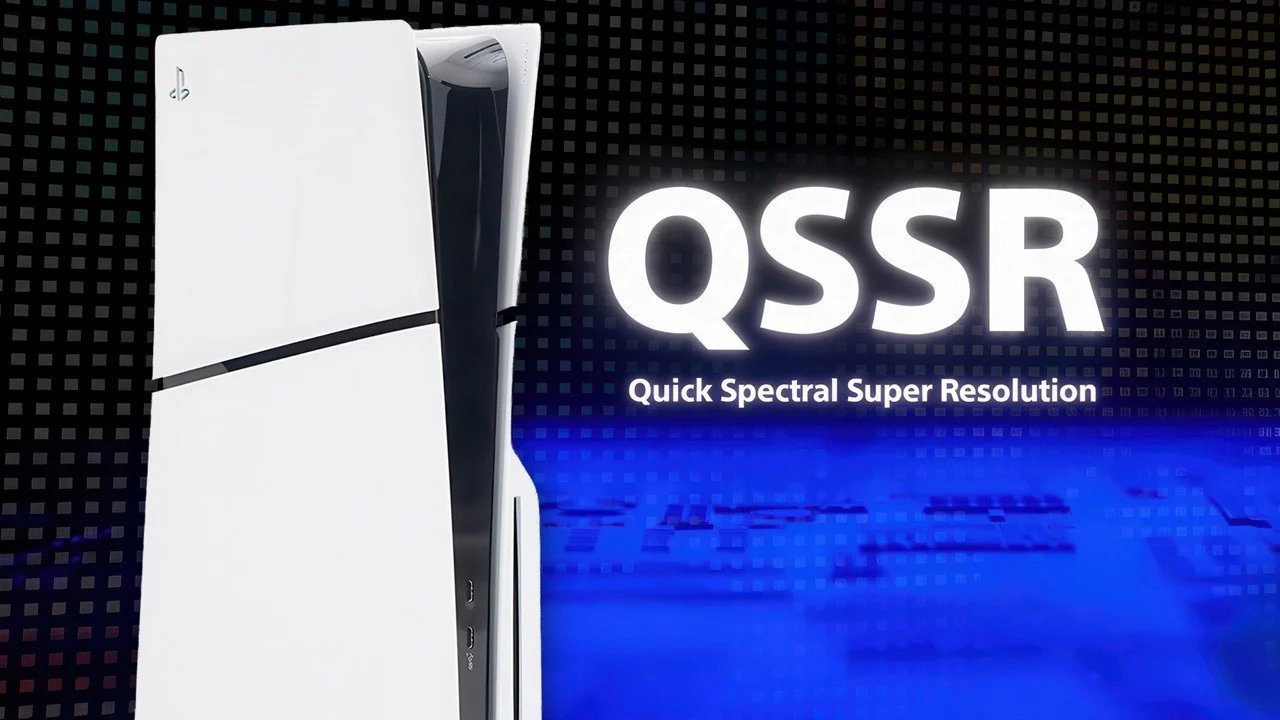
Sony has officially unveiled Quick Spectral Super Resolution (QSSR), a machine learning-based upscaling technology designed specifically for the standard PlayStation 5 console. This development serves as a direct evolution of the PSSR (PlayStation Spectral Super Resolution) technology currently exclusive to the higher-performance PS5 Pro. By introducing machine learning upscaling to the base hardware, Sony aims to address the visual clarity and temporal stability issues that have plagued various titles throughout the current generation.
Technical Foundation and Implementation
The architecture of QSSR is a technical feat that required Sony’s Graphics R&D team to pivot from the hardware-accelerated design of the PS5 Pro. While the PS5 Pro utilizes dedicated silicon designed for 300 TOPS of processing power to handle PSSR—relying on INT8 instructions for maximum efficiency—the standard PS5 lacks this specific hardware. To bridge this gap, QSSR is built primarily upon FP16 math.
Daniel Craig, Principal Engineer for Graphics R&D at SIE, noted that the team utilized a streamlined neural network architecture to achieve the necessary performance profile. To maintain efficiency on hardware not purpose-built for this task, the developers implemented packed math instructions and focused heavily on pipeline optimization. The primary challenge for the engineering team was to minimize the overhead required to run these neural models, ensuring that the cost of upscaling does not negate the performance gains found in frame rate or resolution targets.
Image Quality and Performance Metrics
Early hands-on evaluations, specifically with Marvel’s Wolverine and Ghost of Yōtei, indicate significant improvements in image quality. Users can expect better temporal stability, enhanced sub-pixel integrity, and a notable reduction in artifacts commonly found in moving foliage or complex environmental textures. In Marvel’s Wolverine, the visual fidelity boost is described as exceptional, particularly when compared to existing temporal anti-aliasing (TAA) methods.
Regarding performance, QSSR carries an inherent computational cost. Testing reveals that in 1440p target modes, the upscaling pipeline introduces an additional frame-time load of roughly 1.5ms to 1.8ms. While this results in a nominal reduction in raw frame rates—approximately 8 to 10 frames per second in uncapped scenarios—the trade-off is often negated when using dynamic resolution scaling in 60Hz performance modes. The technology appears best suited for 1440p outputs rather than aggressive 4K targets, where the computational load increases significantly, as observed by a frame-time hit of 4.4ms when outputting to 2160p.
Integration and Workflow for Developers
For game developers, QSSR is designed to be an accessible, drop-in replacement for titles that already support the PSSR pipeline for the PS5 Pro. Sony has streamlined the integration process so that the time required for implementation is measured in days rather than months. Once the base architecture is integrated, developers primarily focus on tuning game settings, such as texture streaming, to ensure that the higher-quality output of the upscaler is supported by the corresponding level of asset detail.
This interoperability suggests that Sony is prioritizing a unified development strategy. By providing a shared toolset that scales from the base console to the Pro model, the company is encouraging developers to author their games with both PSSR and QSSR in mind from the start of the development cycle. This shift could minimize the visual discrepancies currently seen between different versions of cross-platform titles.
Strategic Impact on Current and Future Titles
The rollout of QSSR marks a significant shift in how Sony manages the hardware lifecycle of its current console generation. By retrofitting the standard PS5 with advanced upscaling, Sony is effectively extending the visual relevancy of the base unit. Retrofitting existing games with QSSR is described as a low-risk endeavor, implying that many titles released earlier in the generation could potentially receive patches to improve their image quality.
The broader implication is that the reliance on aggressive internal resolution scaling—which often resulted in blurry or shimmering images—may soon decrease. As developers gain access to this technology, the industry expectation for sub-native resolution handling is likely to rise. With the potential for widespread adoption in upcoming high-profile releases, QSSR provides a crucial tool to ensure that standard PS5 users receive a high-fidelity experience without requiring a hardware upgrade to the Pro model. As more titles adopt the technology, it will become clearer how effectively it can maintain stability across a wider variety of graphical demands.
Disclaimer: This content is auto-generated for informational purposes only.
Source: Read Original News