


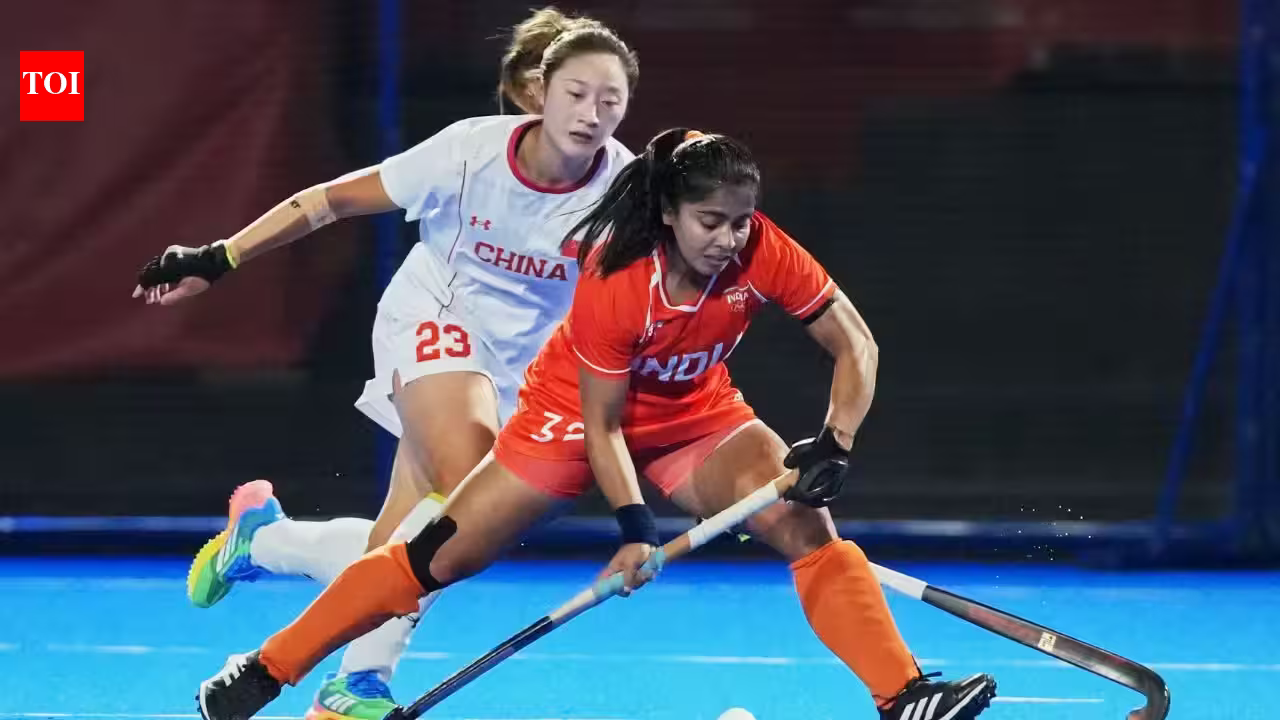





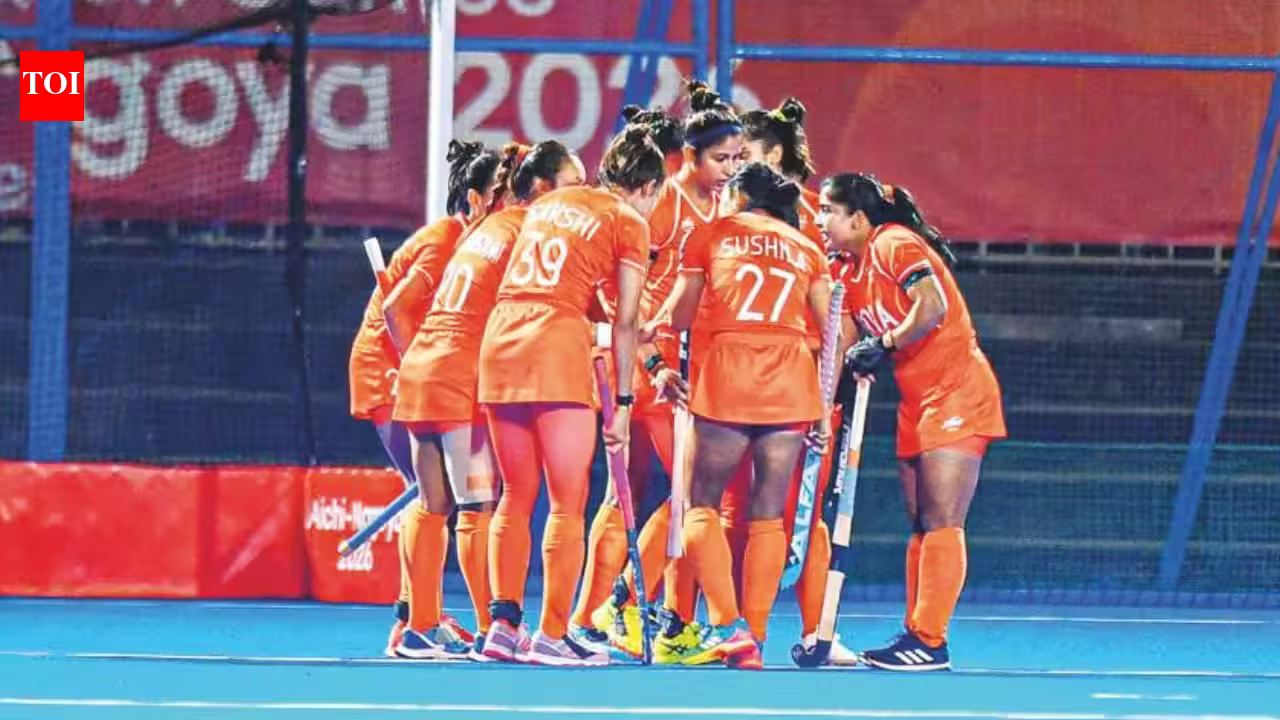
AICHI-NAGOYA — The stage is set for a historic showdown that has been four decades in the making. Today, the Indian women’s hockey team steps onto the turf at the Aichi-Nagoya Asian Games with a singular, burning ambition: to shatter a 44-year gold medal drought and reclaim their status as the queens of Asian hockey. Standing between them and destiny are the defending champions, China, in a title clash that offers more than just the top spot on the podium—it serves as a direct golden ticket to the 2028 Los Angeles Olympics.
For India, this is not merely a final; it is a confrontation with history. Since their sole Asian Games gold medal triumph in 1982, the Indian side has navigated a frustrating path of near-misses and heartbreak. Two previous silver medal appearances—in 1998 and 2018—remind the squad of the thin margins that separate glory from agony. However, the current iteration of the Indian team, hardened by recent international successes, arrives in Aichi-Nagoya with a renewed sense of purpose and the technical pedigree to tilt the scales in their favor.
A Legacy of Progress and Proven Form
The journey to this final has been marked by a steep upward trajectory. Under the stewardship of coach Sjoerd Marijne, the team has shed the “underdog” label, replacing it with a reputation for tactical discipline and offensive aggression. Their 2026 campaign has been nothing short of a statement of intent, highlighted by a title victory at the FIH Nations Cup and an impressive fifth-place finish at the World Cup—the nation’s best performance on the global stage in 52 years.
Critically, the Indian team carries the psychological edge of knowing they can stifle the best. During their World Cup campaign, India proved their defensive mettle by holding China, the world No. 4 and reigning Olympic silver medalists, to a resolute 0-0 draw. That result was a watershed moment, proving that India’s defensive structure, anchored by the legendary presence of goalkeeper Savita and the burgeoning talent of Bichu Devi, can neutralize China’s clinical forward line.
The Road to the Final
Both finalists arrive at this crescendo unbeaten in the pool stages, though their routes to the gold medal match demonstrated distinct styles of survival. India’s semifinal victory over South Korea was a masterclass in composure. After a cagey first half, Ishika Chaudhary broke the deadlock in the dying embers of the third quarter, turning the tide of the match. Captain Salima Tete sealed the deal with a clinical strike, showcasing the squad’s ability to remain calm under the immense pressure of a knockout environment.
China, conversely, had to navigate a more precarious path. Their semifinal against tournament hosts Japan was a defensive stalemate that ultimately required a penalty shootout. While China prevailed 4-2, the ordeal forced them to expend significant emotional and physical energy. Whether the Chinese side emerges from that encounter with a hardened resolve or lingering fatigue remains to be seen.
Tactical Battles: Goal-Scorers vs. The Wall
The statistical profile of this match is a tantalizing contrast of explosive offensive firepower. India enters the final boasting the most potent attack in the tournament, spearheaded by the phenomenal Deepika, who has notched an incredible 21 goals. Alongside her, Navneet Kaur has been a creative engine and a clinical finisher, adding 10 goals of her own. This dual-threat setup allows India to transition quickly, turning defensive turnovers into scoring opportunities in the blink of an eye.
China, however, possesses a balanced and multi-dimensional attack. Zhong Jiaqi has been their most consistent threat with nine goals, while Chen Yi and Zhang Ying provide dangerous secondary options with seven goals each. If the Indian defensive unit, led by Savita, can mitigate the influence of these three, China will be forced to rely on their deeper rotation, potentially playing right into the hands of an Indian team that thrives on high-intensity midfield battles.
Coach Marijne’s Mantra: Discipline Above All
As the final hours tick down, Sjoerd Marijne has been firm in his messaging to the squad. While acknowledging the sheer quality and experience of the Chinese side, he has consistently emphasized that the match will be won in the mind before it is won on the pitch.
“We must stay calm,” Marijne noted during pre-match preparations. “China is a formidable opponent with Olympic-level experience, but our girls have played at that level consistently over the last two years. The objective is to control the tempo, maintain our defensive shape, and trust the process that brought us here.”
The Stakes: A Ticket to Los Angeles
The incentive for today’s winner cannot be overstated. Beyond the prestige of an Asian Games gold medal, the victor earns an automatic qualification berth for the 2028 Los Angeles Olympics. This removes the uncertainty of the qualification cycle and allows the winner to begin a long-term buildup toward the Games.
For India, this is the chance to close the circle. From the 1982 glory days to the heartbreak of 2018, the narrative has been building toward this moment. As the whistle blows in Aichi-Nagoya, 44 years of expectation will hang in the balance. Whether India can secure their place in the annals of Olympic history by defeating the continental giants depends on whether they can translate their recent tactical growth into one last, flawless performance. The world of hockey is watching, and for the Indian women, the time to seize the gold is now.
Disclaimer: This content is auto-generated for informational purposes only.
Source: Read Original News