






A Cinematic Phenomenon: Reflecting on the Magic of ‘Kantara Chapter 1’
In the rapidly shifting landscape of modern Indian cinema, few narratives have managed to capture the cultural zeitgeist quite like Rishab Shetty’s Kantara universe. What began as a localized, visceral exploration of folklore and human spirit has blossomed into a global cultural phenomenon. As of this month, Kantara Chapter 1—the ambitious, atmospheric prequel that further expanded this rugged mythological world—has officially hit its one-year anniversary. It is a milestone that calls for more than just a celebratory social media post; it is a moment to analyze how a film rooted in the earthy traditions of Coastal Karnataka managed to command a global audience of millions.
For the multi-hyphenate Rishab Shetty, the anniversary serves as a reflective checkpoint. Standing at the helm of a project that has grossed over Rs 850 crore globally, Shetty’s tone remains remarkably grounded. While the box office numbers are staggering—a testament to the film’s reach—Shetty’s focus remains squarely on the emotional and spiritual tethering that makes the Kantara films so hauntingly resonant.
The Weight of Expectation: Crafting a Prequel with Soul
When the original Kantara took the world by storm five years ago, it set a bar that seemed almost impossible to clear. It was a film that felt like a lightning strike—raw, unpredictable, and deeply personal. Returning to that well for Chapter 1 was an act of artistic bravery. How do you go back in time to tell a story of origins when the audience has already fallen in love with the mythology of the present?
Shetty recently opened up about the paralyzing weight of that responsibility. “The biggest challenge was to bring this prequel to an audience that had already showered Kantara with immense love,” he noted. “To give a prelude, go deeper into its roots, and tell a story that carries the soul of the land was both a responsibility and a privilege.”
The prequel did not merely attempt to recycle the successful tropes of its predecessor. Instead, it leaned harder into the historical and mystical dimensions of the folklore, introducing new faces like Gulshan Devaiah’s King Kulashekhara and Rukmini Vasanth’s Kanakavathi, who added layers of regality and depth to the grit. By expanding the canvas, Shetty ensured that Chapter 1 felt like a necessary expansion rather than a derivative sequel.
Gratitude Behind the Lens: The Backbone of the Beast
Film history is littered with projects that lost their way due to poor execution, but the Kantara series has remained consistently tight in its vision. This, Shetty attributes to his “backbone”—the crew and the creative team that labored behind the scenes to capture the breathtaking cinematography and the authentic soundscapes of the forest.
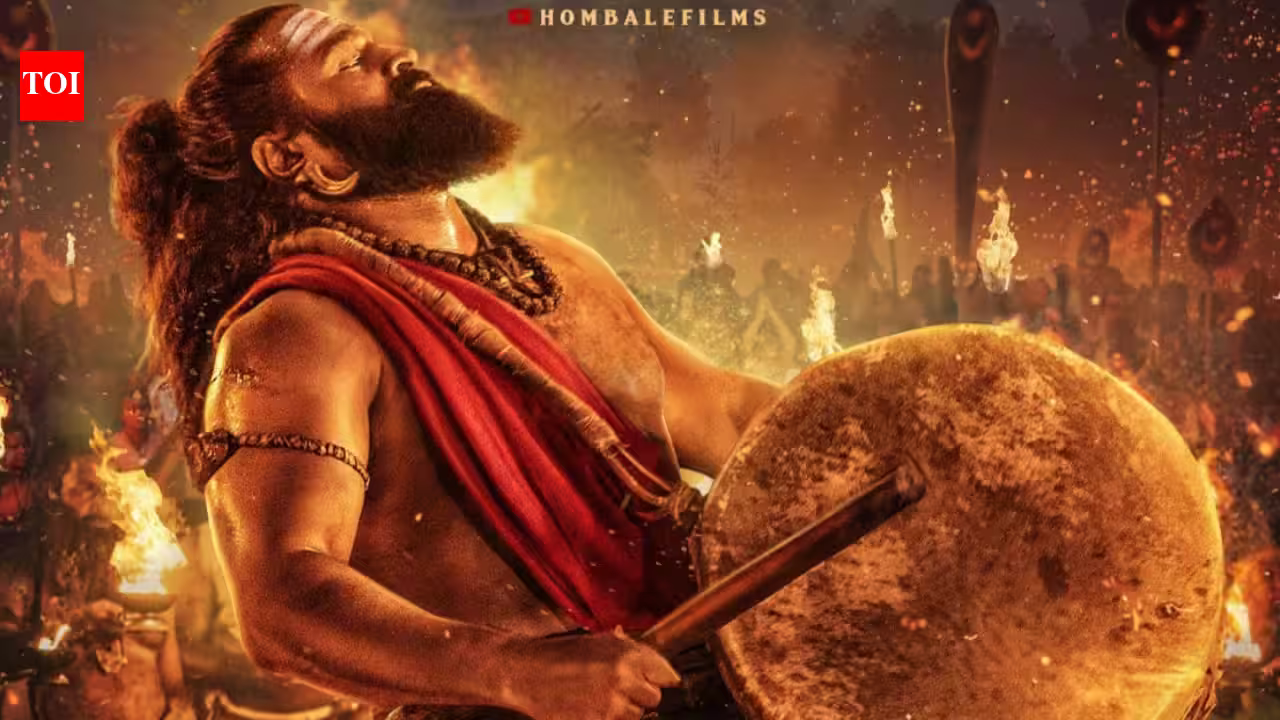
In acknowledging his team, Shetty moves away from the “auteur” label often thrust upon him by the media, preferring to position himself as the conductor of a collective dream. Bringing the 19th-century setting to life required an obsessive attention to detail, from the production design to the choreography of the Daiva Nartana sequences, which remain the spiritual heartbeat of the franchise. It is this collaborative rigor that allowed the film to feel less like a manufactured product and more like an organic entity rising from the soil itself.
The Silence of the Theatre: A Filmmaker’s True Metric
For many directors, success is measured in quarterly reports and distributor shares. For Rishab Shetty, the true metric is something far more ephemeral: the silence of a packed house. He recalls with vivid clarity the visceral reaction of the audience during the theatrical run of Chapter 1.
“The satisfaction I saw on the faces of the audience is still fresh in my mind,” he says. “That moment, that silence, that applause, and the love that followed will always remain special to me.”
There is a specific type of silence that descends during the climactic sequences of a Kantara film—it is not the silence of boredom, but the heavy, charged silence of an audience completely suspended in belief. To be the orchestrator of that collective intake of breath is perhaps the highest achievement for a filmmaker. It validates the risky choice of centering a high-budget commercial film around niche regional customs and ancestral spirituality.
A Legacy in Motion: Looking Beyond the Five-Year Mark
As we look back on the five-year journey—from the humble beginnings of the first film to the massive, sprawling world-building of Chapter 1—it is clear that Rishab Shetty has carved out a unique space for himself in Indian cinema. He has effectively bridged the gap between the arthouse sensibility of regional folklore and the high-octane spectacle of modern blockbusters.
When he speaks about the future, he does so with a sense of humility that belies his current stature as a pan-Indian star. “Five years… Two stories… One dream… An unforgettable journey,” he wrote in his retrospective. “I hope that your love, blessings, and support will continue to be with us in the same way for all our future efforts.”
Whether or not the franchise expands into a third chapter remains a topic of rampant speculation among fans. However, one thing is certain: Rishab Shetty has achieved something rare. He has proved that audiences are not just hungry for familiar sequels or superhero franchises; they are hungry for stories that speak to their own heritage, their own fears, and their own gods. Kantara Chapter 1 is not just a film that made money—it is a film that successfully staked a claim on the collective imagination of a nation. As the dust settles on this first-anniversary milestone, the legacy of the Kantara saga remains as vivid and fiery as the torches carried through its dark, ancient forests.
Disclaimer: This content is auto-generated for informational purposes only.
Source: Read Original News