









The Economic Reality of Generative AI Supply Chains
The rapid ascent of generative artificial intelligence has fundamentally altered the global semiconductor and component marketplace, creating a ripple effect that extends far beyond the high-end data centers housing massive model-training clusters. In 2026, the technology industry is grappling with a severe supply imbalance, specifically regarding memory and high-speed storage. This scarcity has introduced a new economic mandate: if a consumer electronic device requires memory or storage capacity, its production cost is subject to significant inflationary pressure. Even hardware architectures that have remained largely unchanged for several years are now caught in the wake of this supply chain disruption.
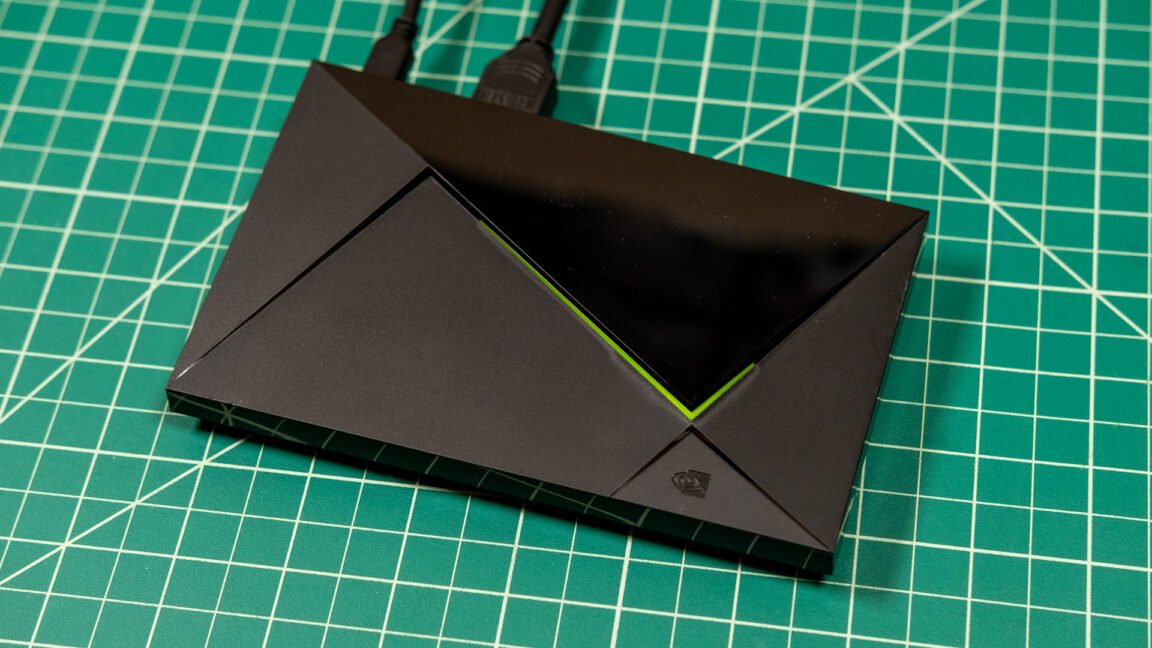
Nvidia’s recent announcement regarding the Shield TV Pro serves as a poignant case study for this phenomenon. The company has officially raised the price of its flagship streaming media player by $100, bringing the total to $299.99. This adjustment, effective immediately, highlights how the demand for high-bandwidth memory (HBM) and standard DRAM driven by AI development has prioritized resource allocation for data center hardware, leaving legacy consumer products to compete for increasingly expensive and limited components.
The Technical Longevity of the Shield TV Pro
To understand why a device originally released in 2019 is still subject to current market volatility, one must evaluate its technical specifications. The Shield TV Pro remains a high-performance media streamer, anchored by the Nvidia Tegra X1+ processor. While this silicon is technically aging, it was designed with significant headroom, allowing it to remain competitive even against modern streaming alternatives. The device utilizes hardware-level decoding for a vast array of media formats, including advanced HDR standards and high-bitrate streaming protocols.
Perhaps the most defining feature of the Shield TV Pro is its AI-enhanced upscaling engine. By utilizing a neural network trained on a wide variety of video content, the device can upscale low-resolution media to 4K in real-time. This processing capability, paired with consistent software updates from Nvidia, has allowed the device to maintain its relevance in home entertainment ecosystems long after its original launch cycle. Because Nvidia continues to actively manufacture these units rather than selling off an older stockpile, the device is fully exposed to the current procurement costs of modern RAM and flash storage modules.
Market Pressures and Component Scarcity
Nvidia has been transparent about the factors influencing the price hike, explicitly citing the rising costs of internal components as the primary catalyst. In a statement regarding the adjustment, the company noted that the global price of memory has increased substantially. Because the Shield TV Pro relies on specialized integrated circuits for its storage and system memory, it is forced to compete for fabrication capacity against high-margin products like smartphones, workstations, and enterprise AI accelerators.
In the current industrial climate, manufacturers of AI hardware are willing to pay premiums to secure supply chains, which inevitably forces component vendors to raise prices across the board. For a niche product like the Shield TV Pro, which relies on a set bill of materials (BOM) that cannot easily be swapped for cheaper, lower-performance alternatives, the increased cost of these fundamental building blocks is passed directly to the consumer. This reality shatters the illusion that aging hardware is exempt from the inflationary pressures of new-age computing demands.
Use-Cases for High-End Streaming Hardware
The Shield TV Pro occupies a specific segment of the market that prioritizes high-fidelity playback and flexible software environments. Unlike entry-level streaming sticks that are often subsidized by data collection or digital storefront integration, the Shield TV Pro has functioned as a premium media hub. It is frequently employed by power users for high-bitrate media streaming via personal home servers, specialized gaming applications, and complex emulation setups.
The value proposition for these users rests on the device’s reliability, its robust interface, and its ability to handle demanding media files without stuttering. The longevity of the Shield TV Pro has been bolstered by its frequent software updates, which have provided stability and feature parity with newer devices. However, at a $299 price point, the device moves into a new tier of market expectations. Consumers looking for simple content consumption may now find it difficult to justify the cost, whereas power users must decide if the specific hardware-based decoding and upscale features remain worth the premium over lower-cost competitors.
Long-Term Impacts on Consumer Electronics
The price adjustment of the Shield TV Pro is likely a harbinger for the broader consumer electronics market. As the appetite for AI-integrated systems continues to scale, the secondary and tertiary hardware markets will continue to experience volatility. Companies that maintain “passion projects”—hardware lines that are kept alive for a loyal, albeit smaller, user base—are finding it increasingly difficult to absorb the costs of component inflation.
This trend suggests that consumers may see fewer long-lived hardware devices in the future. As supply chains become more consolidated around AI-focused production, manufacturers will be forced to either discontinue legacy models or aggressively raise prices to ensure the profitability of each unit produced. The Shield TV Pro’s transition from a $199 device to a $299 device acts as a diagnostic indicator of a shifting technological landscape. It is a stark reminder that in an era dominated by generative AI and massive computing power, the basic building blocks of any digital device—the memory and the storage—have become the most precious commodities, effectively setting the floor for prices across the entire consumer hardware industry.
Disclaimer: This content is auto-generated for informational purposes only.
Source: Read Original News