






The issue of Hindi imposition has once again come in handy for the ruling DMK to beat the opposition AIADMK and its NDA ally, the BJP, as the Tamil Nadu Assembly election campaign gains momentum.
This time, it is the CBSE syllabus, mandating the three-language formula from the current academic year, that has provided the opportunity to target the NDA and the Modi government for being hell-bent on thrusting Hindi under the guise of educational reform in tune with the National Education Policy (NEP) 2020.
Advertisement
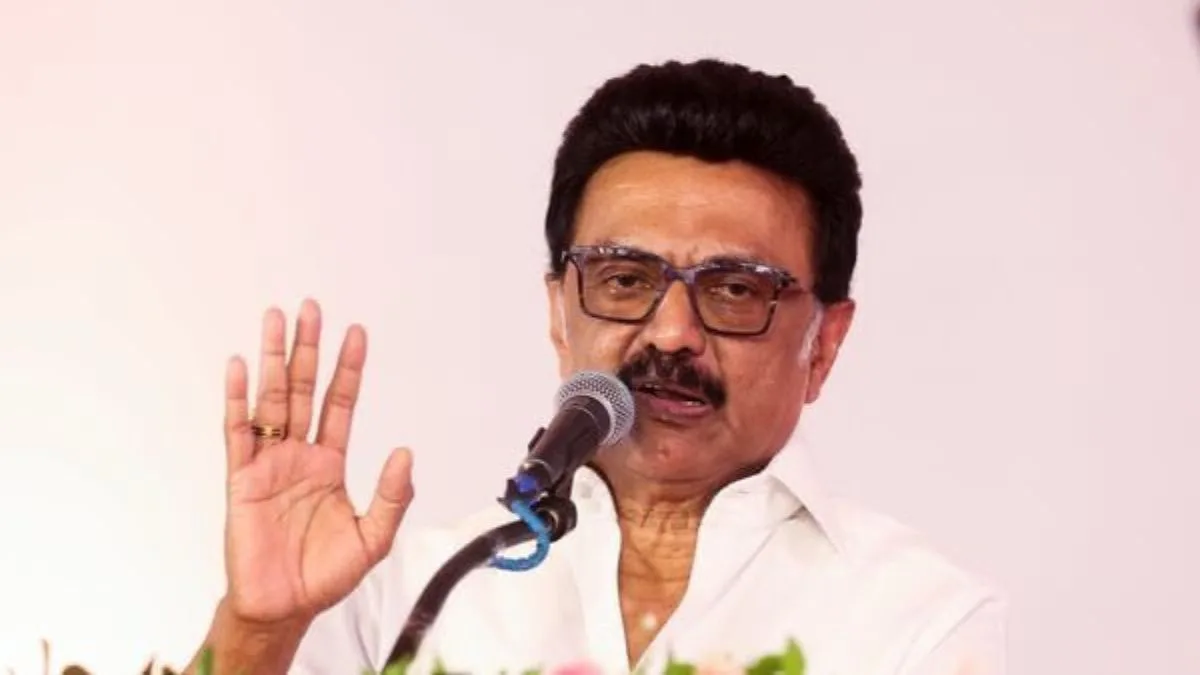
“The recently introduced CBSE syllabus is no ordinary move aimed at education reform in tune with the NEP 2020. Rather, it is a well-conceived nefarious attempt towards linguistic imposition, confirming our long-held apprehensions and a matter of serious concern,” Chief Minister and ruling DMK president MK Stalin said on Saturday, asking the AIADMK general secretary Edappadi K Palaniswami and the NDA constituents whether they accept this onslaught.
“In the guise of promoting Indian languages, the BJP-led Union government has been aggressively engaged in giving priority to Hindi and making it a central pivot while disregarding India’s rich and pluralistic linguistic heritage. The three-language formula is essentially a drive to expand Hindi in non-Hindi-speaking states,” the Chief Minister wrote on ‘X’, adding, “this is nothing but compulsory Hindi for students of southern states.”
Questioning the absence of mutual exchange, he asked whether students in the Hindi heartland are mandated to learn Tamil, Telugu, Kannada and Malayalam or Bengali and Marathi. The absence of clarity on this clearly exposes the underlying bias and discrimination, he pointed out.
“This contradiction is glaring and hence unacceptable. The Union government, which could not make Tamil compulsory in Kendriya Vidyalaya schools due to its consistent failure to appoint adequate Tamil teachers, is lecturing us on promoting Indian languages. This is not responsibility, but the height of deceitful drama,” he said, and asked whether the Modi government is aware of the paucity of adequate, qualified teachers and the requisite infrastructure to implement this.
“Where do we have qualified and trained teachers to carry this out? Where do we have the financial resources, given that this would impose a huge burden on the education sector?” Stalin further asked, describing the move as one driven by an ulterior motive but devoid of any planning, resources and responsibility. In his view, this is not only about language, but about justice, federalism, and equal opportunity. While incentivising Hindi-speaking students with concessions with regard to infrastructure and favouring them in higher education and employment, this would create an imbalance among States, he warned.
“When the need of the hour is to prepare our children for the future by enhancing their skills and scientific temper, thrusting linguistic burden on them would only be a hindrance to their progress. Also, the Union government’s aggressive imposition of Hindi is a direct insult to the linguistic identity of crores of Indians. India’s strength lies in its pluralism, not in imposed homogeneity. As such, any attempt to affect this equilibrium is not only wrong but dangerous,” he noted.