






Opposition Lawmakers Detained in Delhi as Row Over Voter Rolls Escalates
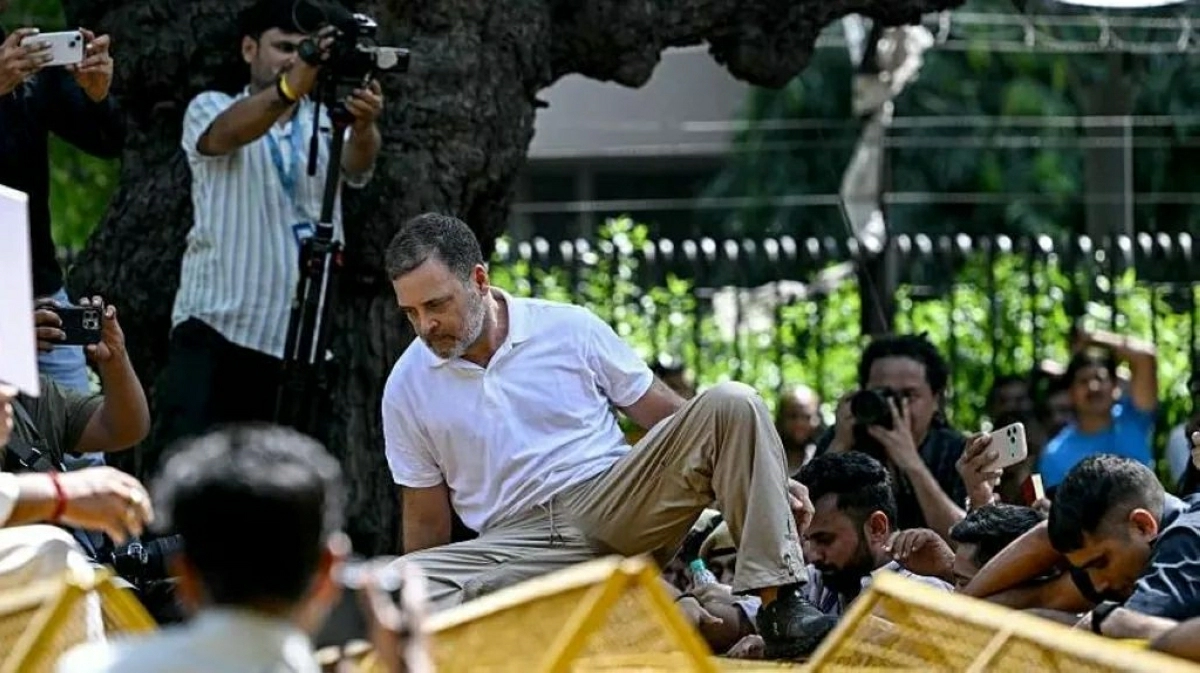
NEW DELHI — Tension flared in the national capital on Tuesday as police detained a significant number of opposition lawmakers during a high-stakes protest march. The demonstration, which saw parliamentarians march from the legislative complex to the Election Commission (EC) headquarters, was sparked by intense dissatisfaction over a nationwide revision of electoral rolls.
The unrest poses a substantial challenge to Prime Minister Narendra Modi’s administration, marking another period of instability just months after public outcry over exam paper leaks forced a cabinet resignation.
A Confrontation at the Commission
Main opposition figures, including Rahul Gandhi and Priyanka Gandhi, were among those briefly taken into custody by security forces. Despite being loaded into police buses, many returned to the site shortly after their release to stage a sit-in. Security personnel, deployed in significant numbers and clad in riot gear, blocked access routes to the EC building, leading to a tense standoff in the heart of Delhi.
Congress President Mallikarjun Kharge leveled stinging criticism at the poll body, describing it as a tool for the ruling Bharatiya Janata Party (BJP). “We are fighting to protect our democracy,” Kharge stated, outlining three core demands: the immediate resignation of Chief Election Commissioner (CEC) Gyanesh Kumar, the termination of the current Special Intensive Revision (SIR) program, and a return to paper ballot voting.
The Controversy Behind the Protests
At the heart of the standoff is the SIR exercise, which has seen over 130 million names removed from draft voter lists across the country. While the Election Commission maintains that the drive is a routine administrative measure to purge duplicate and ineligible entries, opposition parties and civil society activists allege widespread, systematic disenfranchisement of valid voters.
The movement gained significant momentum following media reports citing internal friction within the commission. Investigations indicated that two other election commissioners had lodged at least 14 formal objections over the past year, alleging that decisions were being finalized in the commission’s name without their formal consensus. The EC has since defended its procedures, asserting that internal debates are part of its institutional functions and that all outcomes were reached through collective agreement.
Judicial and Political Fallout
The crisis has now spilled into the judicial arena. The Supreme Court of India is currently reviewing a petition challenging the procedural integrity of the commission. The court has requested a formal response from the government, signaling that while it will not suspend the CEC at this stage, it expects all electoral decisions to be backed by a majority or unanimous vote.
The BJP has dismissed the protest as a manufactured crisis. Spokesperson Sambit Patra labeled the march an “anarchic” endeavor aimed at destabilizing constitutional institutions to bypass the democratic mandate.
As the protest landscape shifts, the pressure is mounting on both sides. The opposition has found unlikely allies in digital-first groups like the Cockroach Janta Party (CJP), which is planning further mass demonstrations for October 10. With the legal proceedings pending and the opposition showing no signs of backing down, the Election Commission faces one of its most rigorous tests of public trust in recent years.
Disclaimer: This content is auto-generated for informational purposes only.
Source: Read Original News