







For decades, female roles in jatra were played by men known as purush ranis, or male queens.
But even at its height, the form carried a certain stigma.
Colonial-era urban elites in Calcutta, influenced by European tastes, often dismissed jatra as rustic or unsophisticated. A 19th-Century Anglo-Indian journal derided the voices of boys playing women as “discordant”, comparing them unfavourably to “howling jackals”.
By the time Bhaduri entered the stage in the 1950s, that world was already shifting. Women had begun to take up acting roles. The space for female impersonators was narrowing. Still, Bhaduri stood out.
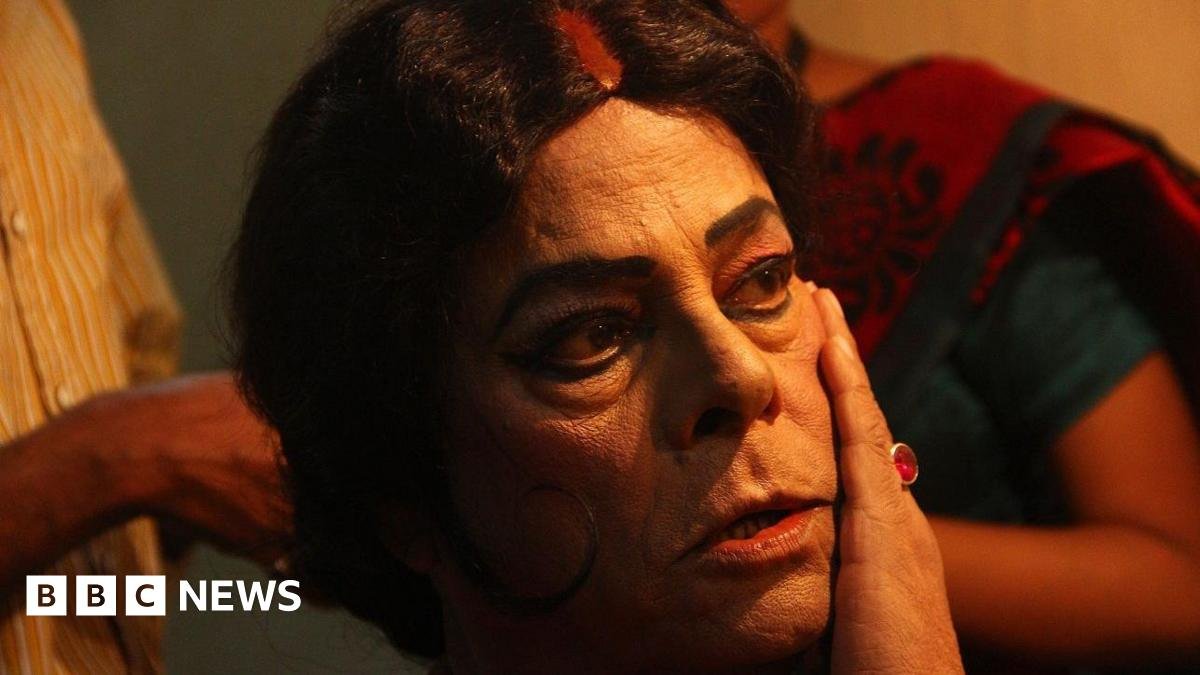
Born in 1939 in north Kolkata to stage actress Prabha Devi, Bhadhuri grew up around performers. He began acting at 16. “I had girlish manners, a girlish voice,” he would later say.
On stage, he transformed. He played queens, courtesans, goddesses and brothel madams with a studied grace.
His costumes were carefully assembled and sometimes improvised. Early on, he used rags to shape the silhouette of his bosom. Later, he turned to sponge. His beauty routine included creams, small rituals in pursuit of an illusion he took seriously.
“Femininity was always a part of me,” Bhaduri said.