








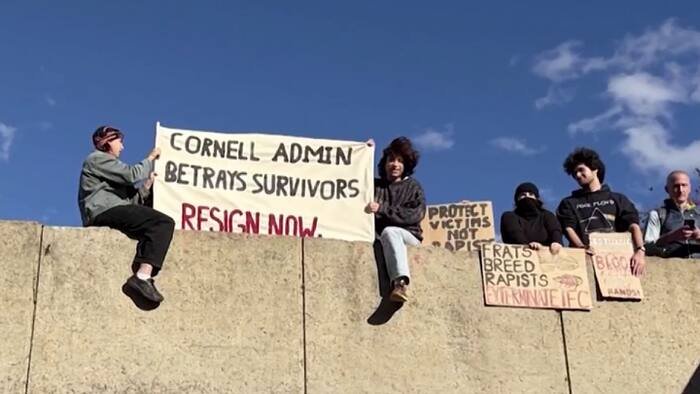
ITHACA, N.Y. – A high-profile sexual assault case involving Cornell University has taken a dramatic turn as the New York Attorney General’s office has officially reopened a criminal investigation into allegations that a student was drugged and raped inside a fraternity house two years ago.
The victim, identified in court documents as Jane Doe, was 20 years old at the time of the alleged incident. The reopening of the investigation follows her decision to file a civil lawsuit against the university and seven former fraternity members. The lawsuit alleges sexual battery, assault, breach of contract, negligence, and violations of New York’s human rights laws.
The case has ignited a firestorm of controversy on the Cornell campus, where students have staged protests demanding greater institutional accountability. According to the lawsuit, internal disciplinary actions at the university were inconsistent: two students were expelled following an internal investigation, four others received disciplinary sanctions but remained enrolled, and a seventh individual graduated before the school’s review process concluded. No criminal charges were filed when the incident was first reported two years ago.
Millicent Daniels, a Jacksonville-based attorney who specializes in campus safety and sexual assault litigation, said the case highlights the complex divide between civil and criminal proceedings.
“The criminal process and what is required for a criminal prosecution is completely different than the civil process,” Daniels said during a recent Justice 4 All segment. “These cases are never black and white. They’re never simple.”
Daniels noted that investigators are currently navigating a dense web of conflicting evidence, including social media posts, text messages, and Snapchat communications, alongside initial statements provided to school officials. She emphasized that the nuances of human psychology—specifically how fear, alcohol, drugs, and shame impact a victim’s timeline and testimony—require that the public refrain from rushing to judgment while the investigation unfolds.
Regarding the timeline for justice, Daniels pointed out that New York law provides a significant window for litigation. Because the state has no statute of limitations for first-degree rape, criminal prosecutors maintain the authority to pursue the case at any time. Meanwhile, the victim’s civil suit, which was filed within two years of the incident, falls well within the three-year limit typically applied to cases involving university negligence.
As the legal proceedings ramp up, Daniels stressed that the case serves as a critical reminder of the responsibilities held by institutions of higher learning.
“Universities, schools, colleges—they’re not babysitters. However, they can’t be bystanders either,” Daniels said. “When allegations are being made, you have a duty to fully and thoroughly investigate it and give that due process and treat it with the seriousness that it deserves.”
As the investigation continues, the legal community remains focused on balancing the fundamental rights of the accused to due process with the right of the survivor to be heard.
Disclaimer: This content is auto-generated for informational purposes only.
Source: Read Original News