







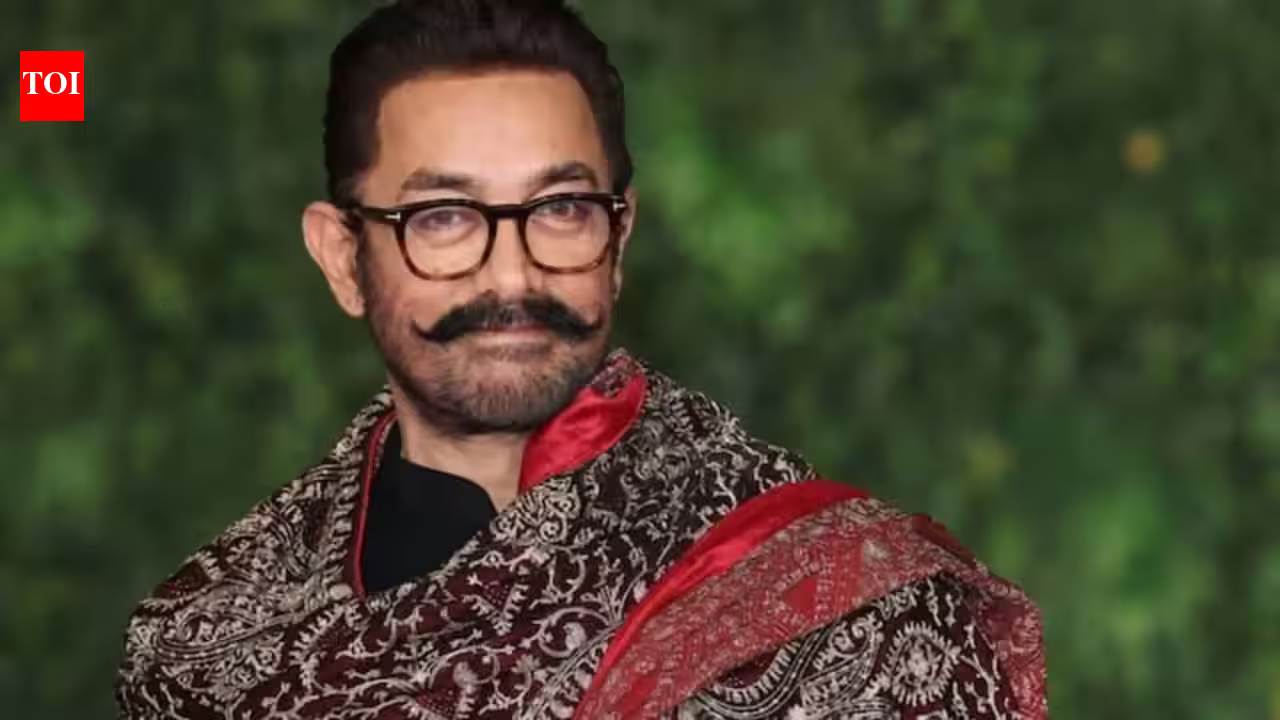
The intersection of cutting-edge technology and human creative intent has always been a volatile cocktail in the film industry, but recent events suggest we have reached a fever pitch. As Artificial Intelligence transitions from a futuristic concept to a daily production tool, the lines between artistic innovation and ethical transgression have blurred. Amidst the swirling shadows of a high-profile deepfake controversy involving actress Janhvi Kapoor, Bollywood’s perennial perfectionist, Aamir Khan, has stepped into the conversation, offering a perspective that balances awe at the medium’s potential with a sober reminder of its inherent neutrality.
Aamir Khan’s Pragmatic Take on the AI Frontier
It is rare to find a filmmaker as meticulous as Aamir Khan weighing in on the rapid digitization of cinema without his characteristic analytical edge. Addressing the media, the Lagaan star sidestepped the panic often associated with AI advancements, framing the technology not as a sentient replacement for talent, but as a sophisticated instrument.
For Khan, the debate is less about the machine and more about the hand that wields it. “Technology is a technology. There is no life in it,” he noted, emphasizing that AI relies entirely on human direction to achieve its resonance. In his view, the industry is currently undergoing a trial by fire. Much like the transition from practical effects to the early, often clunky, days of CGI, filmmakers are currently learning the boundaries of AI. Those who treat it with respect and purpose produce art; those who treat it as a shortcut inevitably fall short. It’s a classic Khan-esque take: technical mastery is merely a prerequisite, while the soul of the film remains a human responsibility.
The Mirage of the Possible: Cinema Without Limits
The most striking aspect of Khan’s commentary lies in his appreciation for the newfound creative liberation. He drew a direct line between the labor-intensive visual effects of the past and the instantaneous, AI-generated spectacles of the present.
“There was a time when you could not do what you had in your mind because the facilities and technology were not so advanced,” Khan reflected. “Today, you can show whatever you can imagine.” This sentiment touches on the ‘dream-state’ potential of cinema—the ability to render the impossible tangible. However, this vast, open horizon of imaginative possibility comes with a heavy caveat. When the barrier to entry for creating realistic imagery is lowered to a few prompts, the accountability for what is being generated must increase exponentially. While Khan advocates for the tool, he implicitly suggests that the industry’s moral compass must evolve at the same velocity as its software.
When Innovation Turns Vile: The Janhvi Kapoor Incident
The conversation regarding AI in film cannot exist in a vacuum, particularly when the technology is being actively weaponized against the very people who power the industry. The recent, deeply disturbing deepfake controversy surrounding Janhvi Kapoor’s appearance in the song “Chuttamalle” from Devara serves as the dark antithesis to Khan’s optimistic view of “imagination.”
The video, a digitally manipulated sequence designed to violate the actress’s image and dignity, sent shockwaves through the Telugu and Hindi film industries. It transformed the academic debate about AI into an urgent legal and ethical crisis. This wasn’t just a technical glitch or a harmless prank; it was a malicious act of gendered harassment. The incident highlights the terrifying ease with which AI can be used to erode privacy and consent, turning a tool for visual storytelling into a weapon of digital assault.
The Industry Strikes Back: A Call for Accountability
The reaction to the Kapoor incident was swift and ferocious, led by her Devara co-star, Jr NTR. The actor did not mince words, labeling the perpetrators “disgusting, sick, and shameless.” In a rare and powerful public statement, he drew upon cultural values, contrasting the traditional Indian reverence for women with the “vile” reality of AI-driven abuse.
Crucially, Jr NTR’s response moved beyond mere condemnation and into the realm of legal warfare. By promising to pursue “every possible legal action” against both the creators and the distributors of such content, he signaled a change in industry strategy. The era of dismissing online abuse as an unfortunate byproduct of the digital age is ending. Actors and production houses are beginning to recognize that if they don’t draw a hard line now, the very foundations of celebrity, privacy, and artistic integrity will be dismantled by the technology they are currently trying to embrace.
Bridging the Gap: What Comes Next?
As Aamir Khan prepares to step back into the spotlight with Ashutosh Gowariker’s Lalkaara—a film that will likely demand a different kind of technical transformation to portray cricket legend Lala Amarnath—the industry finds itself at a crossroads. We are entering an era where we have the technical power to replicate the past and simulate the impossible, yet we have arguably never been more vulnerable to the corruption of the present.
The tension between Khan’s “everything is possible” optimism and the harsh reality of the “Chuttamalle” fallout is the defining struggle of modern moviemaking. AI, as Khan correctly suggests, is just a tool. But as we have seen, a tool in the hands of the ignorant or the malicious can be devastating. The future of cinema will not be defined by who uses AI the most, but by who sets the strongest guardrails against its abuse. As audiences, we are witnessing a pivot point; the screen is becoming a place where we can see anything we imagine, provided we are willing to fight for the right to control what that “anything” actually is.
Disclaimer: This content is auto-generated for informational purposes only.
Source: Read Original News