








When SS Rajamouli speaks, the global film industry listens. The visionary director, who single-handedly reshaped the paradigm of Indian cinema with the Baahubali saga and the global phenomenon RRR, is back at the drawing board. His next endeavor, the globe-trotting action-adventure Varanasi, is already shaping up to be his most ambitious undertaking to date—a project so dense with detail that it is literally requiring the invention of a new world to house its narrative.
Recent reports have confirmed that the production has brought in a dedicated linguistic expert to forge an entirely new language for the film. This isn’t merely a backdrop detail; it is a fundamental plot device, central to a pivotal time-travel sequence that will test the mettle of our protagonists.
Beyond Translation: A Language Built for Mystery
The narrative of Varanasi promises to be a complex puzzle. According to insiders, the protagonists find themselves deep within a mysterious, ancient cave system, confronted by walls covered in an indecipherable, archaic script. To progress—and likely to survive—they must decode these symbols, meaning the audience will be learning the language alongside the characters.
This level of world-building is reminiscent of high-fantasy epics like The Lord of the Rings or Dune. By creating a functional, written script, Rajamouli is moving away from the typical “mystical text” trope and toward a tactile, grounded realism. The language isn’t just there to look ancient; it is a mechanism of the plot, a key that unlocks the history of the world the characters are traversing. It implies that Varanasi is a film where the environment is as much of an antagonist as the human threats, and where the solution to a problem isn’t found at the end of a sword, but through intellectual discovery.
The Evolution of the ‘Kiliki’ Legacy
For those who have followed Rajamouli’s career, the move to create a new language is a logical evolution of his past experiments. During the production of Baahubali: The Beginning, Rajamouli collaborated with the brilliant lyricist and screenwriter Madhan Karky to birth ‘Kiliki.’ Used by the terrifying Kalakeya warriors, Kiliki was a triumph of world-building—a guttural, visceral language that made an entire army feel like a legitimate, distinct civilization rather than just faceless henchmen.
However, Kiliki was primarily a spoken tool. While it added immense flavor to the dialogue, its written form was kept to the fringes. Varanasi is aiming for a much deeper integration. By developing a written script that is vital to the progression of the story, Rajamouli is pushing the boundaries of what he proved in Baahubali. He is no longer just building a culture; he is engineering a civilization that predates the modern world, complete with its own academic record that the audience must navigate.
A Global Odyssey Through Time
The scope of Varanasi is gargantuan, even by the standards of a director known for spectacle. The story is a sprawling odyssey that promises to be as visually diverse as it is narratively dense. While the title pays homage to the ancient Indian city of Varanasi, the journey is set to be truly international.
From the sacred ghats of Varanasi to the desolate, icy expanses of Antarctica, across the plains of Africa, and into the sprawling, decadent architecture of Ancient Rome, the film is a literal trek through history and geography. This movement through time and space suggests that Varanasi is fundamentally a film about legacy and the echoes of the past in our present. By jumping between such disparate locations and eras, Rajamouli is setting the stage for a “puzzle-box” movie, where the secrets hidden in a Roman ruin might be the exact tools needed to navigate the mysteries of an Antarctic expedition.
The Power Players: Babu, Chopra, and Sukumaran
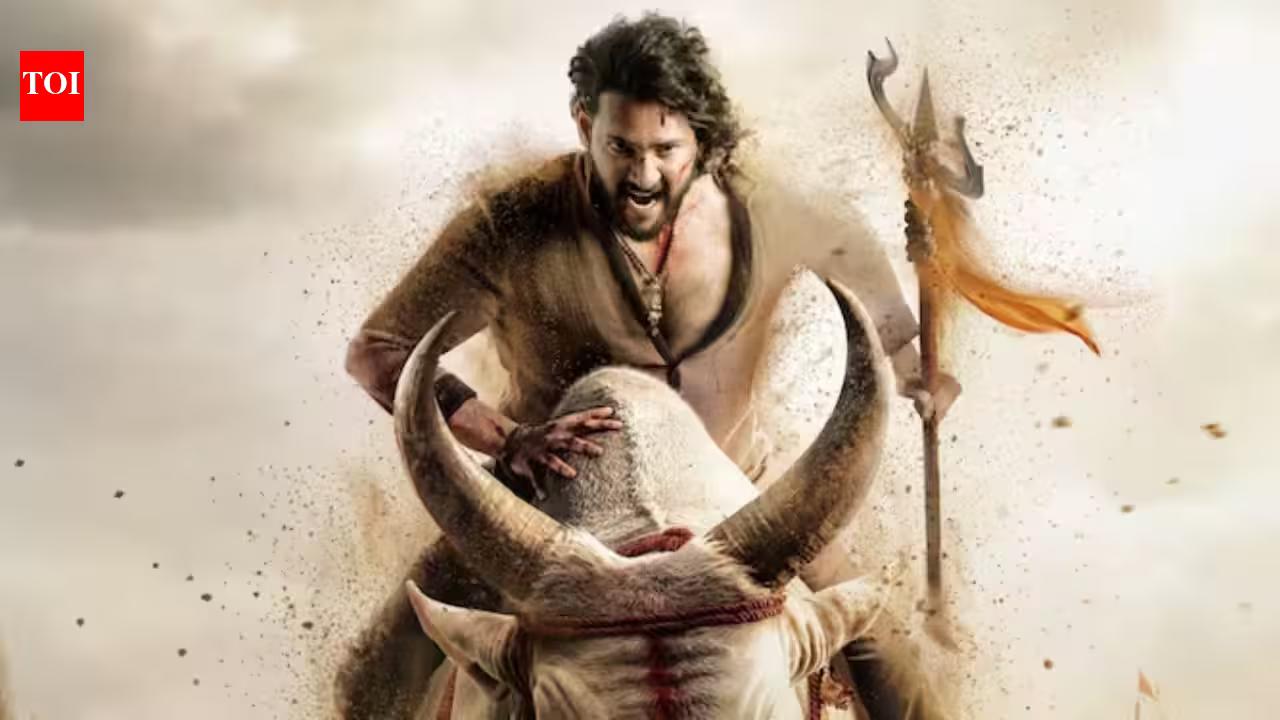
At the heart of this storm is a powerhouse cast that signals Rajamouli’s intent to bridge the gap between regional Indian cinema and a massive, global audience. Mahesh Babu, a superstar of unmatched charisma, steps into the role of Rudhra. Known for his intense, brooding screen presence, his casting as an explorer-protagonist fits the tone of a man navigating a world that seems to be breaking under the weight of its own history.
Equally exciting is the return of Priyanka Chopra Jonas to the Indian cinematic fold. Cast as Mandakini, her involvement brings a significant amount of weight to the film. As an actor who has successfully navigated the complexities of international storytelling, her return to the Indian industry in a Rajamouli epic is a major cultural event in its own right.
The tension of the film is expected to rest on the shoulders of Malayalam cinema icon Prithviraj Sukumaran, who takes on the mantle of the antagonist, Kumbha. Sukumaran has developed a reputation for choosing roles that require a certain intellectual malice, and his inclusion guarantees that the film’s conflict will be as much a battle of wits as it is a visual spectacle.
The Countdown to 2027
While April 7, 2027, might seem like a distant horizon, the anticipation for Varanasi is already beginning to simmer. Rajamouli has a track record of delivering films that exceed even the most bloated expectations. In an era where many tentpole films feel like they are churned out by a machine, Varanasi feels like it is being painstakingly handcrafted.
The decision to invent an entirely new language proves that the team is not just making a movie—they are building a universe. As the industry watches on, one thing is certain: by the time Varanasi hits theaters, we won’t just be watching a story. We will be invited to decode a world that has been hidden from us for eons. If the history of SS Rajamouli’s filmography is anything to go by, it will be a journey well worth the wait.
Disclaimer: This content is auto-generated for informational purposes only.
Source: Read Original News