








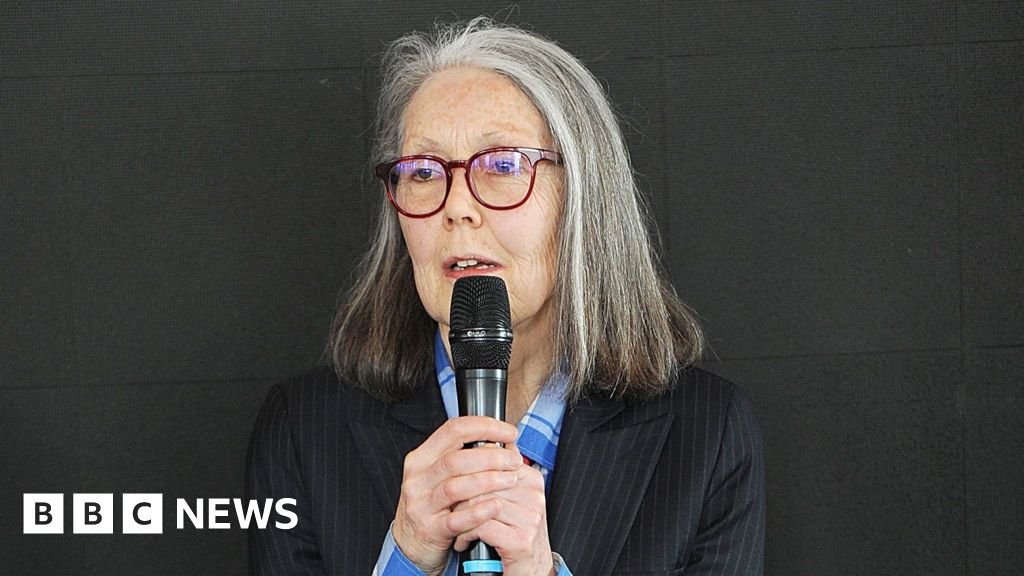
Anne Carson, the boundary-defying Canadian poet, essayist, and classicist whose work has fundamentally reshaped contemporary literature, has been thrust into the global spotlight once again following a new wave of critical acclaim for her unique synthesis of ancient scholarship and modern heartbreak. Known for her enigmatic persona and refusal to adhere to traditional genre constraints, the 76-year-old polymath remains one of the most influential—and elusive—figures in modern letters.
Carson, whose career spans over four decades, is celebrated for her ability to fuse the rigid structures of classical Greek literature with the volatile, emotive raw material of modern fiction and autobiography. From her seminal 1998 work Autobiography of Red, which reimagined the myth of Geryon through a distinctly contemporary lens, to the genre-bending brilliance of The Beauty of the Husband and Nox, Carson has spent her life dismantling the fences that divide prose from poetry.
“She doesn’t just write; she interrogates the very medium of language,” said Dr. Elena Rossi, a professor of Comparative Literature. “By treating a Sapphic fragment with the same narrative urgency as a diary entry or a scholarly footnote, Carson creates a space where history isn’t just something we study—it’s something we feel in the present tense.”
Born in Toronto in 1950, Carson spent years as a professor of classics, a background that imbues her work with a rare, surgical precision. Unlike many contemporary writers, her pages often mirror the architecture of an excavation site, where silence, white space, and stark visual design are as vital as the words themselves. Her latest works continue to explore the themes that have defined her legacy: the pain of longing, the fallibility of memory, and the persistent, haunting ghosts of antiquity.
Despite her immense prestige, which includes a MacArthur “Genius” Fellowship and multiple Griffin Poetry Prize wins, Carson has maintained a famously private life. She rarely grants interviews, preferring that her work speaks entirely on its own terms. This detachment has only added to her status as a literary icon; she is a writer who is widely revered but deeply mysterious, rarely seen at public functions or high-profile literary galas.
As younger generations of writers increasingly abandon the formal limitations of the novel in favor of “hybrid” literature, Carson’s influence is more visible than ever. She has effectively paved the way for a new movement of writers who view the rigid distinctions between fiction, memoir, and research as obsolete.
Whether she is translating Euripides or dissecting the trauma of lost love, Carson remains a singular force. At 76, she shows no signs of slowing down, continuing to challenge readers to look at the intersection of the ancient and the visceral, proving that while the world changes, the fundamental questions of human existence remain as urgent—and as difficult—as they were in the time of Homer.
Disclaimer: This content is auto-generated for informational purposes only.
Source: Read Original News