








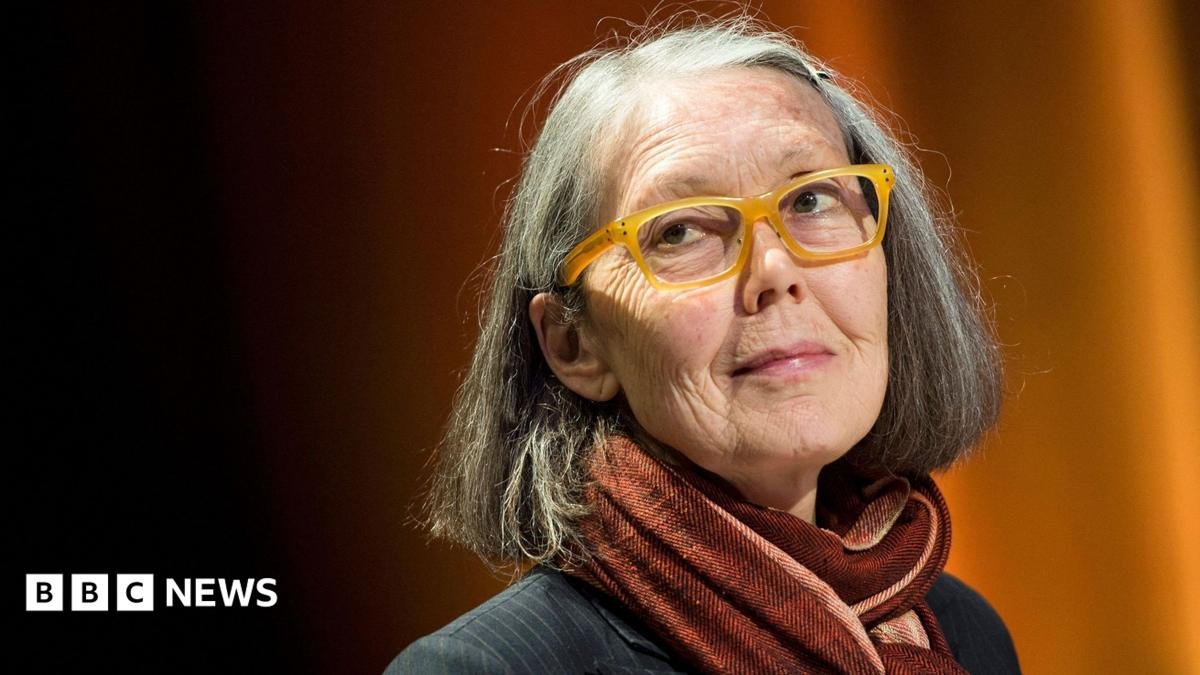
Anne Carson, the boundary-defying Canadian poet, essayist, and classicist whose work has profoundly reshaped the landscape of contemporary literature, has died at the age of 76. Known for her singular ability to weave together the ancient and the avant-garde, Carson occupied a unique space in the global literary canon, treating the rigid borders between poetry, fiction, and scholarly analysis as porous, imaginative sites rather than fixed walls.
Born in Toronto in 1950, Carson spent decades as a professor of classical studies, a background that infused her writing with a deep, haunting resonance. She did not merely translate the works of Sophocles, Euripides, or Sappho; she re-animated them, forcing their archaic anxieties into conversation with the fragmentation and loneliness of modern life.
Her breakthrough 1996 collection, Autobiography of Red, remains one of the most celebrated works of the last half-century. By reframing the myth of Geryon—a monster from the labors of Herakles—as a contemporary coming-of-age novel in verse, Carson demonstrated her signature gift: the capacity to find human tenderness and profound psychological depth in the obscure corners of the classical world. The work earned her widespread critical acclaim and solidified her reputation as a writer who could make erudition feel urgently, achingly intimate.
Carson’s influence extended far beyond the academy. She was a perennial favorite for the Nobel Prize in Literature and a recipient of numerous honors, including the Griffin Poetry Prize and a MacArthur “Genius” Fellowship. Yet, for all her accolades, she remained an enigmatic figure, fiercely protective of her privacy and deeply invested in the intellectual rigor of her craft. Her later works, such as Nox—a meditation on the death of her brother presented in the form of a fragile, accordion-folded book—showcased her penchant for pushing the physical boundaries of what a “book” could be.
Fellow writers and scholars have already begun to mourn the loss of a voice they describe as “unrepeatable.” Author Maggie Nelson once remarked that Carson’s writing possessed the rare ability to “make you feel like you are being dismantled and reassembled in real time.”
In her lectures and essays, Carson often spoke about the “economy of the unsaid,” an aesthetic philosophy that prioritized what remained hidden or fractured in a text. She leaves behind a body of work that is as challenging as it is beautiful—a labyrinth of Greek roots, visual art, and lyrical precision that invites readers to return, again and again, to search for the truths she left half-buried.
As the literary world grapples with her passing, Carson’s legacy is secured not by the consistency of her genre, but by the daring inconsistency of her reach. She taught generations of readers that history is not a relic, but a living, breathing dialogue that never truly ends.
Disclaimer: This content is auto-generated for informational purposes only.
Source: Read Original News