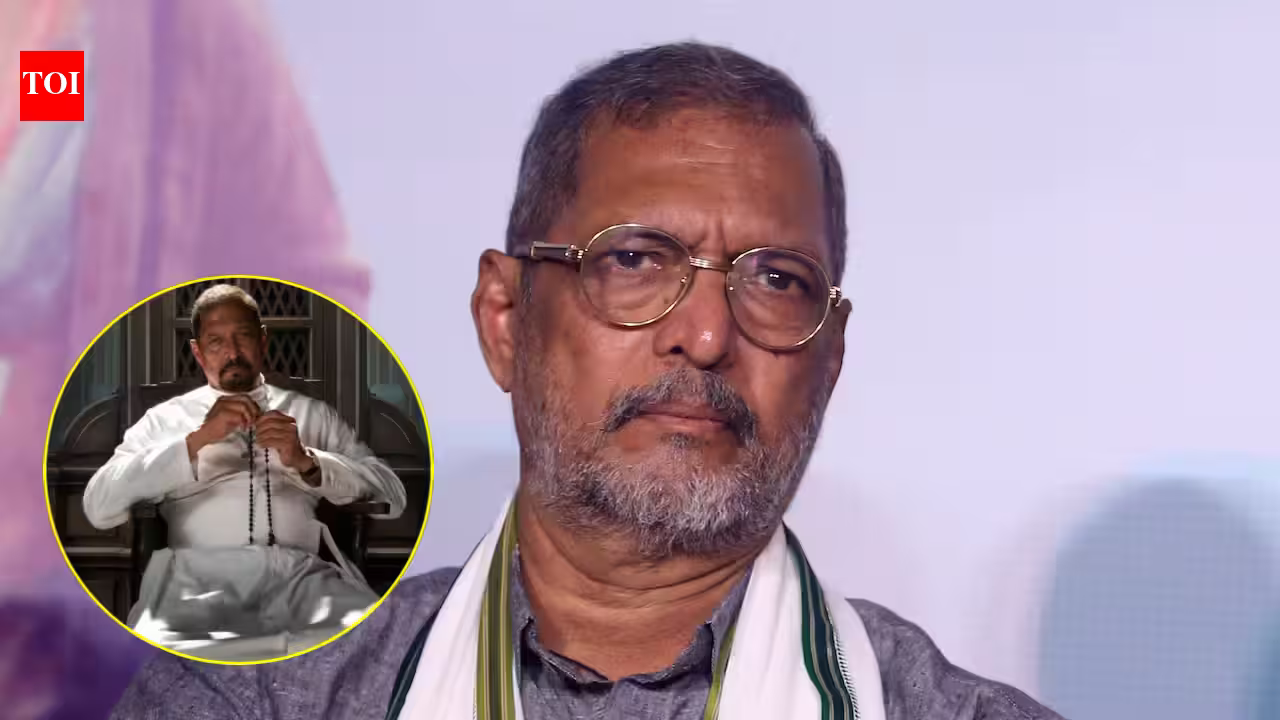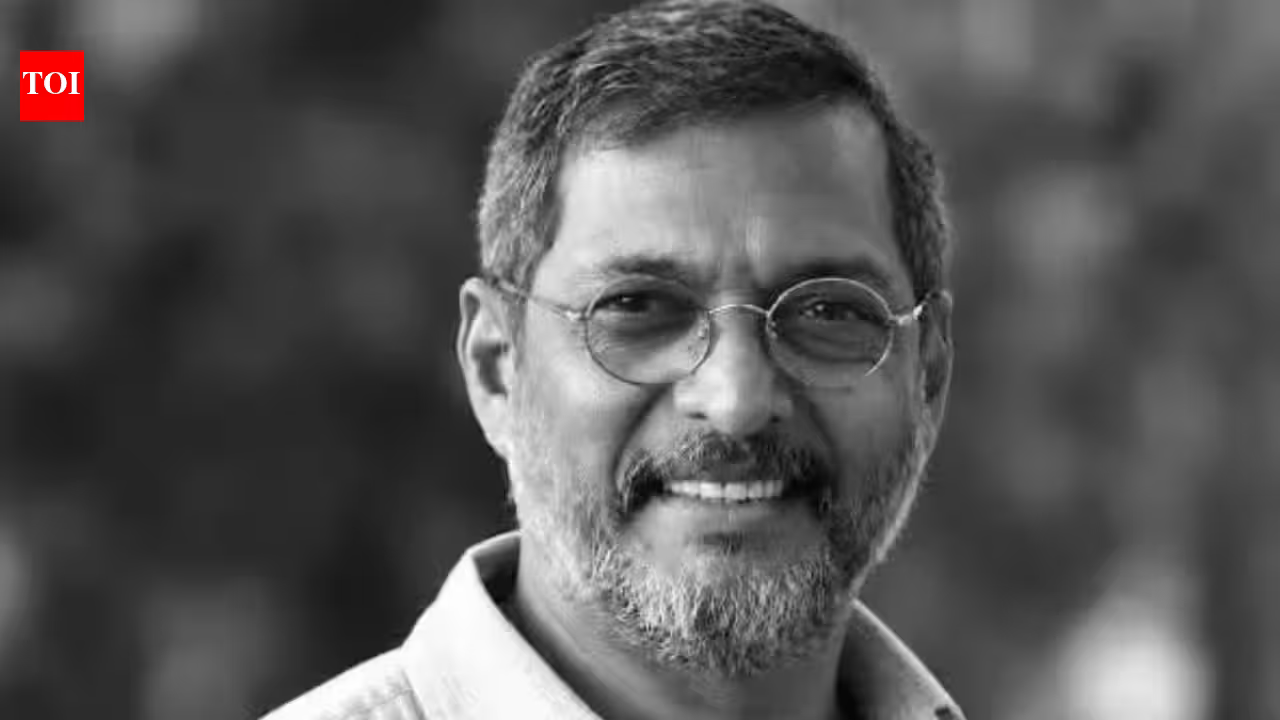







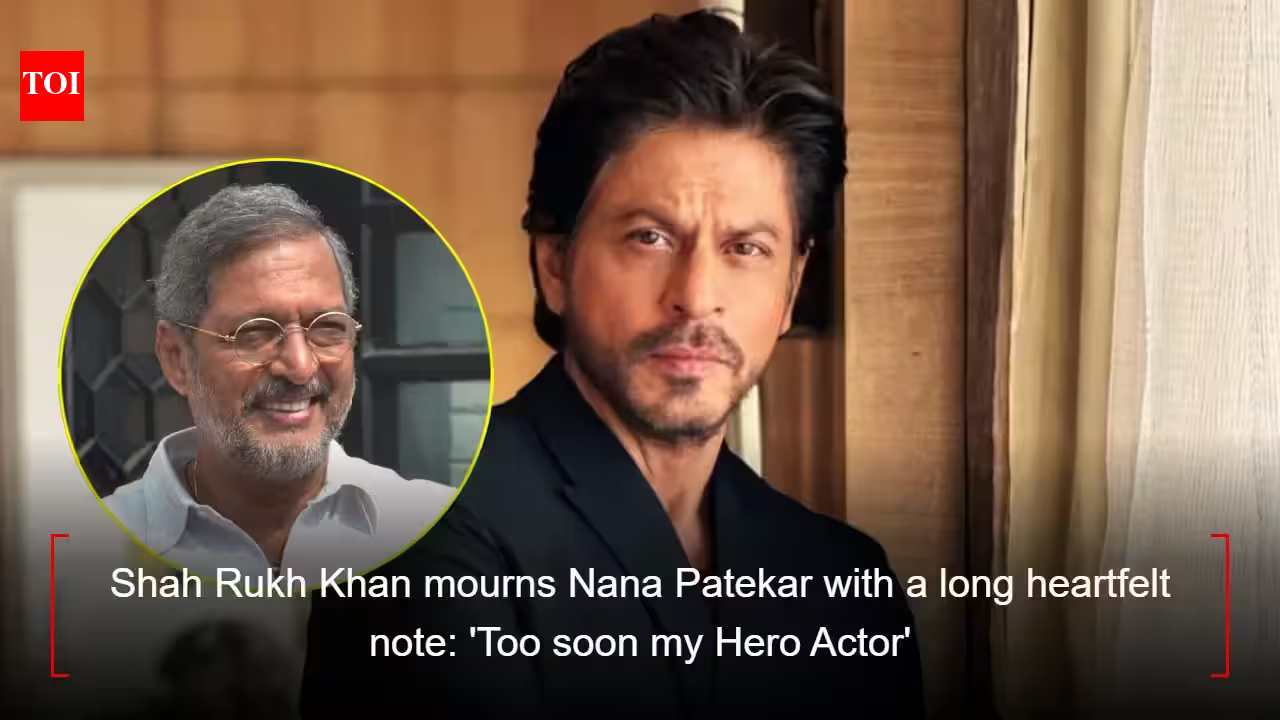
In the rarified air of Indian cinema, where stardom is often measured by box-office numbers and fan hysteria, the passing of a titan like Nana Patekar serves as a sobering, mandatory pause. When the news broke on October 8 that the 75-year-old veteran had passed away in Goa, the industry didn’t just lose a performer; it lost a conscience. Among the chorus of tributes flooding social media, the most poignant—and perhaps the most telling—came from Shah Rukh Khan, a man who sits at the pinnacle of stardom, yet clearly still harbors the soul of an eager student.
SRK’s tribute wasn’t the standard, polished PR statement. It was a raw, unfiltered recollection of a man who refused to treat the King of Bollywood like royalty. In a long, deeply personal note, Khan pulled back the curtain on a mentorship defined not by flattery, but by a series of glorious, ego-bruising insults.
The Art of the “Brutal” Mentor
The most striking anecdote from Khan’s remembrance takes us back to their very first meeting. Most veterans might offer a polite nod to a rising star, but Nana Patekar was never “most veterans.” As Khan recalled, his own nerves got the better of him, and he began fiddling with his hair out of sheer awkwardness.
Patekar, ever the purist, didn’t care for the posturing. He slapped Khan’s hand away with a blunt command: “Hero ki tarah baal mat bana… tu actor hai!” (Don’t style your hair like a hero… you are an actor).
It is a quintessential Nana Patekar moment. He was a man who famously lacked a filter, possessed a singular disdain for vanity, and prioritized the integrity of the craft above all else. For a young, burgeoning superstar to be told that his “hero” persona was a distraction—that he was, first and foremost, a laborer of the screen—was a lesson in humility that clearly resonated with Khan for the rest of his career.
Behind the Scowls, A Hidden Embrace
Beyond the stern exterior and the sharp tongue, those who knew Patekar understood the mechanics of his affection. Khan’s note captures the paradox of the man perfectly: “He would shout at you first, and then somewhere between the third or fourth insult, you realized you were being hugged.”
This was the “Nana method.” He wasn’t interested in being liked; he was interested in being true. His insults were never meant to diminish; they were, in his own abrasive way, a form of quality control. He demanded excellence from his peers because he demanded it from himself. Whether it was on a film set or during a casual, fiercely competitive game of carrom—which Khan notes the veteran loved to dominate—Patekar operated with an intensity that burned white-hot. He didn’t just walk through a scene; he inhabited it, often leaving his co-stars to scramble just to keep pace with his volcanic energy.
A Legacy Written in Grit and Grace
Born Vishwanath Patekar, his journey to the screen began in 1978 with Gaman. However, it was his evolution into a powerhouse of naturalistic, often volatile acting that defined him. Patekar didn’t do “glamour.” He did grit. From the raw desperation of Salaam Bombay! to the menacing, poetic intensity he brought to Parinda and Krantiveer, he carved out a space in Indian cinema that was exclusively his.
He was a National Film Award winner thrice over, a recipient of the Padma Shri, and a man who could pivot from the terrifying gravitas of a crime thriller to the comedic brilliance of Uday Shetty in Welcome without missing a beat. His versatility wasn’t just a parlor trick; it was a testament to his understanding of the human condition. He understood the light and the dark, the rage and the vulnerability, and he poured every ounce of that comprehension into his roles.
The Final Lesson for the King of Bollywood
As the industry grapples with the silence left in his wake, it is the specific nature of Shah Rukh Khan’s final farewell that lingers longest. Khan ended his note by acknowledging the singular piece of advice that he says he will carry forever: “Hero banne ke chakkar mein actor mat khona” (Don’t lose the actor in the pursuit of being a hero).
This is a profound realization. In an age where the “brand” of an actor often supersedes the craft, Nana Patekar stood as a reminder that the performance is all that matters. He wasn’t interested in the peripheral noise of fame; he was concerned with the truth of the character.
The void he leaves is indeed significant. We have lost not just a great actor, but a man who kept the industry honest. As Shah Rukh Khan so eloquently put it, “Too soon my Hero Actor!” While the cameras may have stopped rolling for Nana Patekar, the echo of his advice—to hold onto the craft even when the world is clamoring for the persona—will remain a guiding light for generations of actors who hope to follow in his formidable footsteps. He lived as an actor, he breathed as an actor, and in the hearts of those who truly understood his “hugs,” he will forever remain the benchmark for what it means to be one.
Disclaimer: This content is auto-generated for informational purposes only.
Source: Read Original News