








The Evolution of FidelityFX Super Resolution
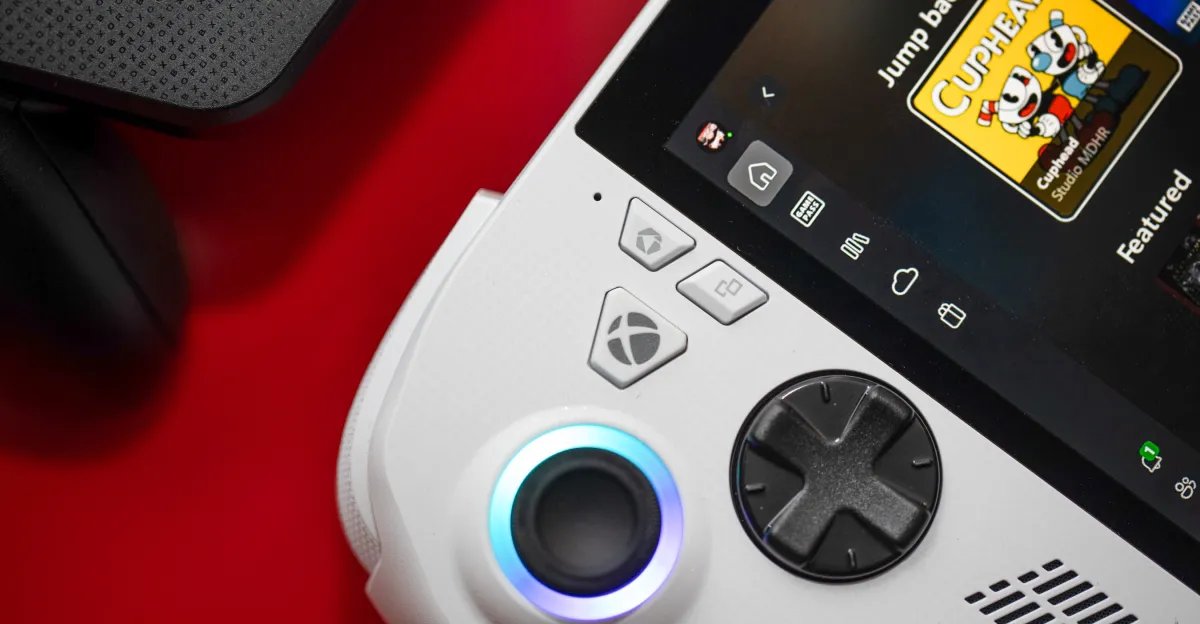
AMD is preparing to reshape the landscape of portable gaming by bringing its next-generation upscaling technology, FidelityFX Super Resolution 4 (FSR 4), to a broader spectrum of mobile hardware. Jack Huynh, head of AMD’s computing and graphics business group, recently confirmed that the company plans to integrate its artificial intelligence-driven upscaling solution into its entire product stack, specifically targeting Accelerated Processing Units (APUs), gaming laptops, and handheld consoles by the conclusion of this year.
For years, FSR has served as AMD’s answer to the challenge of maintaining high framerates in demanding modern titles. Unlike earlier iterations that relied primarily on spatial upscaling algorithms, FSR 4 represents a fundamental shift toward machine learning. This transition is critical because it mirrors the industry-wide move toward AI-assisted frame generation and reconstruction. By leveraging neural networks, FSR 4 aims to reconstruct high-resolution images from lower-resolution inputs with significantly higher fidelity, effectively reducing artifacts such as shimmering or ghosting that often plague temporal upscaling methods.
Bridging the Gap Between Desktop and Handheld
The commitment to expand this technology arrives after a period of uncertainty regarding the future of older hardware. Earlier this year, speculation surfaced that AMD might limit FSR 4 exclusively to upcoming silicon, potentially leaving the vast user base of existing devices like the Steam Deck and various Ryzen-powered handhelds behind. This led to concern that the rapid advancement of graphical fidelity in PC gaming would leave these portable machines incapable of running the latest AAA releases at acceptable performance levels.
AMD’s latest roadmap clarification suggests a two-pronged strategy. The company intends to deploy the technology not only for next-generation hardware launches but also through updates for existing APU lines. This dual approach acknowledges the diversity of the current handheld market. While newer chips with integrated AI acceleration hardware (NPU components) may offer the most robust implementation of FSR 4, AMD’s focus on existing APUs indicates that the company is optimizing the software to ensure compatibility with a wider range of thermal envelopes and architectural configurations.
Technical Hurdles and Hardware Constraints
The primary challenge in implementing AI-based upscaling on handheld hardware is the strict power and compute budget. Handheld devices operate within a narrow thermal profile, often consuming between 15 and 30 watts of power. Because FSR 4 utilizes machine learning models, the computational cost of running these inferences must be balanced against the power allocated to the graphics core. If an upscaler requires too much GPU overhead to function, the net gain in framerate becomes negligible.
Executives at AMD, including David McAfee, have previously emphasized that the company’s priority remains the quality of the gaming experience. The hesitation to commit to older hardware stemmed from a desire to ensure that FSR 4 would not negatively impact frame pacing or induce excessive latency on systems with lower compute capacity. As AMD refines the FSR 4 model, it is likely that the company is working on tiered levels of optimization, allowing the software to scale its complexity based on the specific capabilities of the underlying silicon. This would allow a high-end gaming laptop to utilize a more demanding version of the algorithm while a legacy handheld might run a lighter, more efficient variant.
Use-Cases and Impact on Mobile Gaming
The deployment of FSR 4 on handhelds is poised to transform the mobile gaming experience. In current setups, players often face a compromise between native resolution, which can severely tax the battery and thermal capacity, and lower-resolution rendering that results in a blurred, indistinct image. FSR 4 aims to mitigate this by providing a cleaner reconstruction that holds detail better during motion.
For users of current-generation handhelds, this update could extend the lifecycle of their devices significantly. By allowing games to be rendered at 720p or 900p and scaled to a crisp 1080p or 1200p output, the device can maintain consistent framerates even in graphically intensive scenes. Furthermore, because AI-driven upscaling is often more efficient than brute-force rendering at native resolutions, players may also see improvements in battery life, as the GPU load is redistributed toward lighter rendering tasks.
The Future of AMD Silicon Integration
Looking ahead, the news also hints at the release of new, FSR 4-capable chips designed to be the foundation of future mobile hardware. These chips are expected to feature dedicated hardware blocks optimized specifically for AI workloads. By offloading these calculations from the general-purpose shaders, AMD can provide a more responsive and higher-quality upscaling experience.
As the industry converges on AI as the primary method for scaling performance, AMD’s strategy to bring FSR 4 to the entire product line positions the company to remain competitive against rival solutions. Whether it arrives via a simple driver update for existing machines or through new hardware releases, the integration of machine learning into the graphics pipeline is a necessity for the next phase of gaming. AMD’s decision to focus on both legacy support and new product development ensures that users at every tier of the mobile ecosystem will eventually benefit from the performance gains of modern upscaling. With the end-of-year deadline approaching, the gaming community remains focused on how effectively these software optimizations will perform in real-world scenarios across the diverse array of available portable hardware.
Disclaimer: This content is auto-generated for informational purposes only.
Source: Read Original News