








ISLAMABAD – Pakistan’s federal government declared a state of emergency in the northwestern Khyber Pakhtunkhwa province on Sunday, a dramatic escalation in the country’s deepening political crisis that effectively sidelines the provincial administration led by the opposition Pakistan Tehreek-e-Insaf (PTI).
The state of emergency, invoked under two articles of the constitution, was formally approved by President Asif Ali Zardari following an emergency session of the cabinet led by Prime Minister Shehbaz Sharif. The government’s move effectively suspends the PTI-led provincial government, citing what officials described as the “provincial government’s deliberate disengagement from the fight against terrorism.”
While the constitution permits the federal government to assume control of provincial functions during such emergencies, the President’s office has yet to outline the specific mechanism for how Khyber Pakhtunkhwa will be administered moving forward.
The move triggered immediate fallout in the region. PTI lawmaker Junaid Akbar confirmed that Sohail Afridi, the Chief Minister of Khyber Pakhtunkhwa, has been taken into custody alongside the party’s provincial president. The arrests serve as a significant blow to the PTI, the political vehicle of jailed former Prime Minister Imran Khan, which has governed the northwestern province for years.
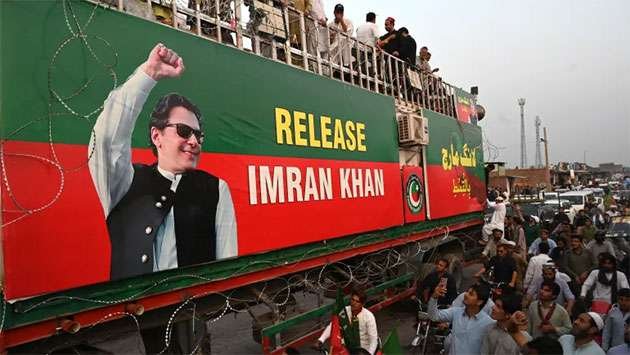
The federal crackdown comes as the PTI prepares for a high-stakes protest march toward Islamabad. Originally planned for late September and pushed to October 4, the march is intended to pressure the government into releasing Khan, who remains a deeply influential figure despite spending more than three years behind bars.
The government has signaled it will not tolerate the march, signaling a potential standoff. For weeks, authorities have fortified the capital, installing massive shipping containers and barricades across main access routes to seal off the city from incoming demonstrators.
PTI spokesman Zulfikar Bukhari condemned the invocation of emergency powers as a reckless act that ignores the democratic process. “This decision will only lead to further bloodshed, instability, and collateral damage,” Bukhari told Reuters. He suggested that while the opposition had hoped for a diplomatic resolution, the federal government’s latest maneuver proves it never had any genuine intention of engaging in meaningful negotiations.
Political analysts warn that the suspension of an opposition-run provincial government is a risky move that could ignite further unrest across a nation already struggling with severe economic pressure and a volatile security landscape. By stripping the PTI of its institutional power base in the northwest, the federal government may have effectively ended the current window for dialogue, setting the stage for a volatile confrontation on the streets of Islamabad this coming week.
As of Sunday evening, troop movements were reported near the provincial capital of Peshawar, and the country remains on high alert as both the government and the PTI prepare for a collision that could define the future of Pakistan’s fragile democratic order.
Disclaimer: This content is auto-generated for informational purposes only.
Source: Read Original News