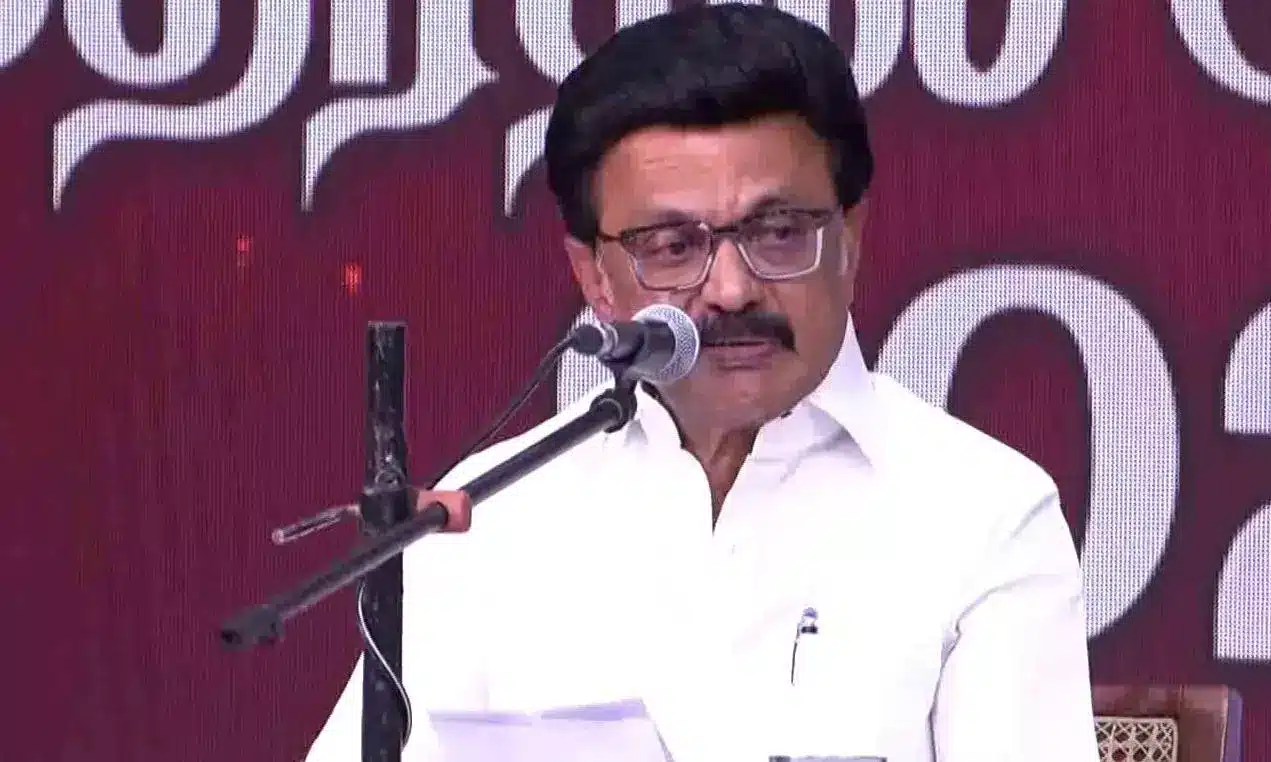
Tamil Nadu Chief Minister M. K. Stalin has firmly reiterated that the state will not implement the three-language formula under the National Education Policy (NEP), calling it an attempt to impose Hindi on non-Hindi-speaking regions.
Speaking ahead of the state elections, Stalin said that as long as his party, the DMK, remains in power, the policy will not be adopted in Tamil Nadu.
Political Clash Intensifies Over Language Policy
The remarks have triggered a sharp exchange between Stalin and Union Education Minister Dharmendra Pradhan.
Stalin argued that the three-language formula undermines India’s linguistic diversity and pushes a “one-size-fits-all” approach. He claimed that the policy indirectly pressures states by linking compliance to funding.
In response, Pradhan defended the NEP, stating that it promotes multilingualism and does not mandate Hindi. He emphasised that students are free to choose additional Indian languages alongside their mother tongue.
Funding Dispute Adds to Tensions
The controversy has deepened with allegations that the Centre has withheld ₹2,200 crore under the Samagra Shiksha Scheme.
Stalin accused the Union government of using financial allocations as a tool to enforce policy compliance. He said the funds belong to the people of Tamil Nadu and should not be conditional.
The Centre has denied these claims, maintaining that no language is being imposed under the policy.
Election Context Shapes the Debate
The language issue has emerged as a major political flashpoint ahead of the Tamil Nadu Assembly elections. Stalin expressed confidence in a sweeping victory, stating that the DMK is well-positioned to win all constituencies.
The debate reflects long-standing sensitivities in Tamil Nadu over language and cultural identity, where resistance to Hindi imposition has historically shaped political narratives.
Why the Three-Language Formula Is Controversial
The three-language formula under NEP encourages students to learn:
- Their mother tongue or regional language
- Hindi or another Indian language
- English or an additional language
Supporters argue it enhances linguistic skills and national integration. Critics, particularly in southern states, view it as disproportionately favouring Hindi.
The ongoing dispute between the Tamil Nadu government and the Centre highlights the broader national debate on language, identity, and education policy. As elections approach, the issue is expected to remain central to political discourse in the state.