







Bridging the Gap: The Imperative for Digital Humanities in Modern Education
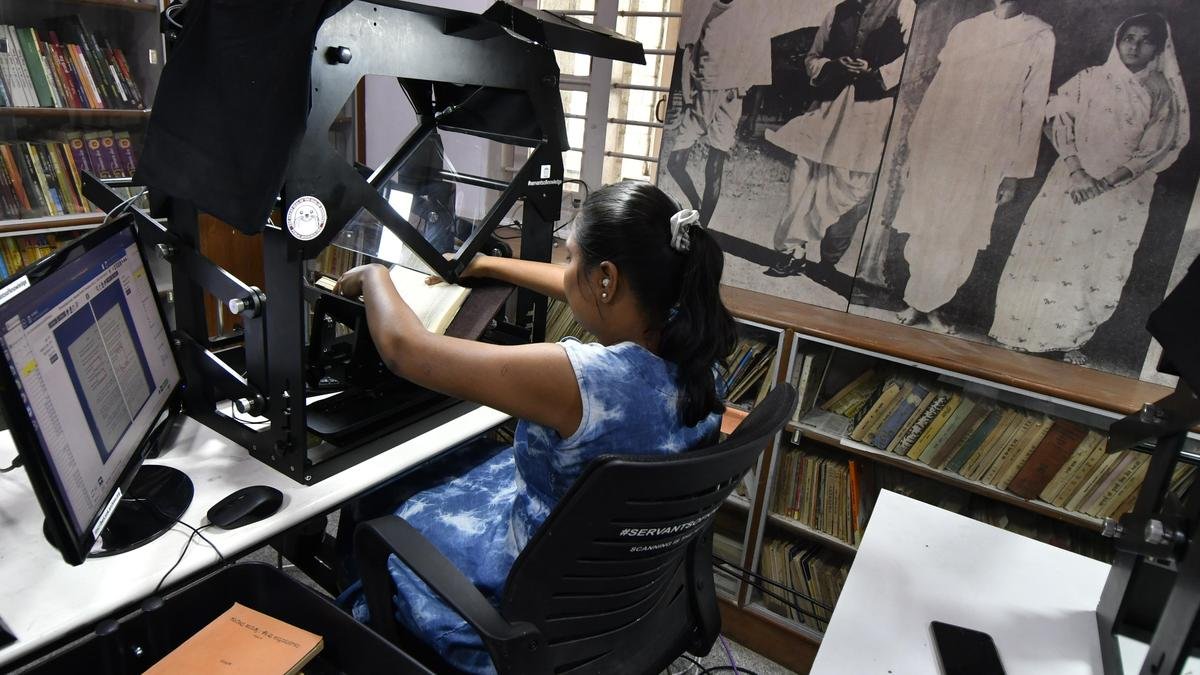
The global landscape of higher education is undergoing a seismic shift as the humanities and social sciences increasingly integrate with computer science. This interdisciplinary fusion, known as Digital Humanities (DH) or computational social science, is transforming how we study history, linguistics, sociology, and cultural studies. While elite institutions like the IITs and top-tier global universities are proactively restructuring their curricula to accommodate this evolution, a concerning divide persists. Many State and central universities remain anchored to traditional methodologies, often responding to declining enrollments by closing departments rather than modernizing their academic identity.
A Historical Evolution: From Punch Cards to AI
To understand the necessity of this shift, educators must recognize that DH is not a sudden trend, but a trajectory that began in the late 1940s. Its origins are found in the work of Jesuit scholar Roberto Busa, who utilized early mainframe computers to process millions of words for the Index Thomisticus.
Throughout the 1960s and 70s, “humanities computing” evolved from simple frequency counts to complex textual encoding. The 1987 launch of the Text Encoding Initiative (TEI) marked a turning point; it allowed scholars to structure texts as data, making them searchable, interoperable, and reusable. By the 1990s, the advent of the World Wide Web democratized access to these digital archives, moving scholarship from isolated projects to networked, collaborative environments.
Adapting to the “Data Humanities” Era
The current era, spanning 2010 to the present, has seen a transition toward “data humanities.” This shift emphasizes “distant reading”—a computational approach where large-scale text mining allows researchers to analyze thousands of documents for themes, stylistic patterns, and sentiment, rather than reading each text individually.
For the modern student, this evolution offers powerful new tools:
- Spatial Humanities: Using Geographical Information Systems (GIS) to map historical and cultural data onto geographic spaces.
- Network Analysis: Investigating the relationships between people, institutions, and intellectual movements to uncover systemic patterns.
- Critical Digital Humanities: Interrogating the cognitive and algorithmic biases embedded in the platforms and databases that shape our contemporary digital lives.
The Policy Challenge: Avoiding Obsolescence
For educational leaders and policy makers, the trend is clear: the humanities are not dying, but they are evolving. The closure of humanities departments in state-run institutions due to “zero enrollment” is often a failure of institutional policy, not a lack of student interest. By resisting the integration of digital tools, institutions risk alienating a generation of learners who expect their education to be as data-literate as it is culturally aware.
Restructuring curricula to include computational methods is not an abandonment of tradition; it is a way to revitalize it. As Artificial Intelligence begins to act as an active participant in research—capable of classifying texts, identifying patterns, and summarizing complex historical debates—the humanities must be prepared to integrate these technologies into the classroom.
The Way Forward
Higher education must move beyond the binary of “traditional versus digital.” Instead, institutions should aim to align their curricula with the reality of a technologically saturated world. This requires a proactive redesign of degree programs, moving toward a model where language teaching and social inquiry are bolstered by computational analysis. If universities fail to pivot, they risk rendering their humanities departments relics of the past. To ensure the survival and relevance of these essential disciplines, academic leadership must embrace the natural evolution of knowledge, ensuring that the humanities remain a vital, modern framework for understanding the human experience.
Disclaimer: This content is auto-generated for informational purposes only.
Source: Read Original News