








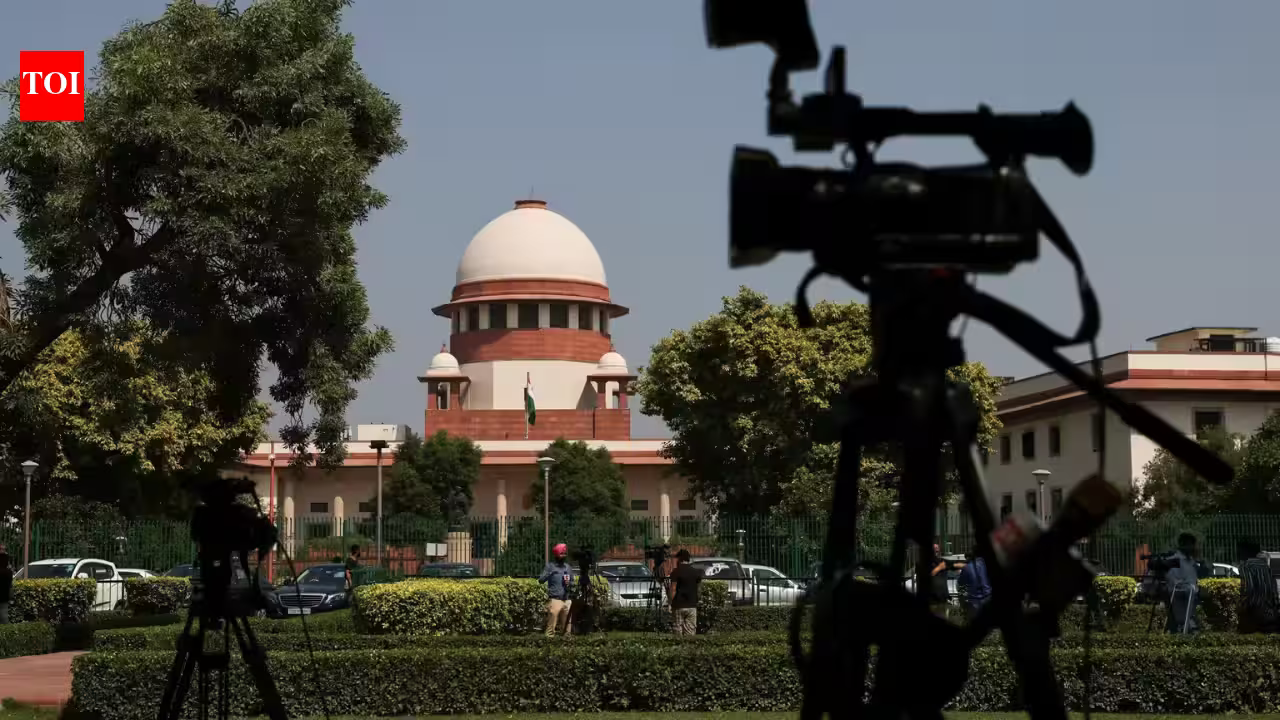
SC Curbs Police Overreach: Digital Surveillance Cannot Be a ‘Fishing Expedition’
NEW DELHI: In a landmark ruling that reinforces the fundamental right to privacy, the Supreme Court has issued a stern warning against the investigative practices of law enforcement agencies. A bench comprising Chief Justice Surya Kant and Justice Joymalya Bagchi held that police authorities cannot invoke the Information Technology (IT) Act to demand an accused’s digital footprints for periods unrelated to the alleged crime.
The court’s decision arrived while quashing a directive from the Ghaziabad Police, which had ordered the social media platform ‘X’ (formerly Twitter) to hand over the digital activity records of journalist Abhishek Upadhyay.
The Case of Proportionality
The controversy stemmed from an FIR filed in August 2024 regarding a road rage incident. While investigating the complaint, the Ghaziabad Police sought extensive digital data concerning the journalist dating back to June 1—several weeks before the alleged offense occurred.
The Supreme Court bench emphasized that investigative agencies must adhere to the doctrine of “proportionality.” The court ruled that police are permitted to seek digital footprints only after formally establishing that alternative investigative methods have been exhausted and proven inadequate. The judges observed that the police order appeared to be a “roving and fishing inquiry,” which constitutes a significant breach of an individual’s privacy.
“Information and Technology Act provisions cannot be misused by police to launch a roving and fishing inquiry by obtaining personal data of an accused in breach of right to privacy,” the bench asserted.
Allegations of Victimization
Representing the journalist, senior advocate Pradeep Rai contended that the road rage FIR was a pretext. He argued that the real motive behind the police’s aggressive digital data collection was to unmask the anonymous sources who provided Upadhyay with information regarding the alleged theft of donations at the Ayodhya Ram Temple—a story the journalist had broken on his digital platform on June 7.
The Ghaziabad Police had defended their actions, claiming the digital trail was necessary because the accused had been elusive during the initial investigation into the road rage charges, which included allegations of caste-based slurs. However, the Supreme Court found the explanation insufficient and noted a glaring discrepancy between the police’s stated intent and the scope of the data they were attempting to acquire.
Protecting Press Freedom
The court made a crucial distinction regarding the nature of investigations, noting that while deep-rooted conspiracies might warrant digital scrutiny, such measures are unjustified when they infringe upon the privacy of a journalist performing their professional duties.
In addition to curbing the scope of the investigation, the court ordered the Ghaziabad Police to return the journalist’s seized vehicle within two days. The bench also issued a strict directive forbidding the police from utilizing any private or personal information they may have already obtained from the social media platform during the period of the disputed order. The interim protection against arrest remains in effect, contingent upon the journalist’s continued cooperation with the ongoing investigation.
This judgment serves as a vital precedent, signaling to law enforcement that the power of digital surveillance is not absolute and must be balanced against the constitutional rights of citizens.
Disclaimer: This content is auto-generated for informational purposes only.
Source: Read Original News