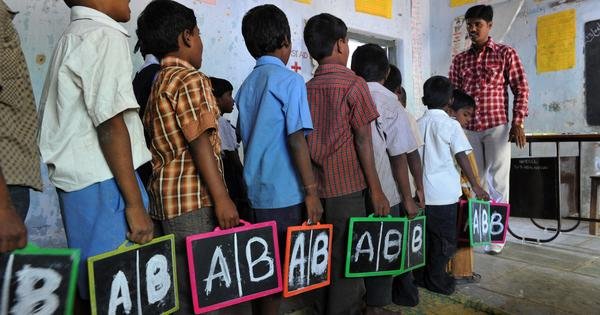
The deeper problem is that India has normalised a linguistic hierarchy in which people slowly learn to distrust their own languages, through everyday corrections, quiet embarrassment and the constant pressure to sound more “proper”, more “educated”, more “acceptable”. (“A Hindi professor responds: English is the real bottleneck stifling other Indian languages”).
It is true that in large parts of North India, speakers of Bhojpuri, Awadhi, Braj, Magahi and other languages encounter this hierarchy first through Hindi. Standardised Hindi becomes the language of respectability, of school, administration, and mobility.
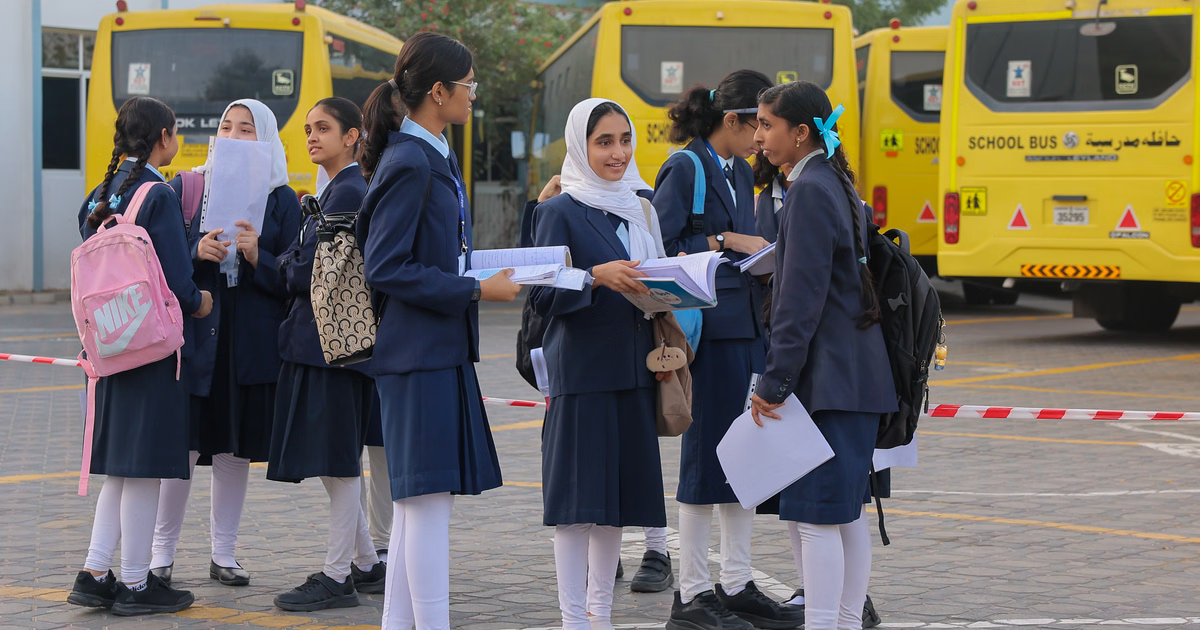
But this is where the current debate misses an important dimension. Language hierarchy does not affect all speakers in the same way. For many women, especially those entering education from non-elite and non-metropolitan backgrounds, language becomes a site of constant scrutiny.
A man negotiating between languages may still claim space despite errors. A woman’s language becomes evidence of education, upbringing, belonging. In this context, the question is how linguistic power operates at different levels and shapes who feels entitled to speak and in which language.
The current debate assumes that the solution lies in choosing the right dominant language. But Hindi’s expansion produces hierarchies that render neighbouring languages inferior. Access to English is shaped by privilege. Regional pride can often be confined to sentiment instead of building intellectual and institutional space for those languages.
India has linguistic diversity but not linguistic equality. A meaningful, multilingual framework would not force speakers to abandon one language to enter another world and nor would it reduce mother tongues to intimacy, Hindi to functionality and English to aspiration.
This requires changing how knowledge, education and opportunity become an interlocked linguistic network, and strengthening Indian languages as languages of thinking. The debate between Hindi and English will continue. But unless we recognise the hierarchy that binds them, we will keep misidentifying the problem.
The danger lies in a system that turns language into a process of self-correction, in which one is always moving away from something to become someone else. A multilingual future can only emerge when speakers no longer feel that their first language is something they must outgrow.
Namrata Singh is an Assistant Professor in the Department of Hindi at Vivekananda College, University of Delhi.