







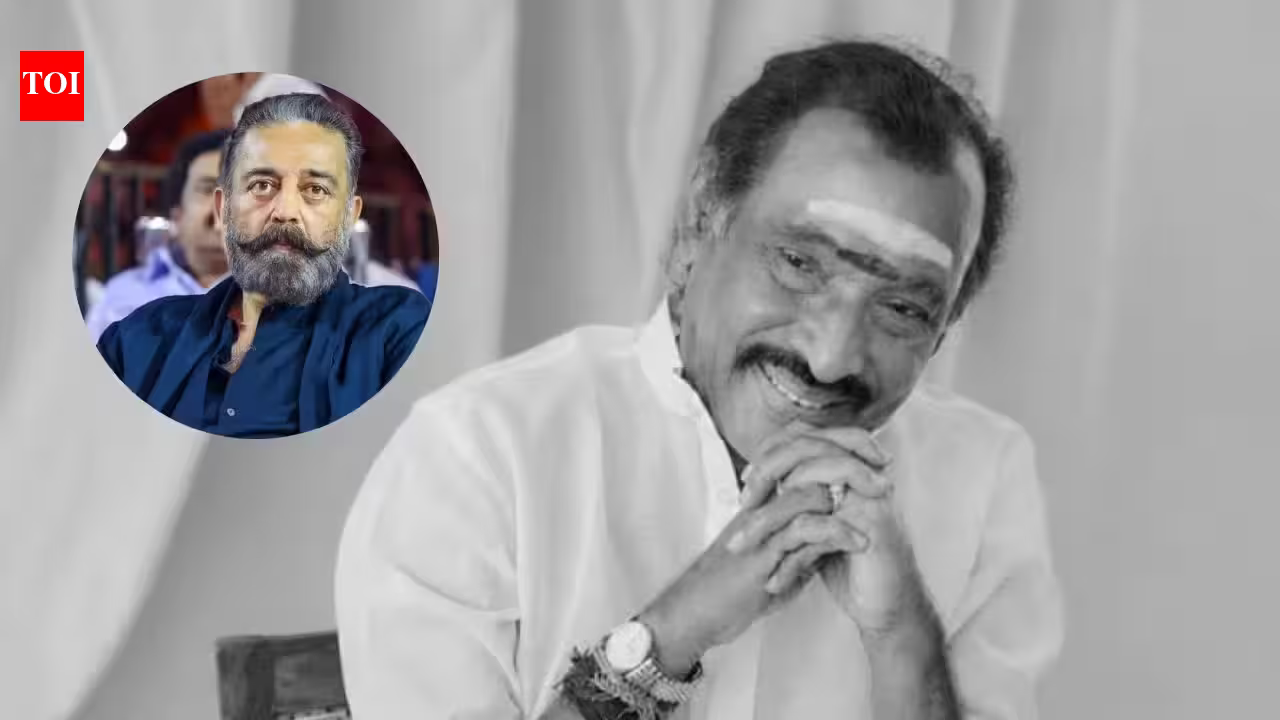
The heartbeat of Tamil cinema has slowed. This week, the industry was plunged into mourning as news broke of the passing of legendary music composer and singer Deva, who died at the age of 75 in a private Chennai hospital. Known affectionately to his millions of fans as “Thenisai Thendral”—the Southern Breeze—Deva’s departure marks the end of an era defined by foot-tapping beats, soulful melodies, and a uniquely grassroots connection that redefined the soundscape of South Indian film music in the 1990s and early 2000s.
While the loss is being felt across the entirety of the entertainment industry, the grief is perhaps most personal for those who spent years in the trenches with him, crafting the cinematic milestones that now serve as his enduring legacy.
A Bond Forged in Cinematic Brilliance
Among the many voices paying tribute, few carry the weight and intimacy of Kamal Haasan’s. The legendary actor took to social media to share a poignant, heartfelt message in Tamil, reflecting on a professional and personal partnership that spanned some of the most beloved comedies in Tamil cinema. For Haasan, Deva wasn’t just a technician or a background score specialist; he was a “dear brother.”
Their collaboration on iconic films such as Avvai Shanmugi, Pammal K. Sambandam, and Panchatanthiram remains etched in the memories of every Tamil cinema buff. Haasan’s tribute painted a picture of a man who brought as much vitality to the recording studio as he did to his life. “The news of my dear brother Deva’s passing is shocking,” Haasan wrote. “He was a vibrant soul, full of enthusiasm and zeal, with a penchant for light-hearted humor and hearty laughter.” For fans who know these films by heart, the interplay between Haasan’s wit and Deva’s spirited compositions feels like a bygone golden age—a time when music and narrative moved in perfect, rhythmic lockstep.
The Architect of the ‘Gana’ Revolution
To understand the scale of Deva’s loss, one must understand the unique space he occupied. In an industry often dominated by high-gloss, experimental instrumentation, Deva emerged as the champion of the “Gana”—the raw, rhythmic, folk-inspired music born from the streets of North Chennai. He possessed an uncanny ability to take the rhythm of the common man and elevate it to a cinematic spectacle that appealed to the multiplex crowd just as much as the neighborhood audience.
His music was democratic. It played at weddings, it echoed through bustling bus stands, and it became the anthem for a generation. By blending traditional Tamil folk sensibilities with contemporary synthesizer sounds, Deva crafted a sonic signature that was unmistakable. Whether it was the high-energy dance numbers that made superstars out of actors or the haunting melodies that anchored emotional climaxes, his versatility was unmatched. He didn’t just compose music; he composed the atmosphere of the lives of his listeners.
A Legacy of Multi-Lingual Mastery
While the heart of his genius beat in the Tamil industry, Deva’s reach was vast. His body of work spanned across Telugu, Malayalam, and Kannada cinema, proving that his understanding of melody transcended linguistic boundaries. Across these industries, he was celebrated not just for his speed—he was famously capable of producing high-quality tracks in record time—but for his distinct musical vernacular.
Filmmakers frequently praised his uncanny instinct. He understood exactly what a scene required before the director even articulated it. This intuitive approach led to his work on countless films, creating a discography that remains one of the most prolific in Indian history. From romantic ballads that became chart-toppers to high-octane background scores that defined hero-entrances, Deva was a storyteller in his own right.
The Industry Remembers a Legend
The outpouring of grief from the film fraternity is a testament to the respect he commanded. The younger generation of filmmakers, who grew up inspired by his work, have been particularly vocal about the impact of his mentorship and presence.
Filmmaker RJ Balaji, who collaborated with Deva on the devotional comedy Mookuthi Amman, spoke for many when he shared his condolences. “Deeply saddened by the passing of Deva sir, a true legend of Tamil cinema whose music has touched generations,” Balaji noted. “Having had the blessing of working with him in Mookuthi Amman will always remain a cherished memory. His legacy will live on through his timeless music.”
Similarly, voices from across the border, such as Malayalam actor Navin Pauly, underscored his cross-industry influence, stating, “Rest in peace Deva Sir… Your music will echo through generations.” Singer Chinmayi Sripaada captured the collective sentiment of the playback singing community, succinctly noting, “Just don’t know how to process the passing of Deva Sir. Huge loss.”
The Final Note: Why He Will Never Truly Be Gone
As the industry prepares to say its final goodbyes, the focus inevitably shifts from the sorrow of his passing to the immortality of his work. In an era where digital trends move at lightning speed, Deva’s music remains a constant. It is frequently revisited, remixed, and celebrated, ensuring that his influence is passed down to new listeners every day.
Deva taught the industry that music could be accessible without sacrificing quality. He taught us that a song could be both a commercial success and a cultural touchstone. As Kamal Haasan and countless others continue to share their memories, the underlying theme is one of gratitude—gratitude for the laughter he facilitated through his films, the joy he provided through his beats, and the vibrant, indomitable spirit he brought to the creative process.
The ‘Thenisai Thendral’ may have breathed his last, but the breeze he created continues to blow through the halls of cinema, reminding us of a life lived in melody and a legacy that, quite simply, refuses to fade. Rest in power, Deva Sir. The music you leave behind will keep the dance alive for a long, long time.
Disclaimer: This content is auto-generated for informational purposes only.
Source: Read Original News