







The Strategic Withdrawal of the Demo
The landscape of indie game distribution on Steam has undergone a profound shift. For years, the Steam Next Fest was considered the gold standard for independent developers to gain visibility, gather feedback, and climb the platform’s algorithm-driven wishlisting charts. However, the sheer volume of submissions has transformed these events into a crowded marketplace where even high-potential projects struggle to achieve signal density. In this hyper-saturated environment, the developers of the upcoming title Drunken Goddess Reflux have made a contrarian, high-stakes decision: they have opted out of providing a public demo.
This departure from the standard marketing playbook is not necessarily a sign of a lack of confidence. Instead, it highlights a calculated assessment of the risks inherent in the current digital ecosystem. By withholding a playable slice of the game, the developers are signaling that their intellectual property is valuable enough to warrant a direct purchase, while simultaneously protecting their unique mechanics and aesthetic direction from rapid-fire imitation by competitors and automated extraction tools.
The Threat of Generative Asset Proliferation
The primary driver behind this increased caution among developers is the rapid evolution of generative artificial intelligence. Tools such as Claude Opus, along with various image-generation models and rapid-prototyping environments, have enabled a new tier of plagiarism. In the current environment, a distinct art style or a novel gameplay hook can be ingested, analyzed, and replicated within days. Once a game begins to generate momentum on the Steam storefront—measured in followers and wishlist counts—it becomes a prime target for automated systems designed to clone its features and mechanics.
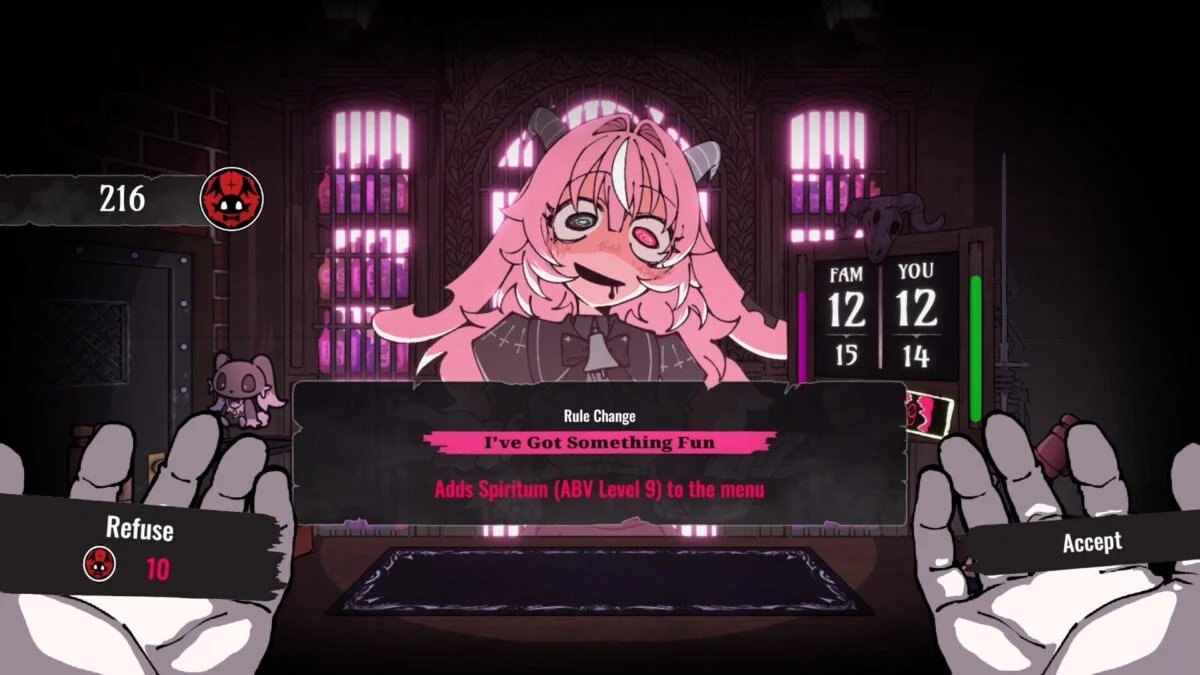
Drunken Goddess Reflux has managed to capture significant attention, currently holding the 65th spot on Steam’s top wishlisted games. With over 25,000 followers, it has become a beacon for those looking for the next breakout horror-gambling experience. By keeping the core interactive components under lock and key, the development team effectively creates a barrier to entry. They prevent potential copycats from scraping game code, art assets, or specific dialogue sequences that define the project’s identity. This strategy acknowledges that when a game’s value proposition is tied closely to a specific atmosphere or mechanical innovation, a leaked demo essentially serves as a blueprint for derivative works.
The Mechanics of Risk Mitigation
When a developer releases a demo, they relinquish a certain degree of control. In the past, this was a necessary sacrifice for marketing. Today, however, developers are reconsidering the economic cost. If a demo is released, the risk of “asset scraping” is high. Bad actors can extract character models, sound design, and even logic structures to feed into machine learning models. These models are then used to generate knock-offs, which are often pushed to storefronts like Roblox or flooded into the lower tiers of the Steam catalog.
By opting out of public testing, the creators of Drunken Goddess Reflux are prioritizing the integrity of the final release. This does not mean the game lacks quality; rather, it suggests a refinement of the development lifecycle. Without the pressure to prepare a “vertical slice” for a demo, the team can focus resources on the finished product. This approach forces consumers to base their purchase decision on trailers, screenshots, and community building, rather than a fleeting gameplay trial. It is a transition from a product-testing model to a premium-release model that views the game as a singular, protected piece of intellectual capital.
Navigating the Crowded Steam Marketplace
The decision to skip the Steam Next Fest also addresses the dilution of visibility. When thousands of demos are released simultaneously, the “noise” created by low-effort projects makes it incredibly difficult for unique titles to maintain traction. By avoiding the festival, Drunken Goddess Reflux effectively sets itself apart as an outlier. In a digital economy where curiosity is a finite resource, being the product that is not available for a quick, disposable trial can paradoxically increase the perceived urgency of the full release.
For the development team, this is an exercise in resource management. Creating a standalone demo requires significant technical overhead: debugging, balancing, and optimizing a version of the game that may not represent the final product. By consolidating these efforts into the final launch, they ensure that the audience’s first experience with the game is precisely what the developers intended.
The Long-Term Impact on Game Discovery
The shift towards restricted access could signal a broader trend in the independent gaming sector. If more developers follow suit, the era of the ubiquitous, free, instant-access demo may be coming to a close. As the barriers to copying become lower, the barriers to accessing original content will likely become higher.
The success or failure of Drunken Goddess Reflux will serve as a bellwether for this strategy. If a game can maintain a high position in the wishlists without a public demo, it demonstrates that community engagement and a clearly defined aesthetic identity are more effective long-term marketing tools than a free, easily replicable trial. As the gaming industry continues to grapple with the dual challenges of extreme marketplace saturation and the threat of automated plagiarism, the protection of intellectual property through strategic scarcity may become the new standard for independent studios. For now, the game remains an intriguing mystery, guarded by its own silence in a world that demands constant, unfiltered access.
Disclaimer: This content is auto-generated for informational purposes only.
Source: Read Original News