







While the towering turbines of offshore wind farms often dominate the horizon, the monumental task of bringing that green energy onshore remains a largely unseen, yet critical, component of the UK’s energy transition. For Reinier Zoutenbier, the onshore consenting lead for the Sheringham Shoal and Dudgeon Extensions, the challenge lies in balancing the urgent need for renewable infrastructure with the preservation of local landscapes, heritage, and community life in Norfolk.
The sheer scale of the planning required to facilitate the expansion of these offshore wind farms is immense. Securing the Development Consent Order (DCO)—the government’s mandatory approval for major infrastructure projects—required a staggering 23,000 pages of assessments. These documents detail not just the technical specifications, but exhaustive studies on potential environmental impacts, ranging from geological surveys to the protection of local biodiversity.
“What the public often sees is the finished wind farm,” says Zoutenbier. “What they don’t always see is the enormous amount of work, planning, consultation, and environmental assessment that happens long before construction starts.”
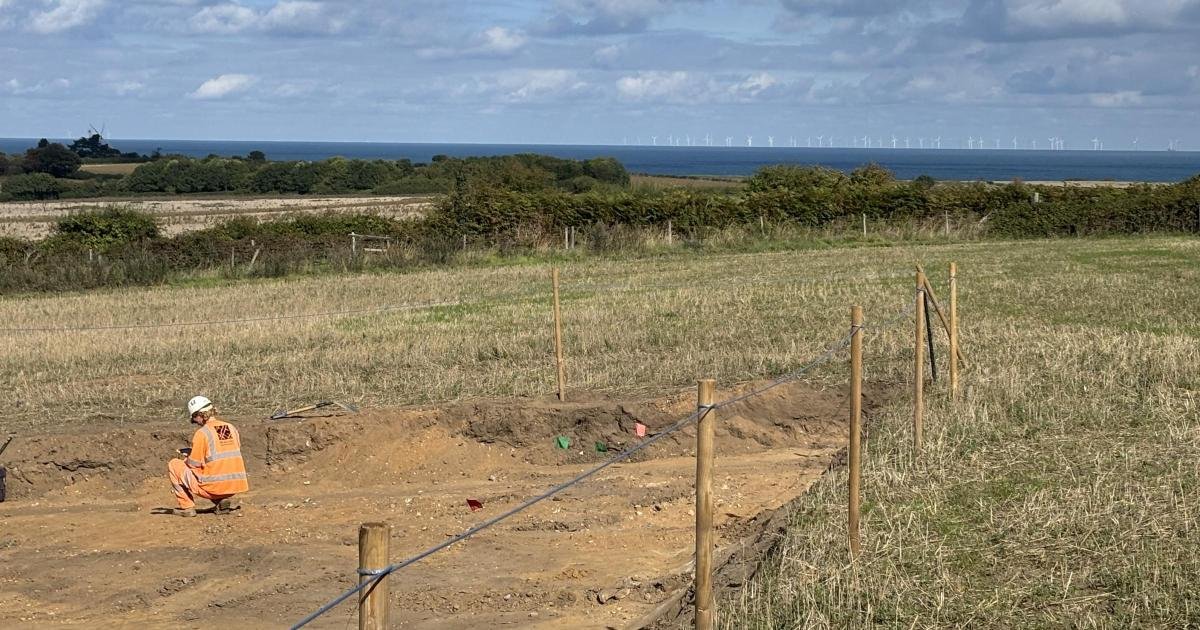
Central to this phase is the 60km cable route, which spans from the landfall point at Weybourne to the Norwich Main substation. Navigating this distance requires a delicate touch to maintain the character of the county. The project team has employed a strategy of extensive surveying, covering everything from archaeological heritage to the habitats of protected species, such as bats, badgers, great crested newts, and pink-footed geese.
The project’s methodology prioritizes avoidance over remediation. In instances where the cable route encounters sensitive areas, the engineering plan shifts to minimize surface disturbance. A notable example is the approach to Weybourne Woods, where the team has opted to drill beneath the woodland rather than clearing paths through it. This trenchless technique, known as horizontal directional drilling, is also being applied to river crossings to ensure that the ecological integrity of local watercourses remains intact.
Beyond environmental conservation, the project emphasizes social responsibility. Zoutenbier’s role involves constant engagement with stakeholders, including local authorities, residents, and landowners. This collaborative approach has yielded practical operational adjustments, such as rescheduling construction excavations to avoid clashing with the harvest schedules of local farmers. Such accommodations, according to Zoutenbier, are essential for maintaining the “social license” to operate.
“We recognize that people have businesses to run and lives to lead,” he notes. “We want to work with people rather than create unnecessary disruption.”
This meticulous preparation is part of a broader, long-term strategy to bolster the UK’s energy security through reliable, home-grown renewables. By integrating local expertise and businesses into the survey and construction phases, the project aims to ensure that the economic benefits of the energy transition are felt within the region.
For the team behind the Sheringham Shoal and Dudgeon Extensions, the goal is a seamless integration of vital national infrastructure into the local environment. As the UK continues to shift toward a cleaner energy future, the work being done in Norfolk serves as a blueprint for how large-scale utility developments can—and must—coexist with the communities and ecosystems they serve. The project team continues to engage with the public, inviting ongoing feedback as they progress toward construction, reinforcing a commitment to being a “good neighbor” while securing the grid for the future.
Disclaimer: This content is auto-generated for informational purposes only.
Source: Read Original News