






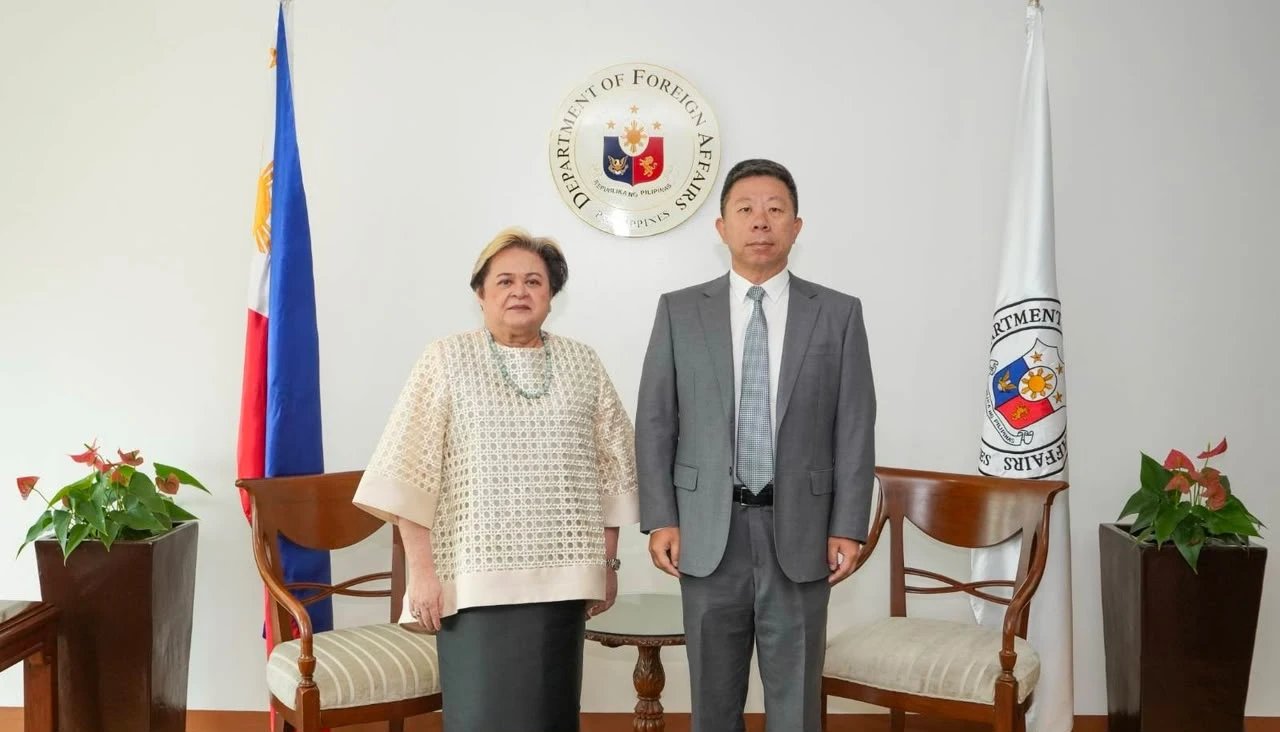
MANILA, Philippines—The Philippine government summoned Chinese Ambassador Jing Quan on Monday to issue a formal protest over remarks that Manila characterized as an implicit threat to use military force. The diplomatic rebuke marks a sharp escalation in the already tense relationship between the two nations over disputed territories in the South China Sea.
The Department of Foreign Affairs (DFA) stated that Foreign Secretary Ma. Theresa Lazaro delivered a “strong objection” regarding the ambassador’s comments, which surfaced during a media interview last Thursday. When asked about Philippine Defense Secretary Gilberto Teodoro Jr.’s description of China as a “troublemaker” in the region, Jing dismissed the characterization as “nonsense” and suggested the Philippines should feel fortunate to have China as a neighbor.
“If we want to use force, we may easily win. But no, we will not choose force and we love peace,” the ambassador had stated, citing global conflicts in Ukraine, Gaza, and Venezuela as examples of instability that the region has thus far avoided.
The DFA rejected this rhetoric as both “provocative and unacceptable.” In a statement released following the meeting, the department emphasized that the Philippines—as a vibrant democracy—values freedom of expression and would not tolerate intimidation against its officials.
“The Philippines… will not accept attempts by a foreign envoy to intimidate those who exercise [their right to express] them,” the department said, adding that the government “reserves the right to take further diplomatic action as it deems necessary.”
The summons comes as pressure mounts within the Philippine legislature, with several lawmakers calling for the ambassador’s formal censure or expulsion. While the Chinese Embassy in Manila previously claimed that the DFA’s initial criticism of the remarks relied on “selective quotation and overinterpretation,” the Monday summons underscores a growing refusal in Manila to tolerate what it perceives as coercive diplomacy.
Tensions in the South China Sea have intensified significantly under the administration of President Ferdinand Marcos Jr., who has moved to bolster the Philippines’ defense posture. The Marcos government has expanded military and maritime cooperation with the United States and other security partners, including an increase in joint combat exercises in the disputed waters. China, which claims sovereignty over virtually the entire waterway, has consistently opposed these drills while staging its own naval exercises in the area.
As both sides remain entrenched in their respective positions, the diplomatic standoff highlights the high stakes in the region, which serves as a critical artery for global trade. With the Philippines signaling a firm stance against what it labels as foreign intimidation, the incident adds a new layer of volatility to the long-standing maritime disputes that have become a focal point of geopolitical competition in the Indo-Pacific. There was no immediate response from Beijing following the Monday meeting.
Disclaimer: This content is auto-generated for informational purposes only.
Source: Read Original News