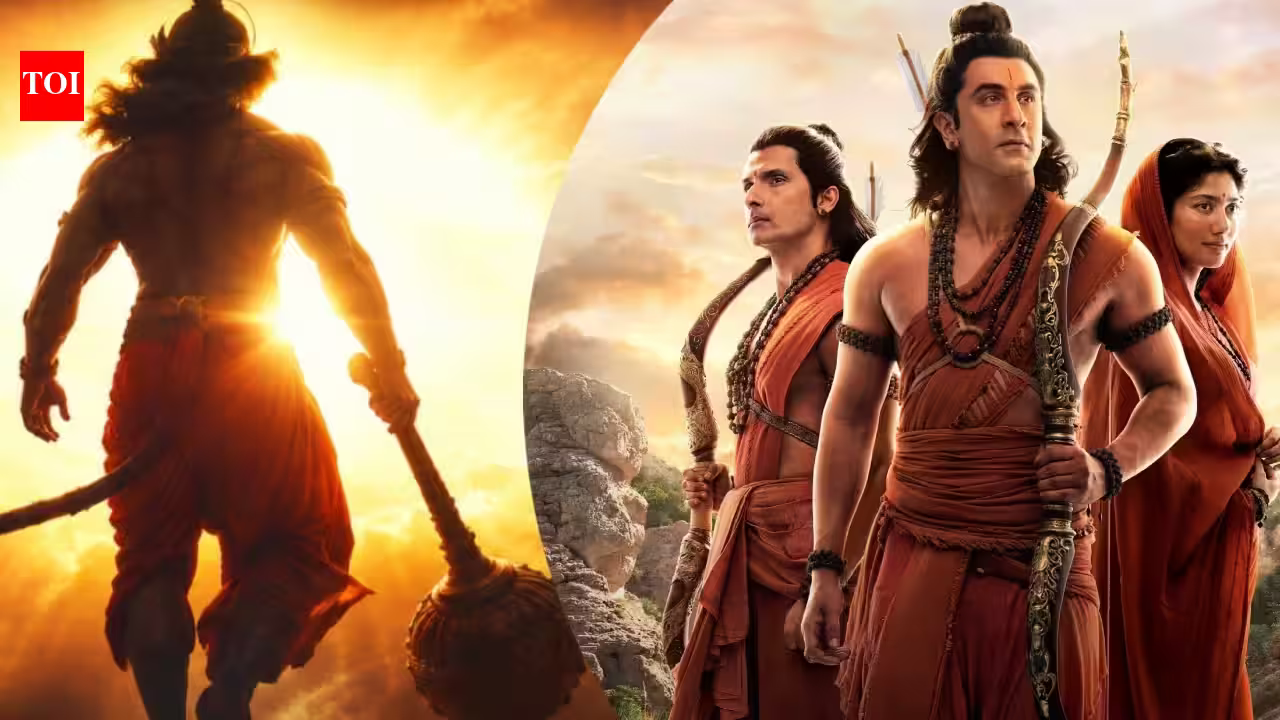








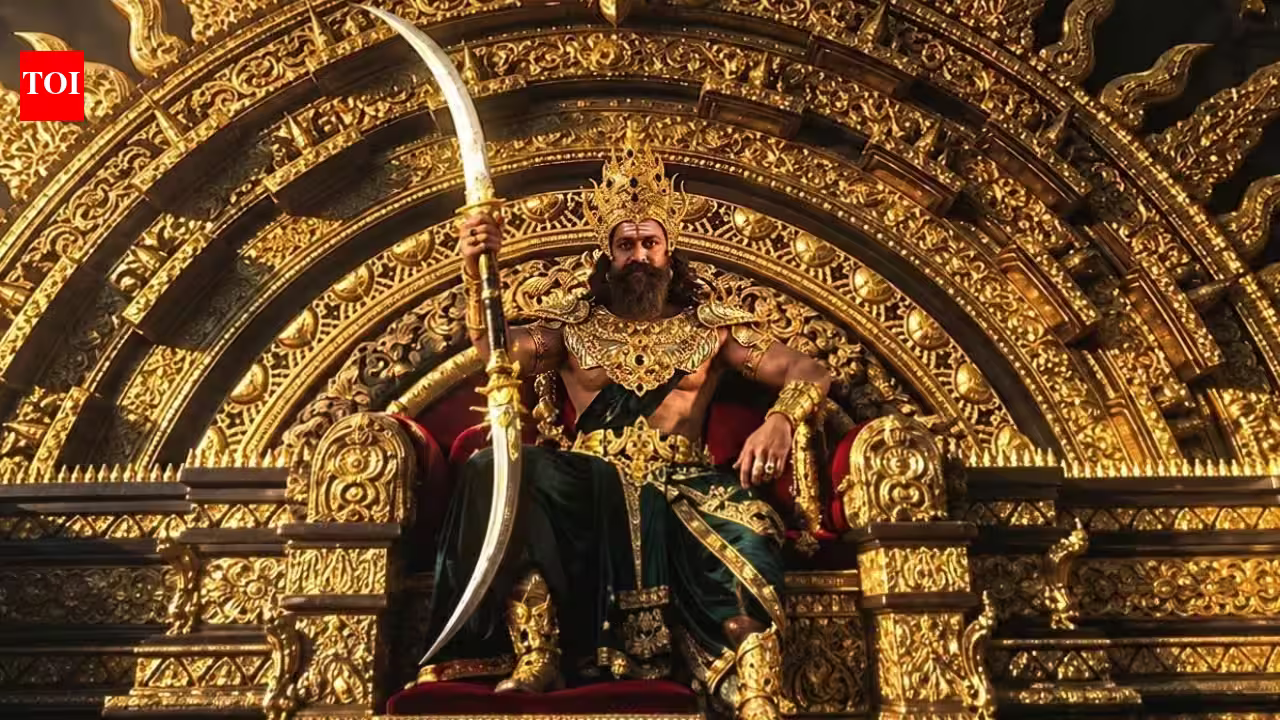
The air in Hyderabad was thick with anticipation, the kind that usually precedes a seismic shift in cinematic history. As Yash, the powerhouse performer who captivated the world with KGF, took the stage, the crowd didn’t just cheer—they roared. But amidst the frenzy of the Ramayana promotional event, the actor struck a somber, earnest chord. He wasn’t there to boast about box office projections or his own menacing transformation into Ravana. He was there to deliver a plea that felt less like a marketing pitch and more like a protective prayer for the future of Indian mythology on the big screen.
In an era where “review culture” has devolved into a forensic search for flaws, Yash is asking for something radical: a ceasefire. With Nitesh Tiwari’s gargantuan adaptation of the Ramayana looming on the horizon, the star has publicly urged audiences to stop dissecting pixels and start embracing the vision.
The Cost of Perfectionism
The discourse surrounding big-budget Indian epics has become notoriously binary. On one side, there is the hunger for global-level spectacle; on the other, a microscopic obsession with VFX and aesthetic purity. Yash is intimately aware of this tightrope walk. Standing before fans from across the diverse cinematic landscapes of India, he addressed the digital noise head-on.
“Please don’t try to find small faults; VFX, this-that,” Yash stated, his voice carrying the weight of a man who understands the monumental stakes involved in bringing an epic of this scale to life. He knows that in the modern digital age, a single frame released as a teaser can be memed, scrutinized, and torn apart by thousands of armchair experts before the film even reaches the edit suite.
His concern isn’t just for his own film—it’s for the survival of the genre. He cautioned that if the audience continuously tears down ambitious projects based on minor technical hiccups, the industry will eventually retreat into safer, smaller, and less creative corners. “If we lose people like him now, we’ll go back,” Yash warned, referring to the team’s immense effort to push boundaries. In his view, the Ramayana isn’t just a movie; it is a proof-of-concept for the viability of large-scale Indian storytelling.
A Dialogue Between Creators and Critics
One of the most refreshing elements of the lead-up to Ramayana: Rise of a Legend has been the unusual transparency of producer Namit Malhotra. In a rarity for high-stakes Bollywood productions, the team hasn’t retreated into an ivory tower. They have been listening.
Reports indicate that Malhotra has been actively monitoring social media feedback, acknowledging that when audiences pointed out specific concerns regarding character design, the team didn’t just ignore them—they adapted. This collaborative spirit, where the audience feels they have a seat at the table, is exactly what Yash is championing. By requesting an “open mind,” he isn’t asking for blind praise; he is asking for a partnership between the fans and the filmmakers. It is a tacit acknowledgment that the film is a living, breathing work-in-progress, refined by the very people who will eventually walk into the cinema to watch it.
The Power of a Unified Industry
Yash’s plea extended far beyond the Hindi-speaking belt. Addressing fans from the Telugu, Kannada, Malayalam, and Tamil industries, he called for a rare moment of pan-Indian solidarity. For too long, the Indian film landscape has been siloed by regional preferences and linguistic divides. With Ramayana, the goal is to weave these disparate threads into a single, cohesive national conversation.
“For once, if you like the film, let’s come together and show the world,” he urged. This is perhaps the most significant takeaway from his speech. Yash is envisioning a collective pride—a moment where Indian audiences stand united behind their own cultural heritage, regardless of which industry produced the spectacle. If a film rooted in the deepest traditions of the subcontinent can’t bring everyone to the table, what can?
The Heavy Burden of Mythological Retelling
Directing the Ramayana is, by any measure, a professional death wish. It is the ultimate tightrope walk: balance the religious sensitivities of millions, maintain the integrity of a millennia-old epic, and satisfy the adrenaline-fueled expectations of a generation raised on Hollywood blockbusters. Nitesh Tiwari, the man behind the heart-wrenching sincerity of Dangal and Chhichhore, is the captain of this ship.
The casting itself is a masterstroke of cross-industry appeal. Ranbir Kapoor as Lord Rama brings a quiet, poised grace; Sai Pallavi as Sita promises an ethereal, grounded performance; and Yash as Ravana—a role that demands an actor who can command the screen with villainous gravitas—is arguably the most intriguing variable. Together, they represent a convergence of talent that feels unprecedented. But Yash is correct in his assessment: the weight of this production is not just on the cast’s shoulders, but on the audience’s willingness to be transported rather than to audit.
The Long Road to 2027
With the first installment set for November 5, 2026, and the conclusion slated for Diwali 2027, the road ahead is a marathon. The production team is essentially inviting the public to witness the birth of a franchise in real-time. By managing expectations now, Yash is setting the stage for a more empathetic viewer experience.
He is essentially asking the audience to see the heart behind the pixels. In a marketplace dominated by cynicism and “gotcha” journalism, a plea for empathy—for the sheer ambition of the attempt—is a daring move. As the clock ticks down toward that late-2026 release, the success of the Ramayana may depend as much on the audience’s willingness to suspend their disbelief as it does on the technical prowess of the VFX team.
Yash has laid down the gauntlet. He has asked us to look past the shadows to see the light of the story. Whether the audience will heed the request for an open mind remains to be seen, but one thing is certain: when the first chapter finally hits the screen, it won’t just be a test of Nitesh Tiwari’s directing or Ranbir Kapoor’s acting. It will be a test of whether we, as a collective audience, are still capable of wonder.
Disclaimer: This content is auto-generated for informational purposes only.
Source: Read Original News