






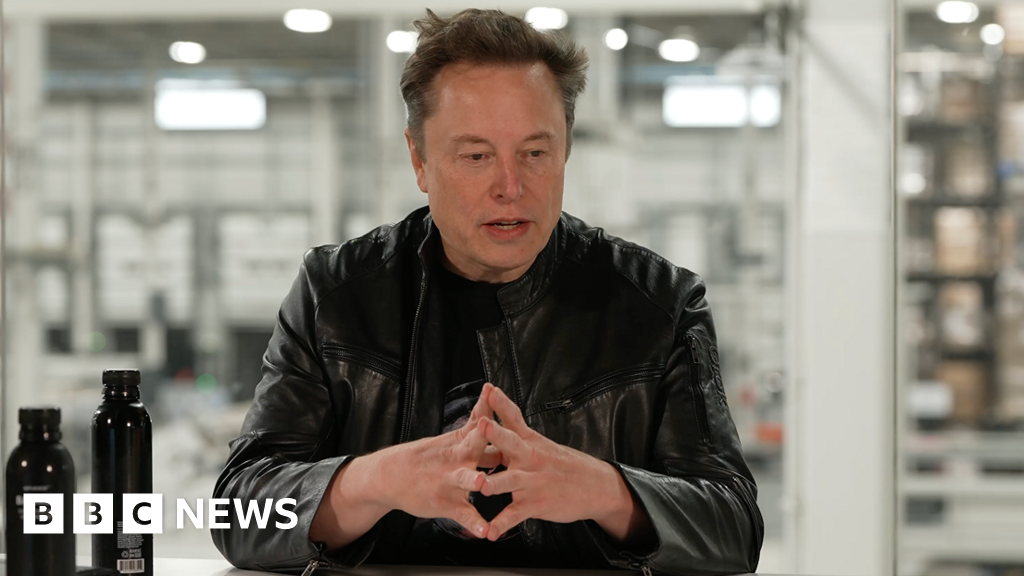
AUSTIN, Texas – Elon Musk has ignited fresh speculation across the global tech and financial sectors, publicly floating the prospect of a “mega merger” between his expansive portfolio of companies. The tech mogul, who currently steers Tesla, SpaceX, X (formerly Twitter), xAI, and Neuralink, suggested that consolidating his diverse business interests under a single unified umbrella could offer unparalleled synergies and operational advantages.
Speaking during an impromptu discussion late Thursday, Musk hinted that the boundaries currently separating his ventures may be artificial, noting that the technological cross-pollination between his firms has already begun to yield significant results. “There is a compelling argument that a cohesive, integrated entity could streamline innovation cycles and optimize resource allocation in ways that currently separate companies simply cannot achieve,” Musk remarked.
The proposal has sent shockwaves through Wall Street, where analysts are already scrambling to model the potential impact of such a consolidation. Proponents of the idea point to the “Musk ecosystem”—where SpaceX provides launch capabilities for Starlink, Tesla utilizes AI advancements from xAI, and Neuralink explores future human-computer interfaces that could eventually integrate with Tesla’s humanoid robot, Optimus. By dissolving the corporate walls between these entities, Musk could theoretically create a singular technological juggernaut capable of dominating multiple sectors simultaneously.
However, the vision of a “mega merger” also raises significant regulatory and structural hurdles. Legal experts warn that such a move would likely trigger intense scrutiny from antitrust regulators in the United States and the European Union, who are already wary of the immense influence Musk wields over critical infrastructure. Integrating a public company like Tesla with privately held ventures such as SpaceX and xAI would present a complex, unprecedented governance challenge that would require shareholder approval and a radical restructuring of equity stakes.
“The logistical complexity of merging a car manufacturer with a satellite provider and an artificial intelligence research lab is mind-boggling,” said Dan Ives, a senior equity analyst. “While the vision of an ‘everything company’ fits perfectly with Musk’s long-term aspirations for humanity, the path to execution would be fraught with legal, financial, and administrative minefields.”
For now, the announcement remains a conceptual roadmap rather than a formal filing. Musk did not offer a timeline for how such a merger might proceed, nor did he clarify which companies would serve as the core of the proposed entity. Nevertheless, the declaration reinforces Musk’s reputation for challenging traditional business norms.
As investors digest the news, shares of Tesla saw increased volatility in pre-market trading. While Musk is known for his penchant for “thinking out loud” on social media and at industry events, market observers emphasize that a move of this magnitude would represent the most significant reorganization in modern corporate history. Whether this is a serious strategic pivot or another of Musk’s provocative thought experiments, the tech world is now forced to grapple with the possibility of a unified Musk enterprise.
Disclaimer: This content is auto-generated for informational purposes only.
Source: Read Original News